
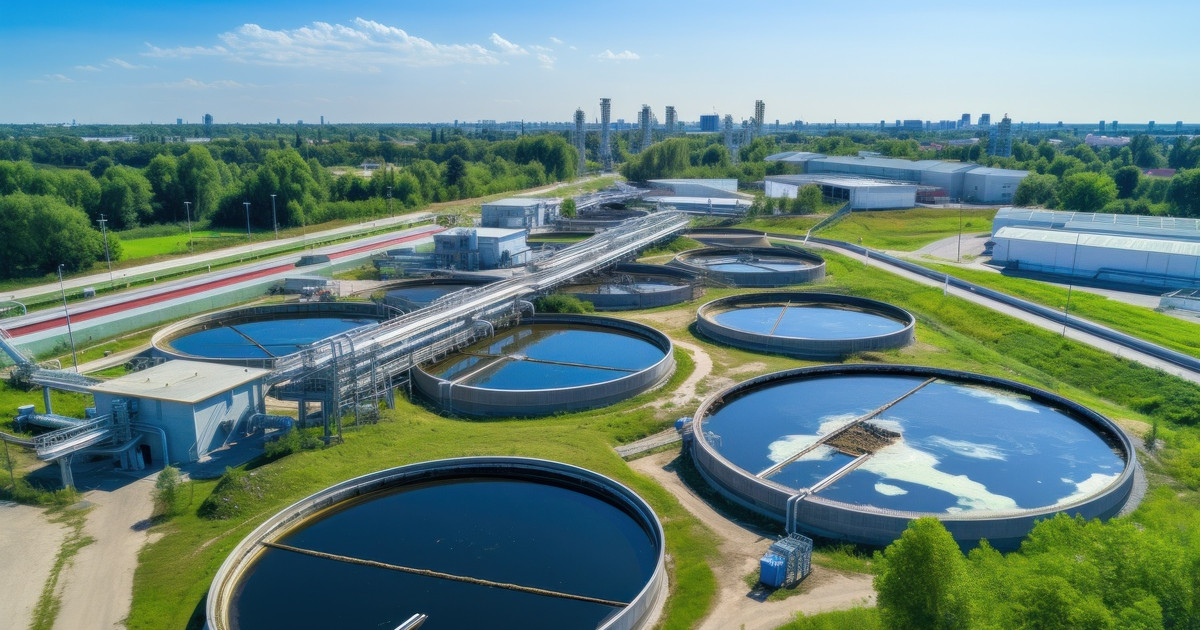
Or wastewater treatment at master level.
We talked with Kolos Téglásy, technical director at a partner of ours engaged in the design, manufacture and commissioning of industrial and municipal wastewater treatment systems.
Applications
In industrial wastewater treatment we use pipe fittings in a great many areas. In almost every type of wastewater treatment plant, in dairy and fruit processing plants, in abattoirs, laboratories and other facilities too.
- We build ready-to-use systems and hand them over to customers together with the permits. In an industrial environment the components are heavily exposed to chemical attack of every kind, so we build our systems from plastic pipes, because they resist acid, alkali and other stresses well, and where that is not suitable we work primarily with acid-resistant components. When assembling pump systems we realise the pipework, its connections and its bends with acid-resistant components, for example union fittings; here dismountability matters too. The associated fastening technology, such as the screws, the anchoring and so on, is all stainless as well, since the machine rooms are also heavily loaded with water vapour, which may be paired with some chemical action, and this heavily loads the fixing points. These systems have to work for long years and, since they practically never stop, they must be built from very durable components. In food-industry wastewater treatment it is a basic condition that no carbon steel components may be built in, because they would fail and rust very quickly, and rust is not compatible with food.
- In municipal wastewater treatment too the equipment works in wastewater for long years, and it is a fair expectation that corrosion should not start on the components. In the event of any repair or dismantling it is also important that the thread should not be damaged, that we can work with it. These considerations have to be borne in mind at the design stage already. That is another reason we use OKS-250 thread paste, because it has really proved itself. Unfortunately stainless screws have one great drawback: they are even more prone to galling than carbon steels. As soon as we discovered the solution, we straight away acquired a larger pack of OKS-250 paste, of which, thank God, relatively little is used up, so a quantity like that lasts us a good long while. At first “we had no time” or energy to deal with this as well, but when you realise how many extra hours one or two instances of galling take away during assembly, you would rather build prevention into the technology. blind rivets were developed primarily for fixing sheets to one another, back when humankind was just trying out its wings… This was a pioneering technology with which, in those days, they could produce quickly and in large quantities… It almost goes without saying that the defence industry of the First World War, and within it aircraft manufacturing, was the field where this was needed most. Who would have thought that the “pop rivet” (“POP rivets”) comes from a brand name, registered from those very times onwards by the English company Tucker? Had it not become widely known under this name, we would now call it a “pull rivet”, or we would have adopted the term blind rivet (blindrivets) from English.
Weldable or assemblable fittings?
With TIG welding we can assemble far more things on site. In many cases we work in extreme conditions, for example under basins, inside shafts, where welding is very difficult. We often work on a ladder or scaffold, or simply hang in on safety harnesses, which makes the work harder. In such cases it is far easier to make threaded or flanged connections, which we always keep with us.
The design
The design starts with a condition survey of the given plant and an examination of further expansion options. We look at what load the wastewater discharge represents, and we also carry out laboratory tests to find out the pH value and how much water we have to treat per day. Generally the volume of water discharged varies between 10 and 1200 m3/day (about the volume of two training pools at a sports swimming complex). From these basic parameters we can draw up the plan of how many m3/hour the machine system to be assembled must handle. That already gives the diameter of the fittings, that is, the sizes we work in.
We mostly use two-inch system elements, because at this diameter we can already work with a capacity that suits most of our plants, and this already gives the starting point for the further design too. The pipe and fitting sizes, and the connection sizes of the selected pumps, have to be coordinated at this stage, to decide which should be internal and which external thread.
On the basis of the plan we put together a preliminary material list, which determines for us the sub-assemblies our next job will consist of. For several years now we have taken great care always to use common components, which if needed we can replace at any time with spare parts. With this technique we can save a lot of time, and the remaining components can form the basis of the next system and of servicing too.
The material types used
Where we have to treat the wastewater with concentrated acid or alkali, plain A2 stainless can no longer take it, and we have to use the next material grade instead. I think we tried an A5 grade acid-resistant nut once as well, but where we had to work with concentrated hydrochloric acid, even that high-grade acid-resistant material could not take it, and after about a year and a half it too was completely destroyed. Interestingly, we were eventually able to solve the problem with a glass component. I mention this only as a curiosity. Concentrated hydrochloric acid is a dangerous substance.
Flanges
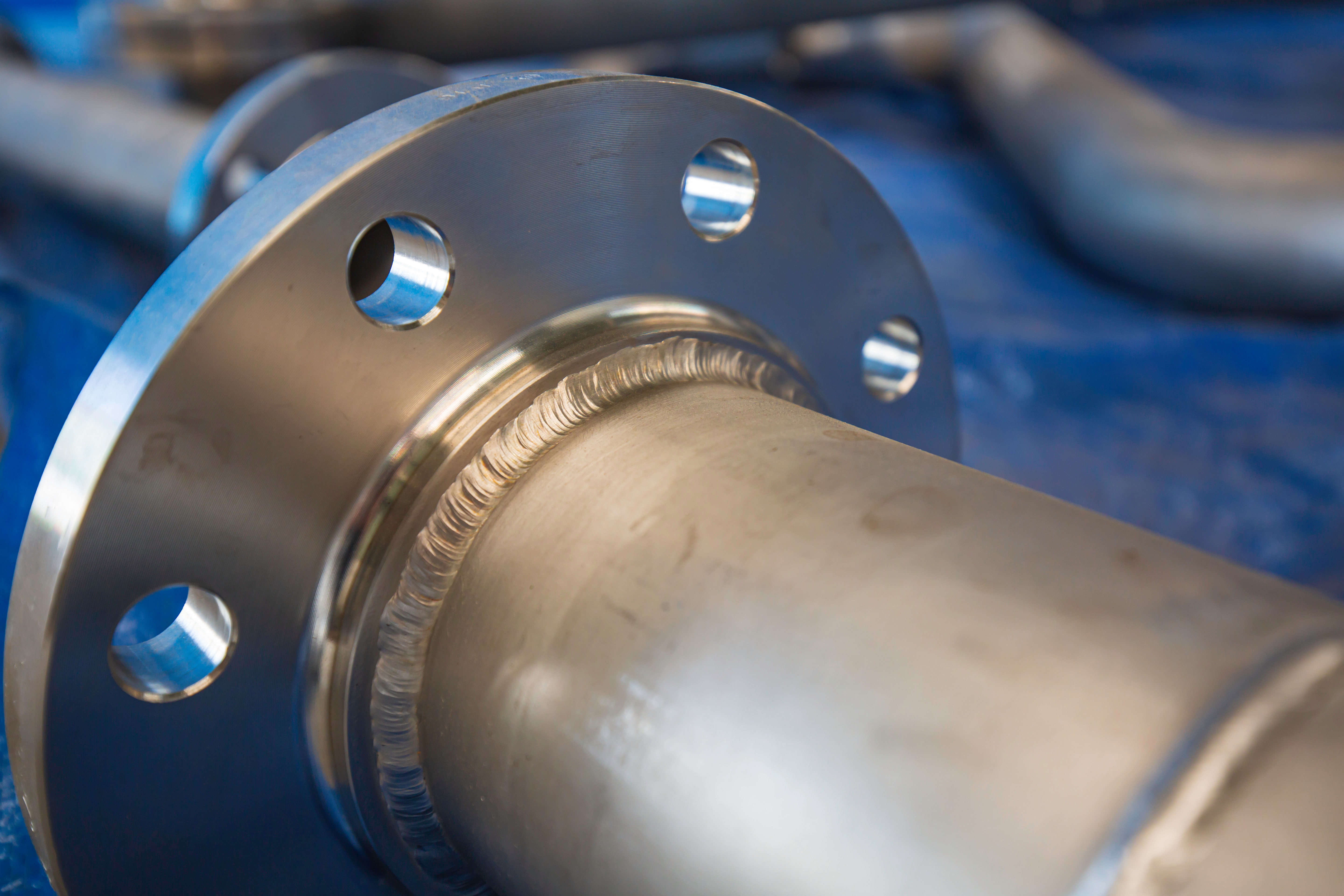
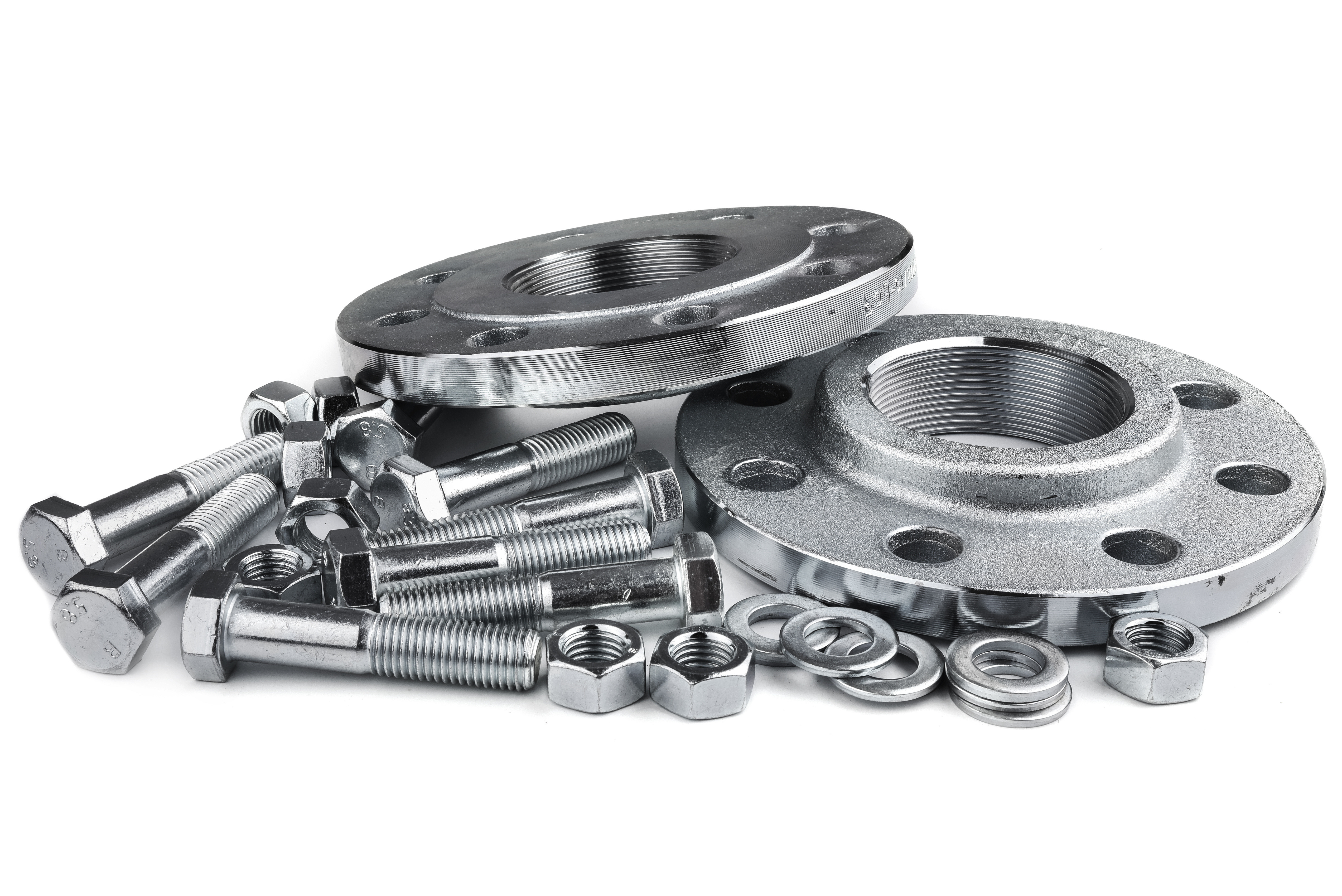
The machine we build in we either have manufactured ourselves or buy ready-made. If we purchase a filter unit, the machine generally starts with a fixed stainless flange and ends with one just like it, and we have to build the pipe network on from there. From this point we switch to plastic and work with loose flange systems, which makes it easier to set the position of the holes. Very high-quality work can be done with solvent-weld PVC pipework; with that the system really does last “a hundred years”, which is why we like to use it. Here NONOX screws must also be chosen that will hold this flange joint over the long term.
Filters
We build filter machines 4-5 metres long, because where 1000 m3 of water has to be pumped through daily, only these giant machines can do the job. We do not use mini filters built into the pipe, because of the heavy duty; they would have to be cleaned and replaced hourly.
Ball valves
In valve systems we use many throttle valves. We have to regulate the flow rate of certain pipe sections and, since we build these from solvent-weld elements, in such places we also use solvent-weld valves, whose closing ball itself is likewise made of acid- and alkali-resistant plastic. Only very rarely do we use smaller, half-inch and three-quarter-inch stainless valves and ball valves. Where we work with diameters much smaller than the main flow diameter, smaller acid-resistant valves may also come into question. The shutting off and opening of the wastewater flow, however, we generally solve with plastic valves. Especially in on-site assembly these are very easy to handle. On the main treatment machine, which is made entirely of acid-resistant materials, there are small so-called recirculation pipes of 10-12 diameter, where throttle valves have to be fitted to every pipe.
Our customers generally expect us to replace the valves roughly every 2-3 years, even if they still work well. In these lies the “soul of the machine”, the conditions for precise adjustment. If they are a little more worn, have play, or any corrosion starts on them, the machines run less accurately. If the wastewater is not so corrosive, simple nickel-plated brass valves go into the system. Where the pH is strongly destructive, however, we work only with acid-resistant valves.
Hose ends
Pump technology embraces several operating principles. There are pumps that can produce high pressure, and there are others that, by contrast, produce a high volumetric flow. In the dairy industry high pressure is not needed, but they work with a high volumetric flow, so for them any kind of constriction takes back the performance of the entire dairy system. They therefore always strive to maintain the pump’s maximum diameter even in the pipe. By contrast, with wastewater we work at high pressure, so a minimal reduction in diameter does not trouble us: at 6/4 inch, a 50 hose already counts as a diameter reduction. In a dairy plant this ruins the milk, so they have to build every pipe section at very nearly the same diameter.
Besides this, hose sizes are still not standardised, only the fittings. The practice, therefore, is that there are as many hose sizes as there are hose manufacturers, which is why we always buy our hoses from the same company too, because this saves us time and spares us the irritation. When making a complete system we thus save as much as a day’s extra work, so that is another reason we do not like to change our suppliers. Even if we may have to wait for some component, it is worth it, because the hose diameter and the matching hose end are not standardised technical articles but manufacturer-specific products.
Non-return valves
In wastewater treatment it is not advisable to use non-return valves, because if some lumpy contamination gets under the shut-off diaphragm – and there is such in wastewater – then it can jam it, and it can no longer prevent the next backflow. We have already tried in many places, from the ball type through the spring-plate-diaphragm type to special versions elsewhere. Everywhere the experience was that in the long term, unfortunately, they are not reliable in service, so we work with a slightly different system, with which we interrupt the water flow.
The essential point is that we leave it to physics: when the pump stops, it should be able to drain back straight away, and thereby the pipe too can remain empty – which is why we mostly do not use a non-return valve, only in chemical dosing. For if we dose the chemical downwards, then when the dosing pump stops the system would go on pushing the chemical out, and that is why here we tend to install stainless non-return valves with pneumatic connections. They cost a fortune, and despite that they do not close well either. Non-return valves were invented for clean water. Ball non-return valves, built onto pumps, are perhaps used in municipal systems, because municipally there is far less fine, lumpy, hard contamination, so non-return valves work more effectively there. In industry, however, the non-return valve is all but forbidden.
Elbows
Is the 45 or the 90° elbow better? This is simply a question of routing, if we have to turn in or get around something. It is not good in every case to turn through 90° at once. It is always the conditions of the given place that decide whether it is more practical to carry on with 90 or 45° fittings. With large-diameter wastewater pipes, from the point of view of avoiding blockages, it is a far more advantageous solution to turn through 45° twice.
Press bends
It is a great advantage if a pipe section can be dismantled, because if it gets blocked somewhere it can be taken apart and easily cleaned out with a high-pressure washer. If we weld everything to everything, then in the event of a problem we make our own lives harder. That is why we use union fittings in many places. Machine manufacturing companies prefer to work with press bends, because they weld the pipe sections together indoors, in the workshop, which is obviously cheaper for them than fiddling with thread sealing everywhere.
Warranty
On a complete wastewater treatment system we give a full one-year warranty. This covers every existing component but, since these machines operate 365 days a year, 24 hours a day, a warranty must not be given for much longer, because the components really do wear very quickly – at least compared with general domestic use.
After the one year expires we generally conclude a so-called maintenance contract, which means that quarterly or even weekly two or three colleagues go out, look the system over, adjust it if necessary, have a talk with the operator, and that is when those problems come to the surface: that something is dripping somewhere, that a new pH probe is needed over there, and suchlike. In the next maintenance period we already take the components to be replaced with us, and so we can achieve continuous condition preservation.
Industrial wastewater treatment equipment, like anything else, reaches the age when – if not the main unit, then – all the sub-assemblies, accessories, the electrical control cabinet and wiring, and so on, have to be replaced. By contrast, if they order continuous PPM, that is, planned preventive maintenance, from us, then this can last far longer. Needless to say, there are places where they simply start it up, use it, and when it stops they call. That is the worst version. A shutdown, the repair of broken-down equipment, is mostly harder and more costly than if we had consciously prevented the problem. We have a developed strategy for how to protect this equipment and, if we really do carry out the maintenance every six months or every year, then unexpected failures can be avoided, and so the service life of the equipment can be extended.
Supplier readiness
What is a great advantage for us is if everything needed is in stock, because when they phone to say there is big trouble, we have to go the very next day. Sometimes we have only one day to obtain every missing component. Unfortunately the tendency in today’s world is that in many places the goods are delivered four weeks from the order. Well, we could not work like that! The fact that these standard components are generally available immediately at Menet-Trend is a really very great help to us.
Projects
In the food industry there is one area where we have managed to ensure immediate response by standardising five pump types, for which we have a stocked storage place, from where we only have to take the component we happen to need. If there is trouble with one of these machines, the lads simply pick it up, take it down in a box, replace it, and often they finish the whole thing before we could even send a quotation, because there is no time for that in the meanwhile.
These systems cannot be stopped. The boilers are fired up, the milk is coming. We have a facility that has not stopped for a single minute in seven years. There was trouble with it once, on a New Year’s Eve. Yes, I spent that New Year’s Eve there too. It was a memorable occasion.
Social responsibility
We have launched an environmental project in primary schools. To small children we present, on the one hand, the basic concepts connected with the formation and treatment of wastewater. By purifying a glass of water I demonstrate how much serious work obtaining even one litre of clean water requires. I mix water with milk, then separate it with the help of chemicals. The children get excited, they greatly enjoy it, because they can follow the process all the way through.
The other important topic of the presentation is raising awareness of correct forms of water use. We calculate how much water saving it would mean, projected onto the whole country, if just one child wasted half a litre less water a day! In interactive form we examine the state of drinking water supplies on the various continents, and we arrive at the most important conclusions: that here in the Carpathian Basin we still have water in abundance, but unfortunately this will not be so for much longer. It has to be taken seriously now, because we can see that in much of the world there is already a great shortage of drinking water. We should like to leave water to our grandchildren too.
Interviewee: TK
Reporter: MBR
Edited by: SZA
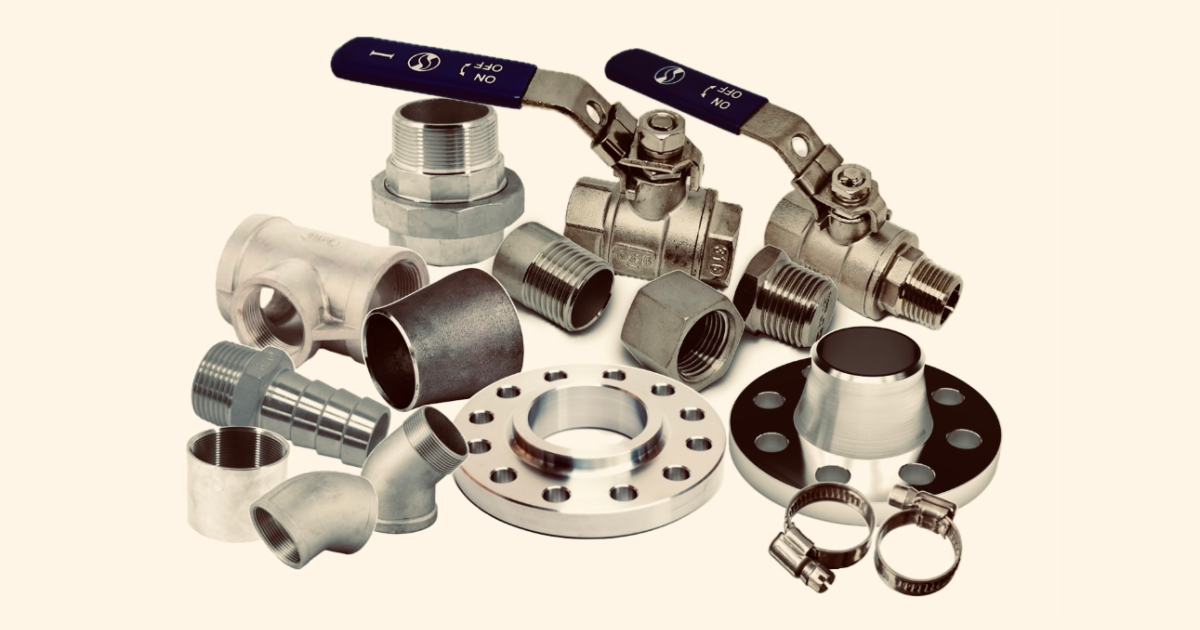
Do you need an acid-resistant pipe fitting, a union fitting or a stainless fastener? Available from our stock.
Webshop
Leave a Reply