
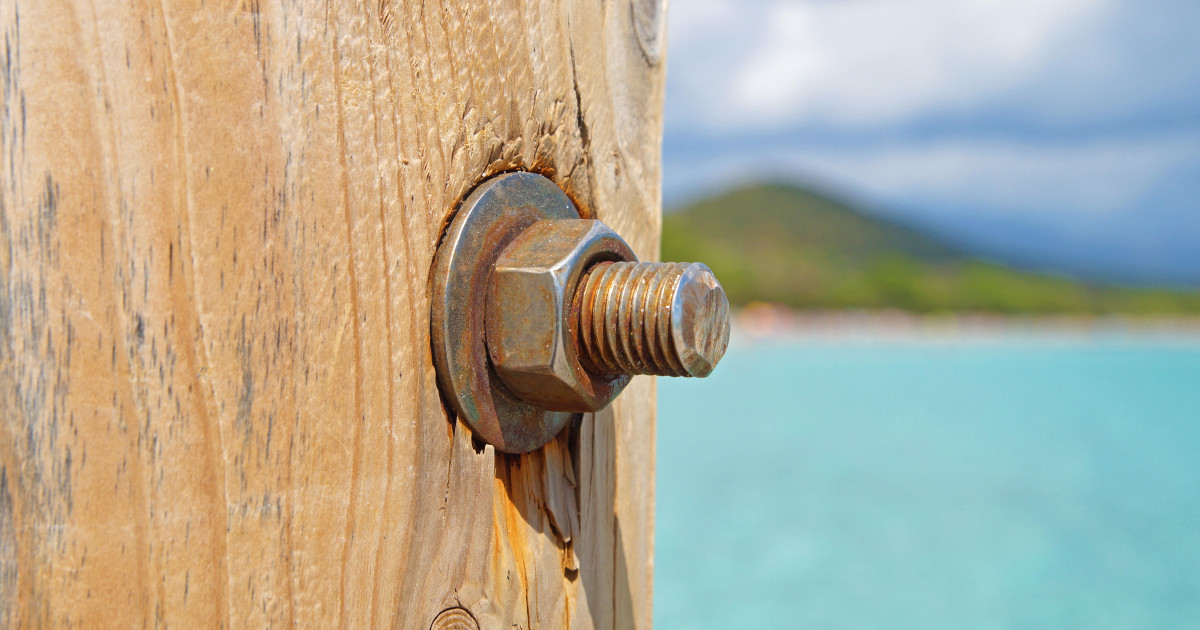
We are poking at an apparently contradictory subject now: how could anything be called stainless if it is prone to rusting?!
The answer is that the relative properties of materials can only be considered stable under defined conditions, so we can ensure that the desired properties endure if we see to it that the necessary conditions are present. While steel, for example, is protected by painting, galvanising and so on, corrosion-resistant steels must not be painted; entirely different precautions have to be taken…
We shall not wander far, since the aim of our article is not an academic treatise but to give useful practical advice on keeping an unpleasant but natural phenomenon in check.
I.Austenitic stainless and acid-resistant steels are protected from corrosion and its spread by the oxide layer that forms on their surface, so our primary advice is that this surface oxide layer
- A.should be allowed to form and to regenerate if it is damaged, that is, do not prevent the surfaces of stainless and acid-resistant materials from making contact with open air, do not paint them, do not let them become contaminated, and the oxide layer will restore itself of its own accord;
- B.After machining, help the surface oxide layer to restore itself by using cleaning agents suitable for stainless steel!
II.Under all circumstances avoid contact between stainless or acid-resistant steels and carbon steels, because the latter infect them, and once the rust has penetrated the internal structure of the material the process is irreversible:
- C.When machining our stainless or acid-resistant materials, do not use tools or implements (drill, hammer, saw, cutting and cleaning disc, welding electrode, screws and so on) that are made of carbon steel, or that are not specifically intended for machining or assembling stainless or acid-resistant steels!
- D.Never use tools on corrosion-resistant steels that have previously been used to machine carbon steel workpieces!
- E.Do not work with corrosion-resistant materials in an environment where carbon steel is also machined, because it is inevitable that carbon steel particles will after all land on the surfaces of the corrosion-resistant steel and settle there!
- F.Where it cannot be prevented that unwanted iron particles from the construction environment pass onto the corrosion-resistant materials, they must be removed from there dry if possible, and the surfaces must then be protected from intergranular corrosion with cleaning agents suitable for stainless steel.
- G.Only use corrosion-resistant screws on carbon steel structures if their direct contact can be prevented!
- H.The reverse is no better: do not use carbon steel screws on corrosion-resistant structures either; choose suitable corrosion-resistant screws (with A1-A5 material designations and so on)!
III.Contact with chemicals:
- A.Austenitic stainless and acid-resistant steels are fully resistant to some chemicals, and much less or not at all resistant to others. For our subject we need not concern ourselves with those that do not harm these types of steel, only with those that do. You will find 60 significant compounds, with their concentration and temperature variants, set out in a table at the bottom of this article; fortunately only a bare handful of them really harm stainless or acid-resistant steel.
- B.We draw particular attention here to the fact that chlorine compounds, and above all their vapours, are quite merciless towards austenitic stainless and acid-resistant steels, so the use of cleaning agents and chemicals that contain chlorine must be avoided. Unfortunately the water of chlorine-treated swimming pools is one of these.
Chemicals and their effects on stainless and acid-resistant steels
Chlorine is not the only dangerous substance, but it is perhaps the most widespread. The table below also contains several compounds that it is well to be careful with in every situation, and which attack even acid-resistant steel.
Explanation of the letter codes showing the level of resistance: A = no effect on it, D = severely destroys it, B and C mark the transition.
| Corrosive substance | Concentration | Temperature (°C) | Level of resistance – A2 | Level of resistance – A4 |
|---|---|---|---|---|
| Acetone | all | all | A | A |
| Ethyl ether | – | all | A | A |
| Ethyl alcohol | all | 20 | A | A |
| Formic acid | 10% | 20 boiling | A | A |
| Formic acid | 20 boiling | B | A | |
| Ammonia | all | 20 boiling | A | A |
| Ammonia | 20 boiling | A | A | |
| Any petrol | – | all | A | A |
| Benzoic acid | all | all | A | A |
| Benzene | – | all | A | A |
| Beer | – | all | A | A |
| Hydrocyanic acid | – | 20 | A | A |
| Blood | – | 20 | A | A |
| Binder solution | – | 98 | A | A |
| Chlorine: dry gas | – | 20 | A | A |
| Wet gas | – | all | D | D |
| Chloroform | all | all | A | A |
| Chromic acid | 10% purity | 20 boiling | A | A |
| Chromic acid | 10% purity | 20 boiling | C | C |
| Chromic acid | 50% purity | 20 boiling | B | B |
| Chromic acid | 50% purity | 20 boiling | D | D |
| Developer | – | 20 | A | A |
| Acetic acid | 10% | 20 boiling | A | A |
| Acetic acid | 20 boiling | A | A | |
| Fatty acid | technical | 150 | A | A |
| Fatty acid | 180 | B | A | |
| Fatty acid | 200-235 | C | A | |
| Fruit juices | – | all | A | A |
| Tannic acid | all | all | A | A |
| Industrial air | – | – | A | A |
| Glycerine | concentrated | all | A | A |
| Potassium permanganate | 10% | all | A | A |
| Milk of lime | – | all | A | A |
| Carbon dioxide | – | – | A | A |
| Copper acetate | – | all | A | A |
| Copper nitrate | – | – | A | A |
| Copper sulphate | all | all | A | A |
| Magnesium sulphate | approx. 26% | all | A | A |
| Seawater | – | 20 | A | A |
| Methyl alcohol | all | all | A | A |
| Lactic acid | 1,50% | all | A | A |
| Lactic acid | 10% | 20 boiling | A | A |
| Lactic acid | 20 boiling | C | A | |
| Sodium carbonate | cold saturated | all | A | A |
| Sodium hydroxide | 20% | 20 boiling | A | A |
| Sodium hydroxide | 20 boiling | B | B | |
| Sodium hydroxide | 50% | 120 | C | C |
| Sodium nitrate | – | all | A | A |
| Sodium perchlorate | 10% | all | A | A |
| Sodium sulphate | cold saturated | all | A | A |
| Fruit | – | – | A | A |
| Oils (mineral and vegetable) | – | all | A | A |
| Oxalic acid | 10% | 20 | B | A |
| Oxalic acid | boiling | C | C | |
| Oxalic acid | 50% | boiling | D | C |
| Kerosene | – | all | A | A |
| Phenol | pure | boiling | B | A |
| Phosphoric acid | 10% | boiling | A | A |
| Phosphoric acid | 50% | 20 | A | A |
| Phosphoric acid | boiling | C | B | |
| Phosphoric acid | 80% | 20 | B | A |
| Phosphoric acid | boiling | D | C | |
| Phosphoric acid | concentrated | 20 | B | A |
| Phosphoric acid | boiling | D | D | |
| Mercury | – | up to 50 | A | A |
| Mercury nitrate | – | all | A | A |
| Salicylic acid | – | 20 | A | A |
| Nitric acid | up to 40% | all | A | A |
| Nitric acid | 50% | 20 | A | A |
| Nitric acid | boiling | B | B | |
| Nitric acid | 90% | 20 | A | A |
| Nitric acid | boiling | C | C | |
| Hydrochloric acid | 0,20% | 20 | B | B |
| Hydrochloric acid | 50 | C | B | |
| Hydrochloric acid | 2% | 20 | D | D |
| Hydrochloric acid | 50 | D | D | |
| Hydrochloric acid | up to 10% | 20 | D | D |
| Hydrochloric acid | 1% | up to 70 | B | A |
| Hydrochloric acid | boiling | B | A | |
| Hydrochloric acid | 2,50% | up to 70 | C | C |
| Hydrochloric acid | boiling | |||
| Sulphuric acid | 5% | 20 | B | A |
| Sulphuric acid | > 70 | B | B | |
| Sulphuric acid | 10% | 20 | C | B |
| Sulphuric acid | 70 | C | C | |
| Sulphuric acid | 60% | all | D | D |
| Sulphurous acid | aqueous solution | 20 | A | A |
| Sulphur dioxide | – | 100-500 | C | A |
| Sulphur dioxide | 900 | D | C | |
| Tar | – | boiling | A | A |
| Wine | – | 20 and boiling | A | A |
| Tartaric acid | up to 10% | 20 | A | A |
| Tartaric acid | boiling | B | A | |
| Tartaric acid | above 10% | 20 | A | A |
| Tartaric acid | up to 50% | hot | C | C |
| Tartaric acid | 75% | boiling | C | C |
| Lemon juice | – | 20 | A | A |
| Citric acid | up to 10% | all | A | A |
| Citric acid | 50% | 20 | A | A |
| Citric acid | boiling | C | B | |
| Sugar solution | – | all | A | A |
Explanation of the letter codes showing the level of resistance: A = no effect on it, D = severely destroys it, B and C mark the transition.

Leave a Reply