
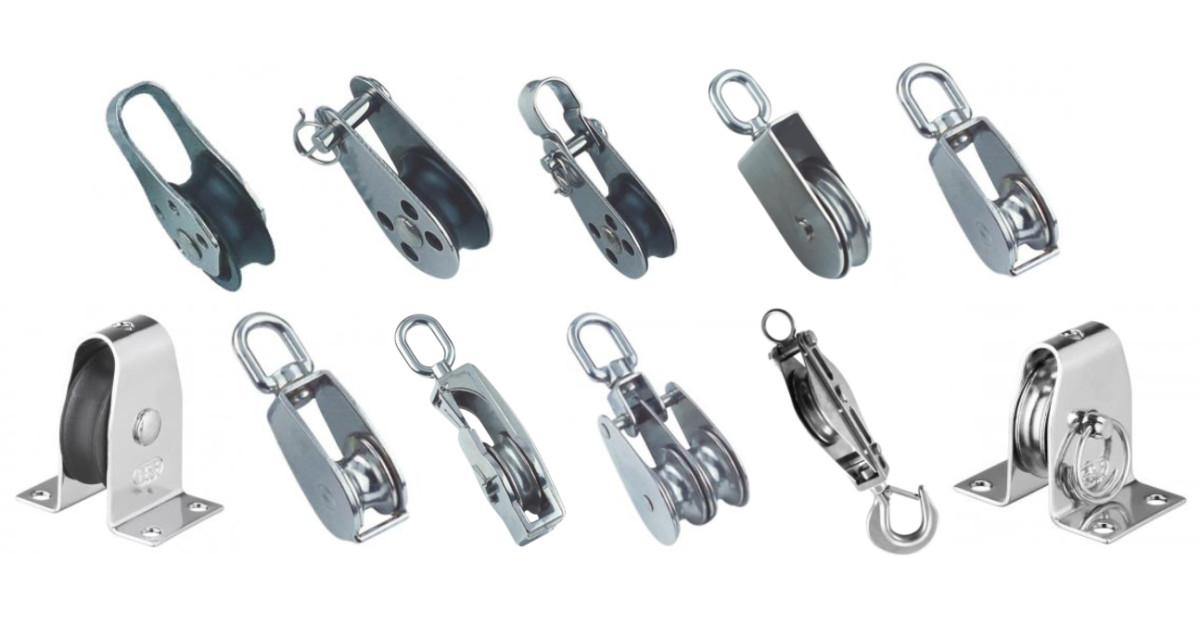
What can a pulley have to do with rowing?
More than we would think at first. The stability of an international-standard rowing course is ensured not only by the buoys and wire ropes, but also by specially designed stainless pulleys hidden under the water. These components play a decisive role in the alignment of the courses, in their adjustability and in their long-term sustainability too.
Are you interested in what effect aquatic wildlife has on racecourses? Do you know how a professional rowing course is built up, and what technical challenges have to be faced under the water and at the edge of the course?
A long-standing customer of ours, dear to us, uses our specially designed stainless pulleys and fasteners in large quantities for building rowing courses. We share their experiences with you on the basis of their own accounts.
The layout of a racecourse
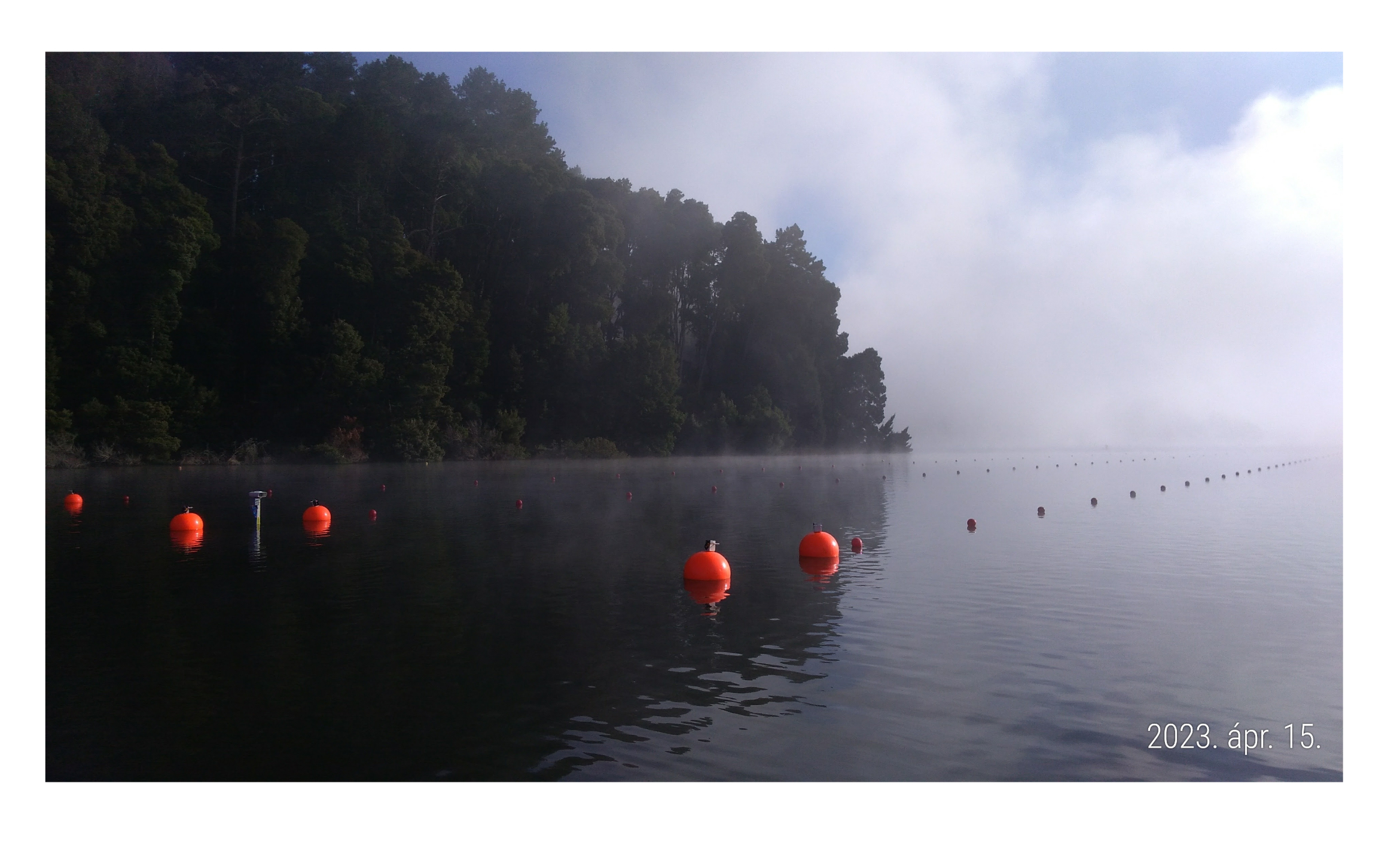
Racecourses laid out both on natural waters and in built basins are made according to the rules of the sport. Common to both is that in the area serving the movement of the boats the rigging lies at a safe depth; on the surface only rows of buoys and individual large buoys mark out the area.
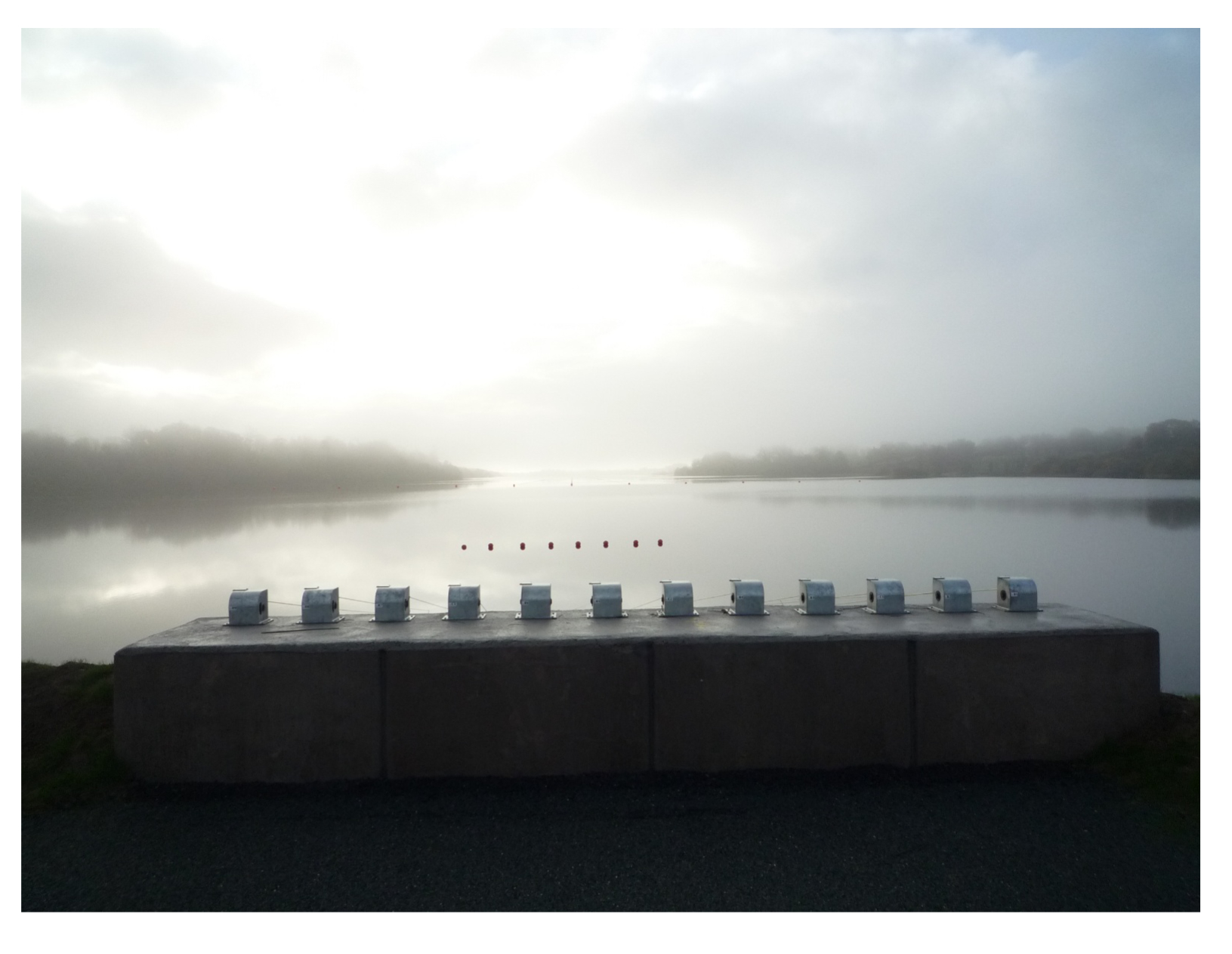
The regular system of buoy rows is determined by the longitudinal and transverse rigging under the water, and in setting out the route of the wire ropes that make up the rigging the leading role belongs to the pulleys. The wire ropes, marked at regular intervals, start from winches on the bank and on the opposite side, 2000 or 1000 metres away, run into winches in just the same way. These are what the wire ropes can be tensioned with, and what the longitudinal position of the ropes – and with them the buoys – can be set with.
The winches are fixed to concrete blocks or steel structures on the bank, according to what the terrain allows, and the wire ropes run under the water, led through the pulleys.
These pulleys are given the most important task in setting the route, since the alignment of the wire ropes has to follow the geometry of the bed and of the bank.
The traditional, closed pulleys are suitable for guiding shorter rope sections, but when laying long wire ropes the side-opening version is the more advantageous, because the ropes do not have to be threaded into it in advance.
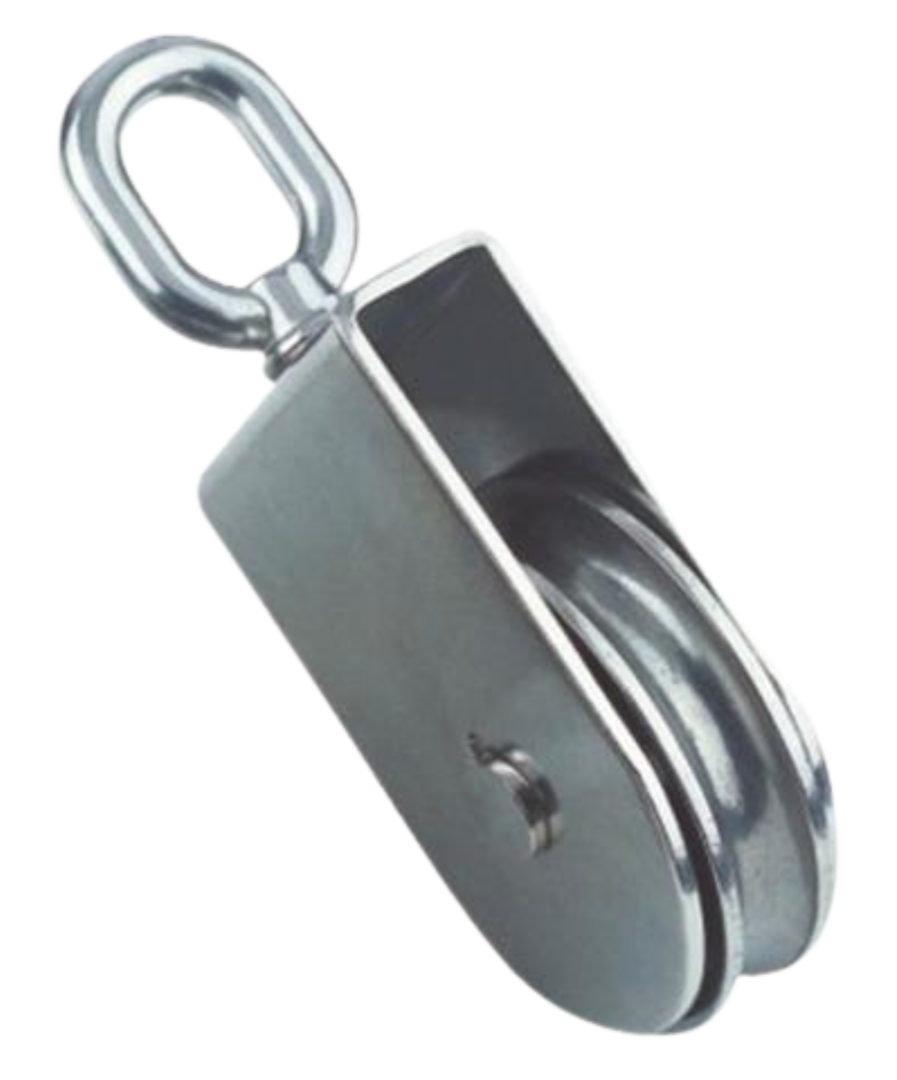
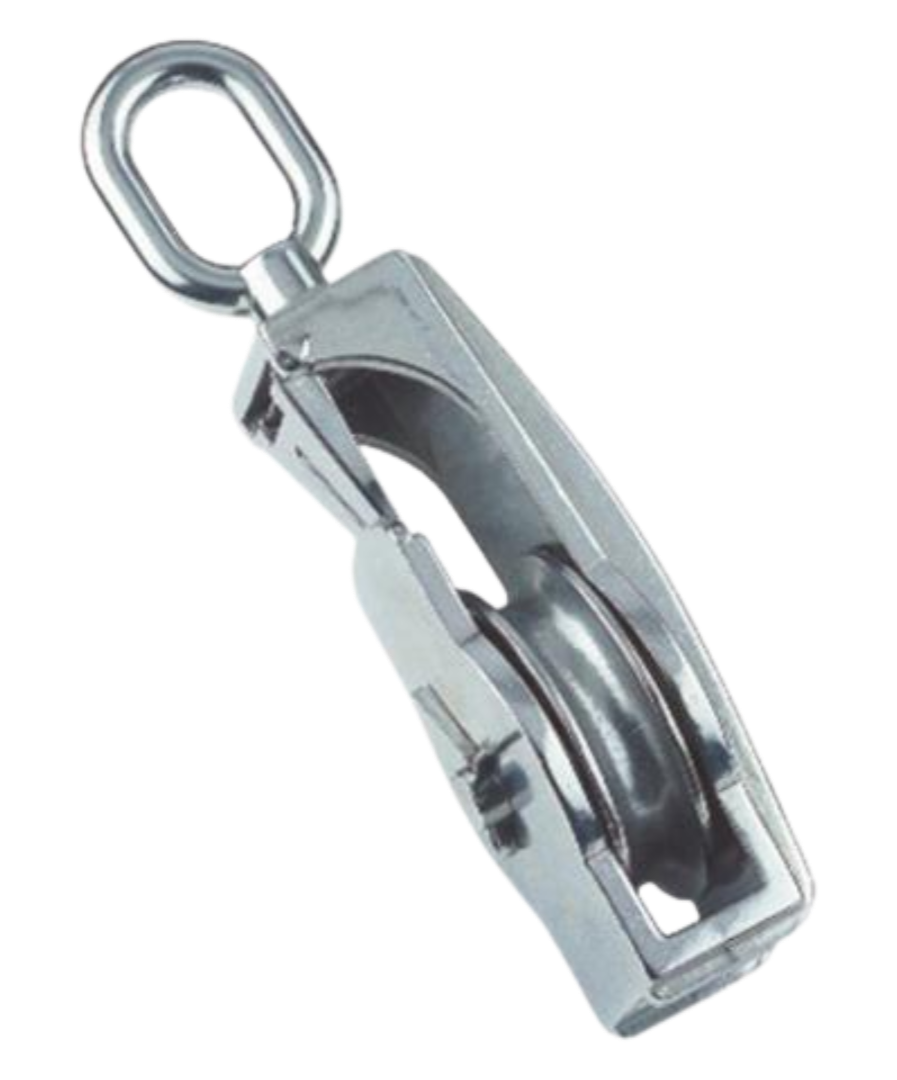
Closed pulley for short wire ropes Side-opening pulley for long wire ropes
The role of the pulleys here differs somewhat from the usual application, since for most of the time they function “merely” as break points. After construction and the setting of the buoy rows, the wire ropes only very rarely have to be moved.
From time to time, however, it happens that the course rigging has to be converted from a kayak layout to a rowing one or back, because the rules of the two sports prescribe different buoying and lane widths. During the work we lift the wire ropes, thread them into a pulley fixed to the side of a motorboat, and by “trolleying” along the wire rope the buoys can be changed continuously.
The function and advantages of the pulleys are therefore as follows:
- When setting up, they make it possible to move the rope evenly, without “jumping”;
- The arc of the roller spares the strands of the wire rope – which makes micro-movements because of the waves – at the break points;
- As a “guide rein” they can also be used as an excellent working tool when re-buoying, moving along the wire rope;
- The side-opening versions support the quick connecting and disconnecting of the wire rope;
- The swivel allows relatively free “steerability” even alongside the guidance.
The load capacity of the pulleys and fasteners
The tensioning of the wire ropes is done with a relatively small force (approx. 2 kN) (approx. 200 kg), so as a first approximation the loading of the pulleys is not critical compared with the nominal load capacity. If, however, the route breaks sharply, then the increase in the force acting on the pulley and the fasteners has to be reckoned with. (At an angle smaller than 120 degrees the supporting structure and its elements genuinely have to be re-dimensioned.)
It is very important to pay attention to the correct laying of the slack wire rope still awaiting tensioning, and of the pulley, under the water, because a loose loop can easily spin round during tensioning and, jamming against the opening tongue of the pulley, can make movement of the rope impossible – or, forcing the plate open, the wire rope can break free, tangling up the nearby fittings and buoy rows.
The corrosion resistance of the structures
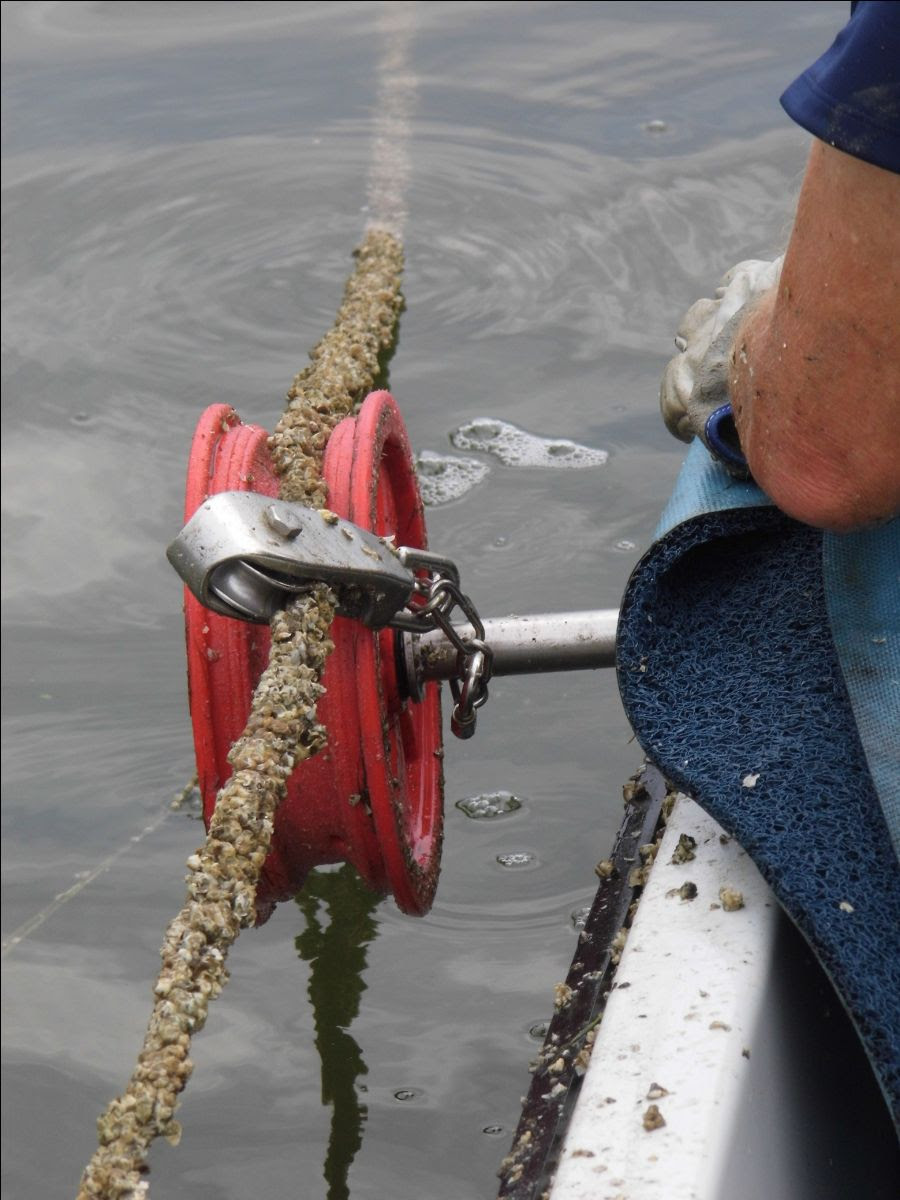
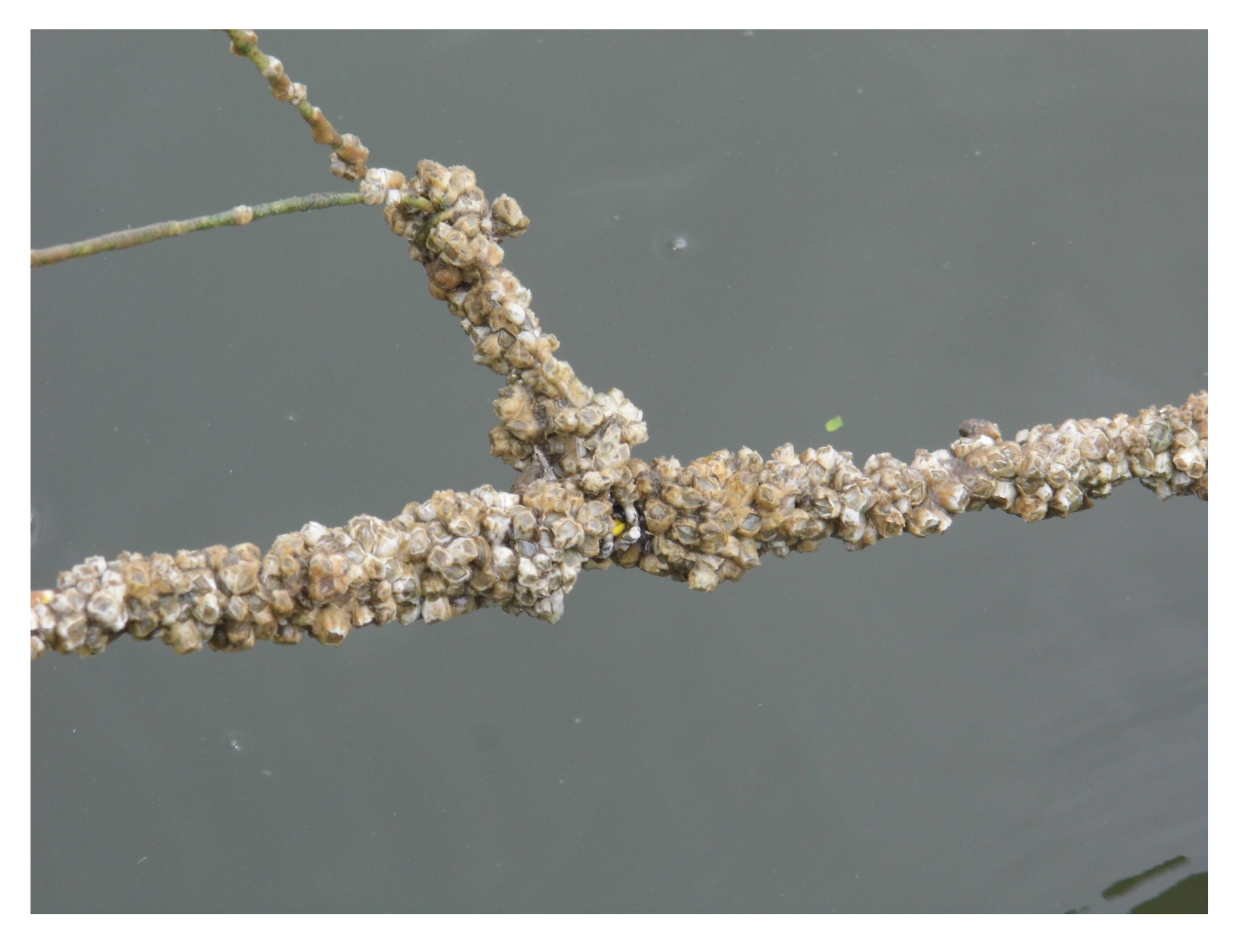
The courses are established on natural, open waters, so the components are continuously exposed to biological and electrochemical effects. Besides the dimensioning, it is nothing other than the fouling and electro-corrosion of the components that is the most critical problem for the technical condition of the racecourse.
Although every component is stainless or acid-resistant, even with the greatest care it happens that the elemental composition of metal components in direct contact with one another differs – if only because of the different manufacturers and technologies. Occasionally it can even happen that a stainless item is connected to a non-stainless — at best somehow surface-treated — foreign metal structure.

The electrochemical corrosion arising from the above can be further intensified by an unfavourable chemical composition of the water. It is curious that, according to experience, it is “classic”, clean seawater that causes corrosion least of all. Far more dangerous consequences develop in what is known as mixed water, and even more so in alkaline, sodic waters – especially where mismatched materials are in contact. Particular attention has to be paid to those natural waters into which, “as a matter of tradition”, wastewater is discharged to this day.
It only compounds the trouble if the component is also overloaded, since this brings about a change in the crystal structure, from which rapid and fatal corrosion can set in seemingly out of nowhere. The first heralds of this are the rust spots appearing on the split pins that usually secure the shaft end, and on the spring or tab washers found on the bolted assemblies.
A decent person generally feels sympathy towards aquatic wildlife; if, however, they look at it with an operator’s eye, it can also cause them a great deal of annoyance for entirely different reasons.
Silt and sludge gradually settle on every component, contributing to electrochemical corrosion as a catalyst.
The cleaner the water, the more virulent the aquatic life. For the rowing course the greatest trouble is caused by pondweed, algae and the mussels and water snails that settle in large quantities. After a time the calcareous shells of the latter firmly fix every moving component, clog the gaps, and the spring plate of the pulleys becomes impossible to open. During operations carried out by hand, cut injuries are frequent even through protective gloves.
If not under the water, then on the surface – in the little cabinets and nooks of the course fittings – wasps often take up residence, and from time to time grass snakes or other snakes lurk there too.
It can be seen, then, that building and operating a course is not only a serious engineering challenge, but at the same time work full of excitement and dangers.
The sustainability of the racecourse
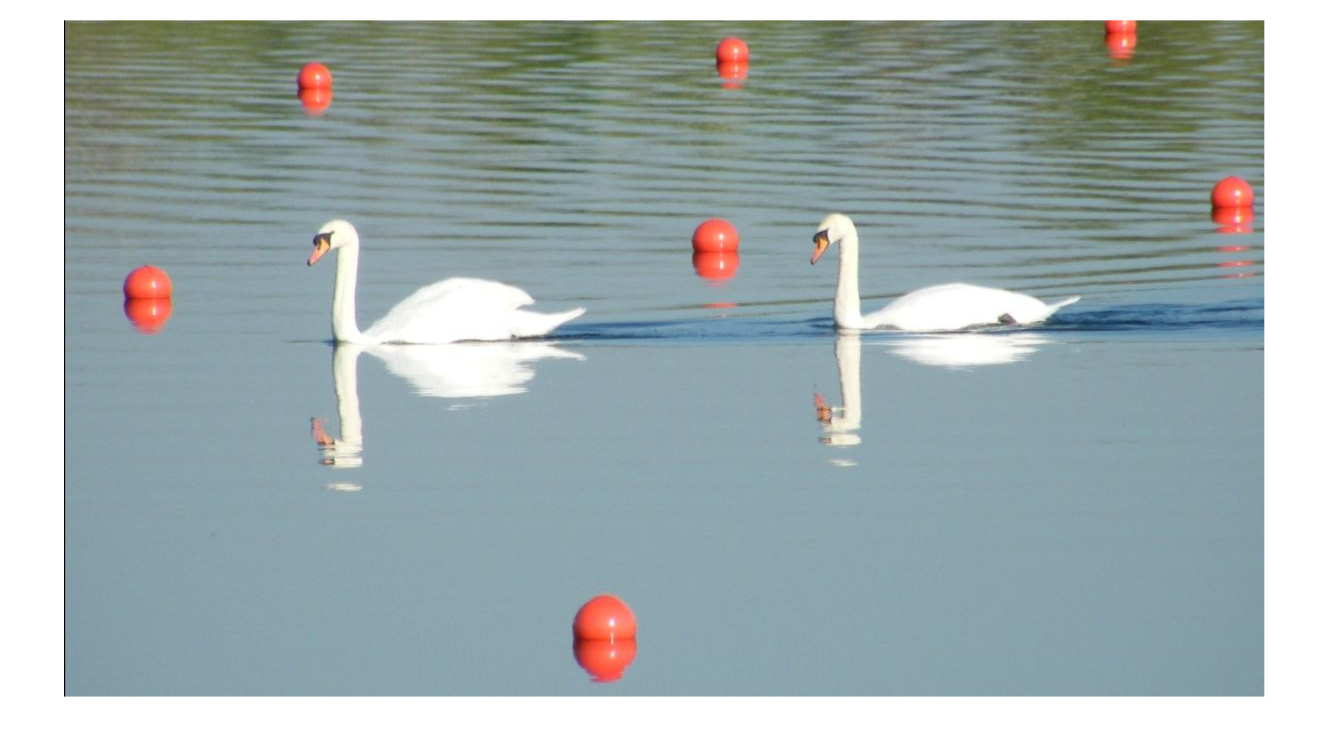
A well-built racecourse with its straight rows of buoys can present an imposing sight, yet its beauty and usability depend primarily on the condition of its invisible parts, that is, on the underwater supporting structures and the pulleys, shackles and wire ropes attached to them. Despite the carefully chosen corrosion-resistant steels, the components nevertheless require maintenance over time; the regularity of that maintenance and the replacement of worn components are what can ensure the long-term technical sustainability of a course, and thereby the satisfaction of the athletes, the organisers and the public.
These pulleys can be found in Menet-Trend’s range, so if you use such items, get in touch with us on +361-453-7060, or at the info@menet-trend.hu email address! We have been the stable suppliers of industry for more than 30 years – you can rely on us!

Did you find the article useful? Read our posts on similar topics too:

Leave a Reply