
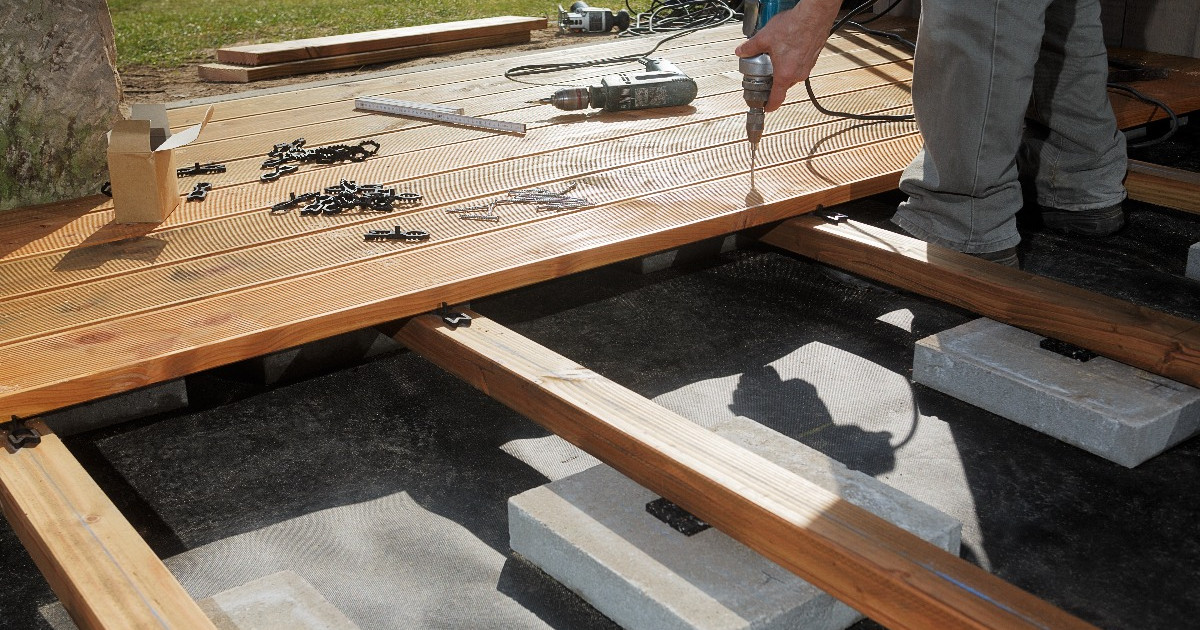
A look inside wood, or screwing safely, quickly and rust-free.
Wood dries, warps, cracks, sometimes gets damp, changes and moves. Is that not annoying at times, when we want to work with it – or when we no longer want to work with it? But what are we to do if we love wood, because it is a natural material, and the space it makes is pleasant, somewhere we like to be, radiating a kind of warmth, even intimacy?
Wood and the screw – a special relationship
When we work with wood, we try to ward off every problem that arises, as best we can.
There are many kinds of wood and many technologies, but we are primarily interested in the factors of fitting, since it is for such and similar properties that we have to offer you assembly solutions.
That is our starting point.
Why does wood split when screwing – and how do we prevent it?
Wood can split when we screw into it because it has a grain direction, and if a steel wedge braces itself between its fibres, then at first glance that wedge is indeed the stronger, and the wood gives in. (Of course, the game is not over yet, because in time the wood starts to warp, and it may even happen that in the end it tears that screw apart after all.)
Splitting can be avoided by driving the screw into the material not by forcing it, but by forming a proper hole.
Drills exist, you can pre-drill away, but why, if you do not have to?
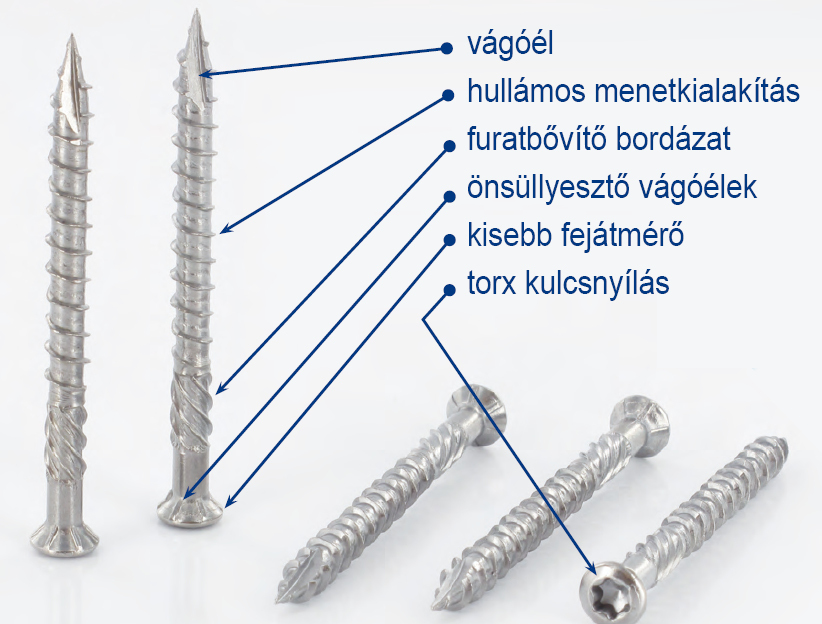
Self-drilling and self-tapping wood screws serve to replace this operation:
The stress can be reduced further if the lead section of the screw contains a so-called milling part, which widens the hole slightly above the diameter of the screw shank – this results in a somewhat looser fit, which helps to avoid splitting. Near knots it is better to be careful, and if we must screw there, then we should rather pre-drill.
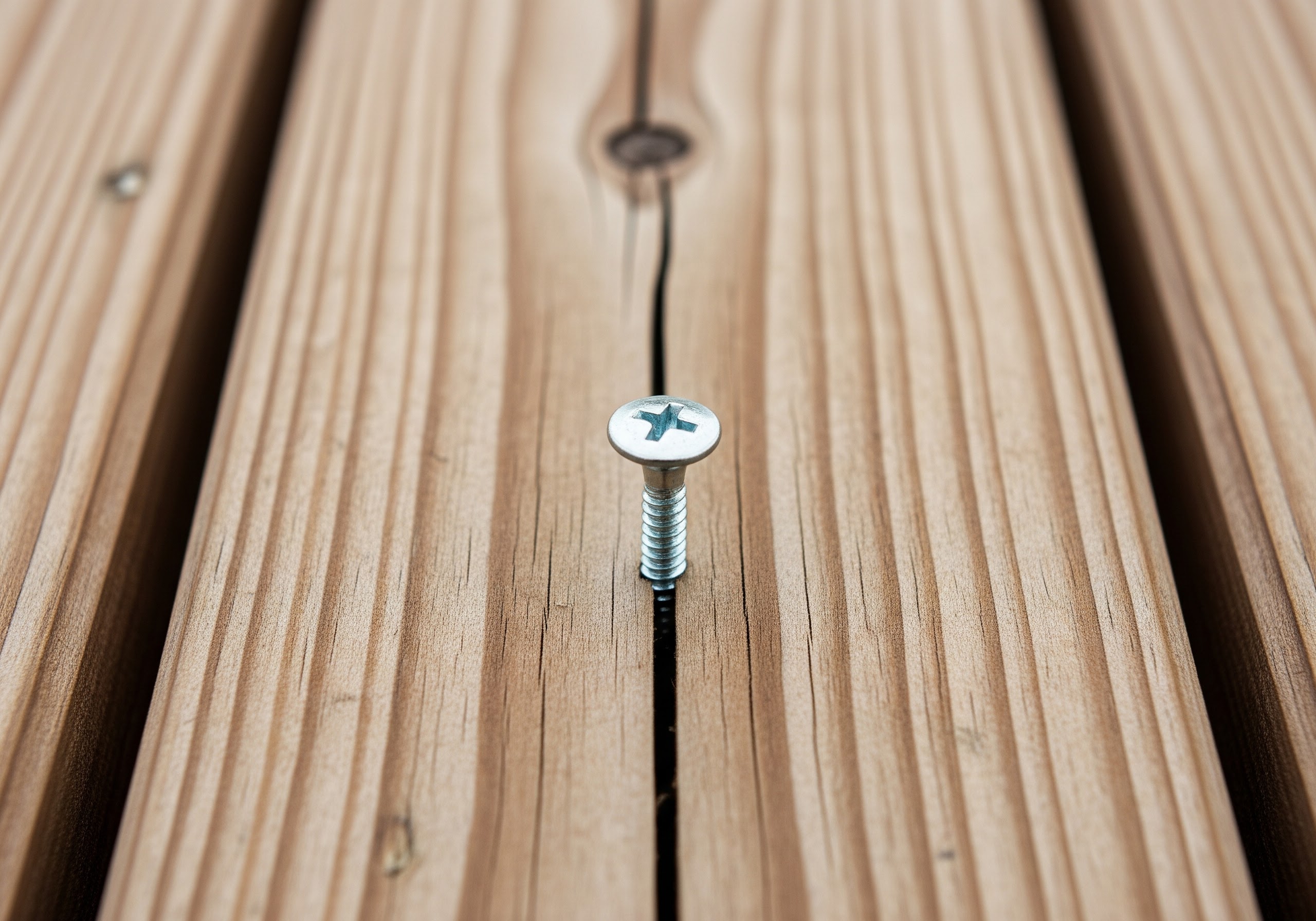
The self-countersinking head – another operation that can be saved
The next section that can stress the material is the head of the screw, especially if it is countersunk.
To eliminate this there are self-countersinking heads, on which ribs formed for this very purpose remove the wood fibres from the head’s path – so there is no need to pre-countersink, because the screw does this for us too.
Cross recess vs. Torx – let us turn the head!
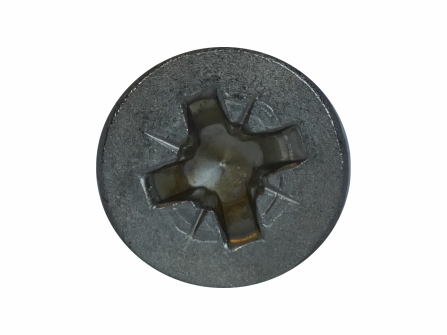
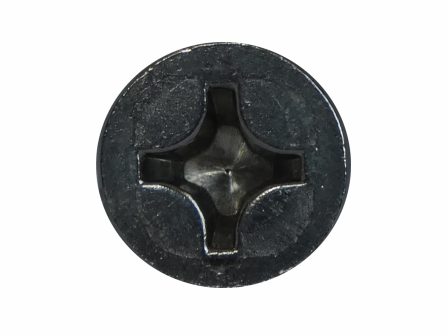
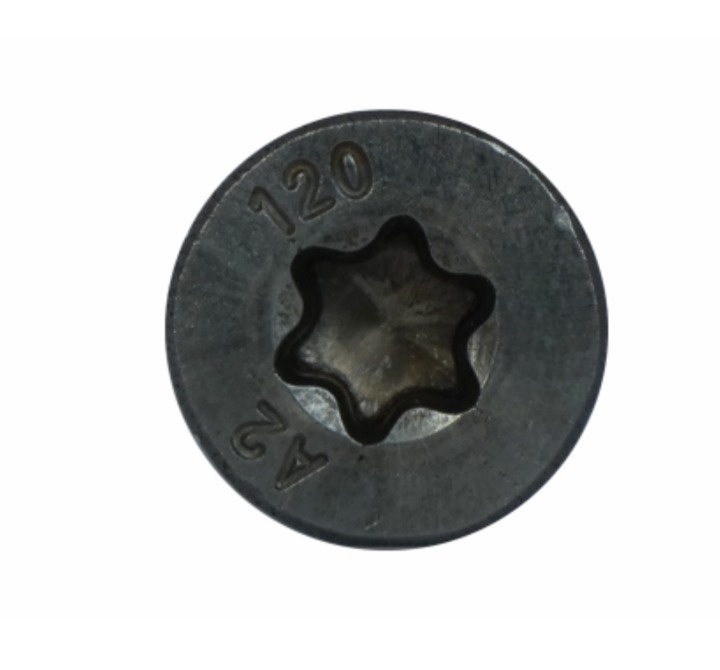
Let us turn the head and look inside! In the 1980s we could still meet straight slots here, then from the 1990s the Phillips and Pozidrive cross recesses began to spread – which are still much easier to work with, but the greater the resistance of the wood, the more force we have to exert through the screwdriver. What a good feeling it is when you are making progress with the work! Not so when the bit keeps twisting out of the drive!
Cross recesses unfortunately transmit force with relatively low efficiency – they let go, and when the bit twists out, in the worst case both the drive and the bit are damaged.
That is precisely why in the most modern wood screws we nowadays see a Torx drive instead of a cross recess. This kind of drive is more obliging, and does what we expect of it: it turns the head, and the head turns the shank – the screw goes in more smoothly and faster than ever before in the history of screwing.
Choose Torx-drive wood screws instead, if you have the choice!
The broken-off screw head – and how we can prevent it
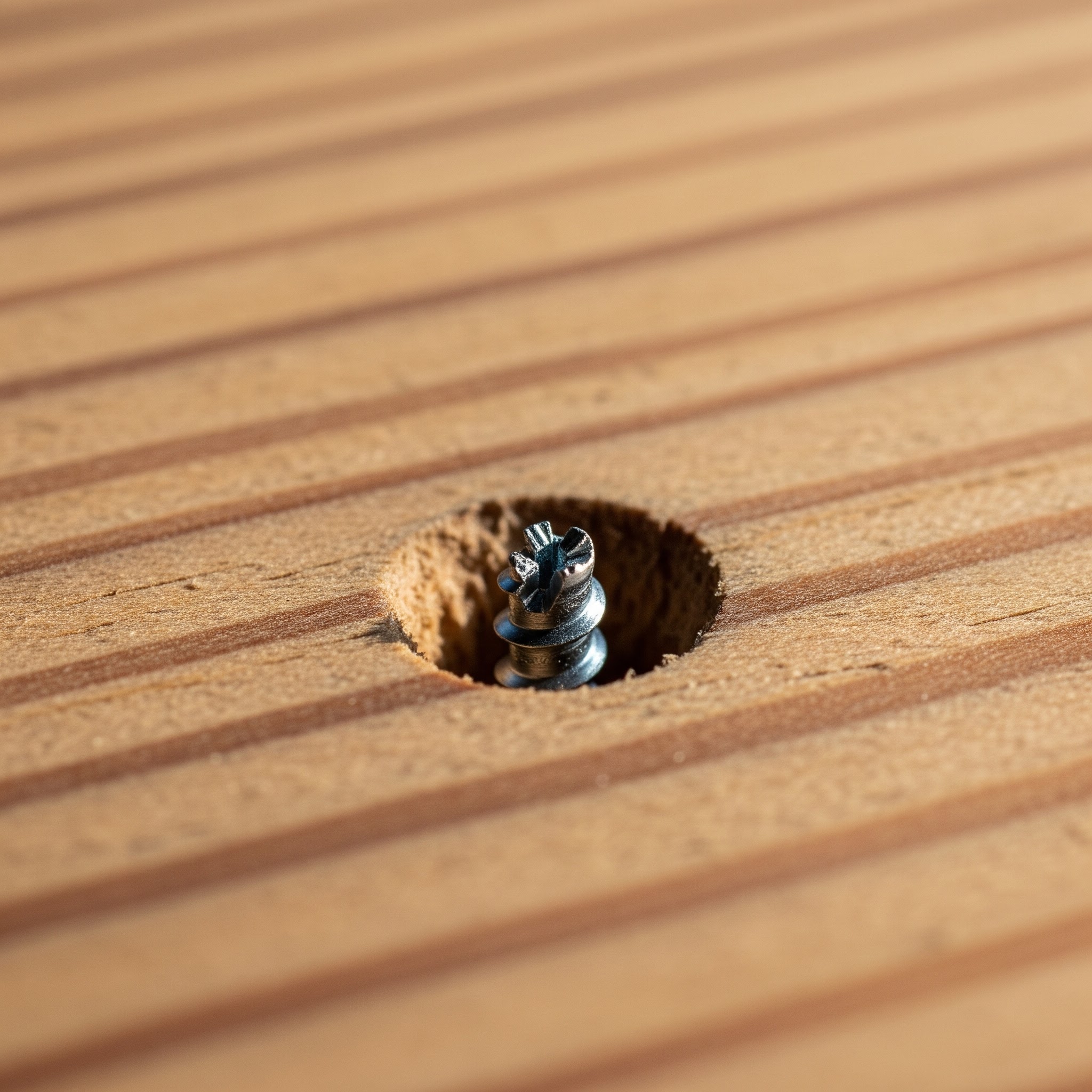
Once we have made driving easier, an unpleasant surprise can still await us if we hear a little crack in the wood – that is the moment when the screw binds – and then a moment later just this much: “pop”, and the screw head has already broken off.
Now what is one to do? Drill beside it and pick out the broken-off shank with pliers, or leave the whole thing and start again with another piece of wood? That soup will come dear if there are many such pieces of wood in it!
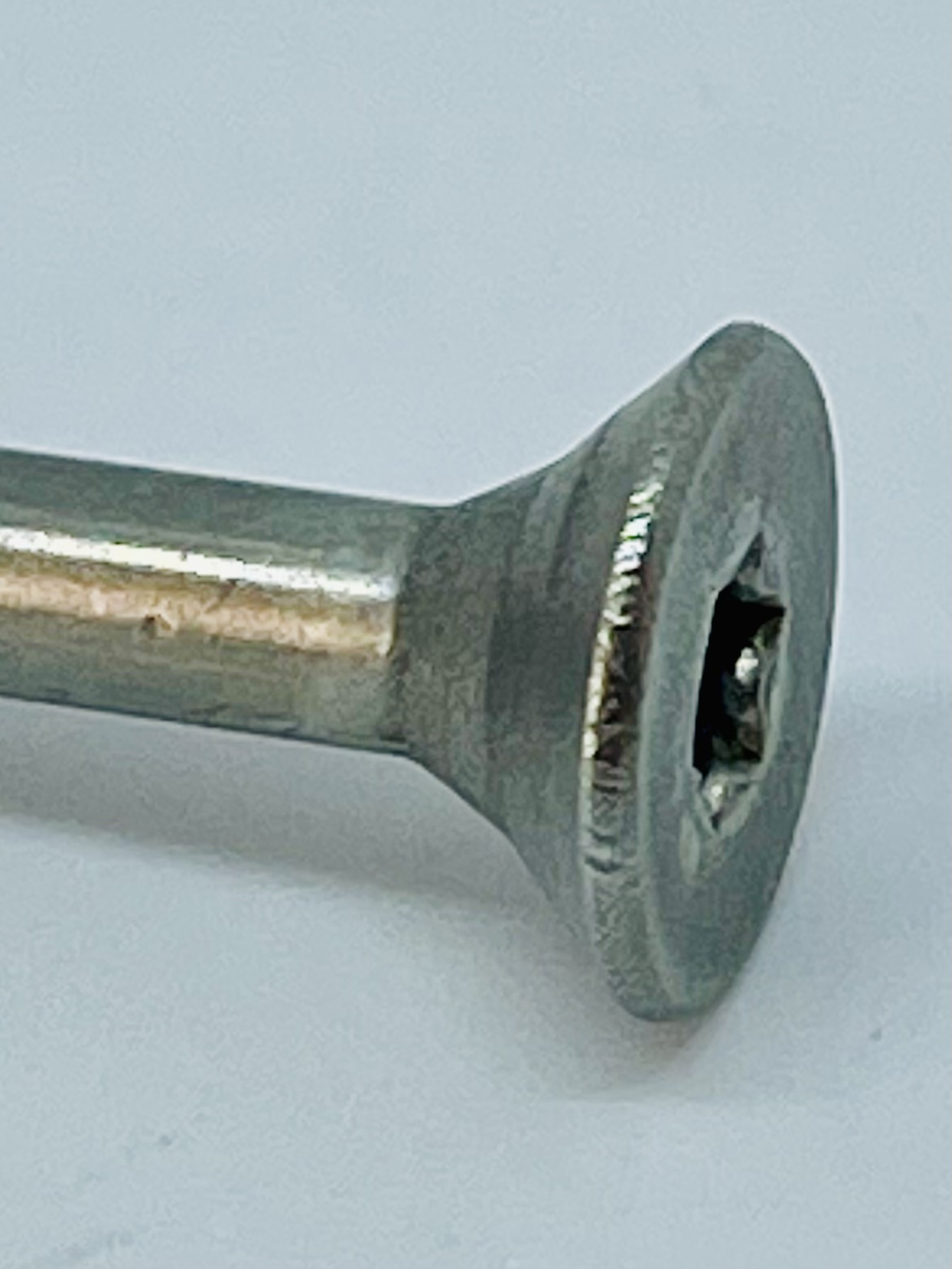
And we would very much not like to be mentioned often in soup matters – which is why the heads of our next-generation wood screws are reinforced. At the meeting point of the head and the shank there is a neat little thickening: that is the point where heads tend to snap off, and which had to be reinforced.
We hope that you will hear neither a crack nor a snap again, and will not have to rack your head over it either – just get on nicely with your work, the way you like it.
A rust stain is ugly, but stainless stays ugliness-free
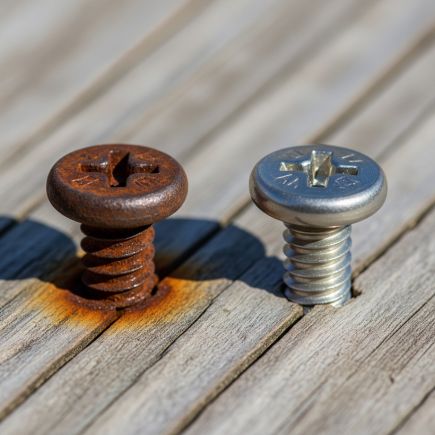
The fasteners available from us are for the most part stainless – you need not worry about either rust or the quality of the material. Stainless screws are stronger by default than their steel counterparts, and they resist the weather too. On carefully designed outdoor wood surfaces the rust will not run in time, if you fit them with such screws.
Terraces, railings, outdoor wood cladding, façades, stairs, wooden houses, playgrounds, fences, saunas… You do not want to put such things together with cheap galvanised screws, do you?
It is not certain that unpleasant surprises will hit you straight away if you do this – but at the latest when you do one day have to take apart what you threw together on the cheap, you will find that the iron screws have rusted into the wood. A few such little “crack–pop” noises convince a person that they are far better off working with NONOX stainless wood screws next time. Do not wait for that!
Hardened by heat treatment or work-hardened by drawing – which is needed when?
A2–A4 grade austenitic stainless screws unfortunately cannot be hardened by heat treatment – instead they are work-hardened by drawing, which is a fundamental part of the manufacturing process, not hocus-pocus.
If that is not enough, because the wood is very hard, then you can order from us hardened NONOX stainless screws with a martensitic material structure, designated C1 – these cope with the toughest nut too.
Driving-easing coating – so that even a long screw can be driven in easily
Stainless steel does not need surface protection, because it is stainless throughout its material – its protection is provided by the oxide layer that forms on its surface. However, a little lubrication can come in handy for NONOX wood screws too: they can be driven into the wood with less resistance, which matters especially with long screws.
Some of our next-generation wood screws are therefore fitted with a special driving-easing coating.
Drawing layers together – the advantage of the partially threaded screw
When we fit two materials together, they tend to move apart a little – in the upper layer the screw turns more easily than it can penetrate the layer beneath. There are places where we do not even notice this, but there are places where it is ugly and unacceptable.
Two solutions present themselves:
The hole-widening ribs are a short, 1–2 cm section on the shank of the screw, which removes the thread from the upper layer and widens the hole so much that the shank can pass through without resistance – and thereby the layers draw together nicely.
Would you like to know which next-generation NONOX wood screws are at your disposal?
+361-453-7060Request an information brochure from us by post! All you have to do is call this number: +361-453-7060, give the address – and by the next day the material that makes choosing the most suitable screws easier may well already be with you.
If questions still remain even after this, feel free to call our colleagues – they are surprisingly helpful, you will experience that at once!

Leave a Reply