
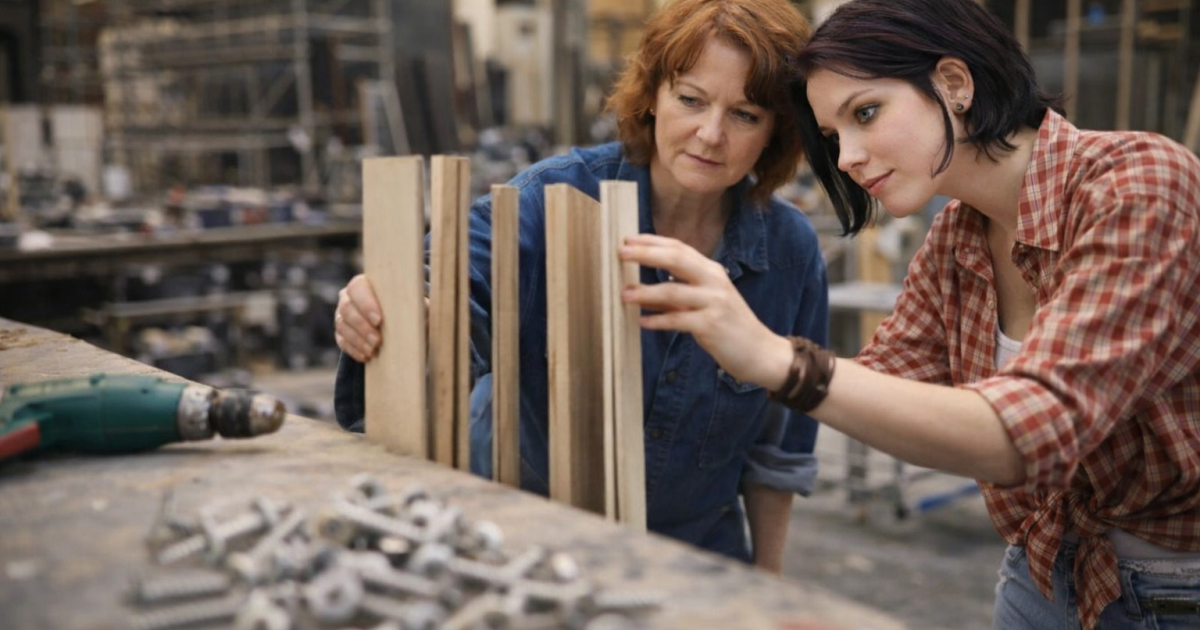
I have got used to this smell — of the glue, of the paint, of the sawdust. When I walk in here in the morning, into my studio, all I know is that I am home. The things that surround me here are the ones I have somehow grown used to. I keep things roughly in order, so that everything is where it usually is if possible, but a casual observer may not find it as tidy as I do. Especially when I am working. I came here thirty-three years ago as a decorator; back then others still directed my work, today I rather just do it, because I know it inside out.
A set is not a shop window. It is not enough for it to be beautiful. It has to be carried, pushed, lifted, fixed in the dark, when things are slipping, nervously and in a rush too, as tends to happen. If something does not hold, that is not an aesthetic question here. That is trouble.
I work with everything I have to: canvas, leather, imitation leather, fibreboard and plywood, aluminium, copper, tinplate, glass, Plexiglas. Each behaves differently. Some give, some crack, some stay in one piece only if you know where you are allowed to take hold of them. You do not learn these from a book.
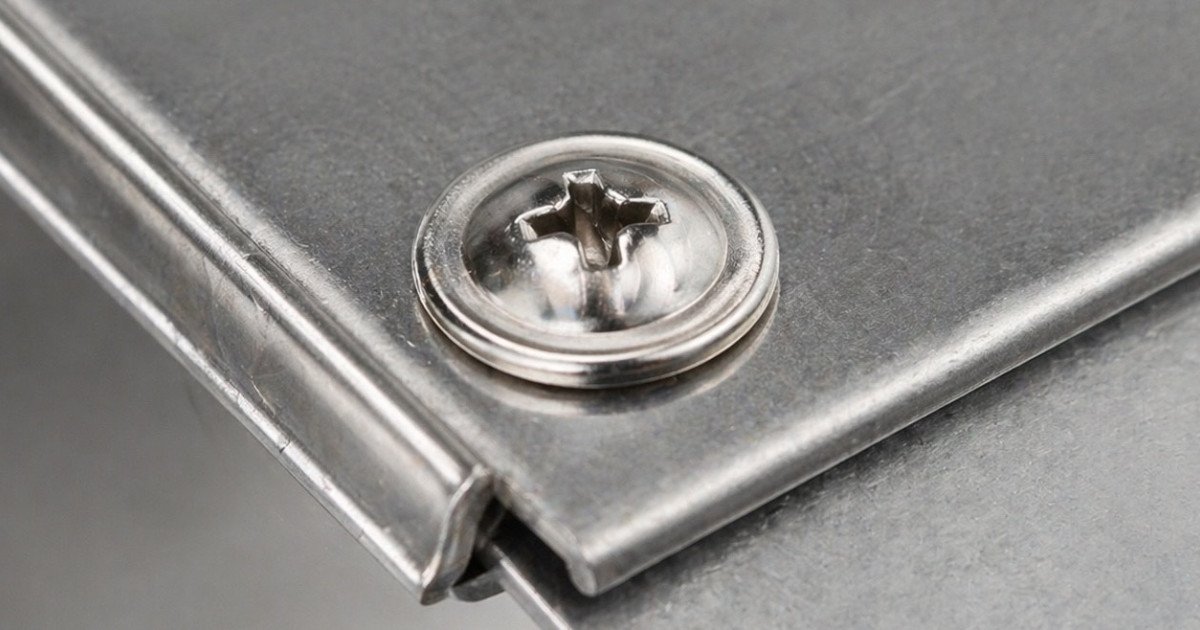
When my master, from whom I learned all this, retired, there was no great handover. That day too I simply stood in front of my sets and knew that from then on I had to solve this alone. I have always had screws I was fond of. Sometimes a wider, flatter one is needed, sometimes a more decorative one, sometimes the clunky one is the right one. The wide-headed ones, though, seat far more nicely. They do not harm the material, they do not tear out when we move the set. The good thing is that these need no washer, they do not catch on anything, and somehow the whole structure is “calmer” for them — and so am I.
It was not always like this. When I started, there was not yet such a choice of screws. I could almost say that we worked with whatever we could get hold of. Back then it still came down to good connections. If the material was thin, you had to be clever. We put a washer underneath, sometimes a scrap of leather, sometimes a little cut-out plate, so that it would grip over a larger surface. Of course, everything could be solved. We made what had to stand up back then too. There was just more trick, experience and improvisation in it.
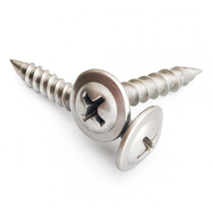
These wide-headed, flat screws, for example, appeared much later. Not so long ago, if I think about it. When they first came into my hands, I was delighted. Not because they were new, but because at last I did not have to work out separately for everything how to spread the pressure on a delicate surface. These simply seated, neatly and securely. I have used them a lot ever since, wherever I can. Well, not always, of course. There are times when something else is needed, because the work demands it. But these are somehow closer to my heart than the rest. You really can count on these when the material is more delicate, when tearing out or an ugly mark is out of the question. I have other favourites like this, but this is one of them, that is for sure.
Someone once said that these have a name of their own. “Opel screw” — that is what he said. I smiled to myself about it. I do not know why they are called that. To me these are just good screws. The kind that do their job. Not loud, they just hold. Sometimes I even paint them over so that they do not show at all, though these are always in invisible places anyway.
Nor would I say that I necessarily need stainless. I typically work indoors, for indoors. It does not rain in here, nothing stands out in the open for months. But I found these screws here, at your place, and I have been buying them from you ever since. So as it happens these are all stainless. That is how it is. It suits me. I have a good relationship with you, you always have what I am looking for and you give good prices. I have no reason to switch.
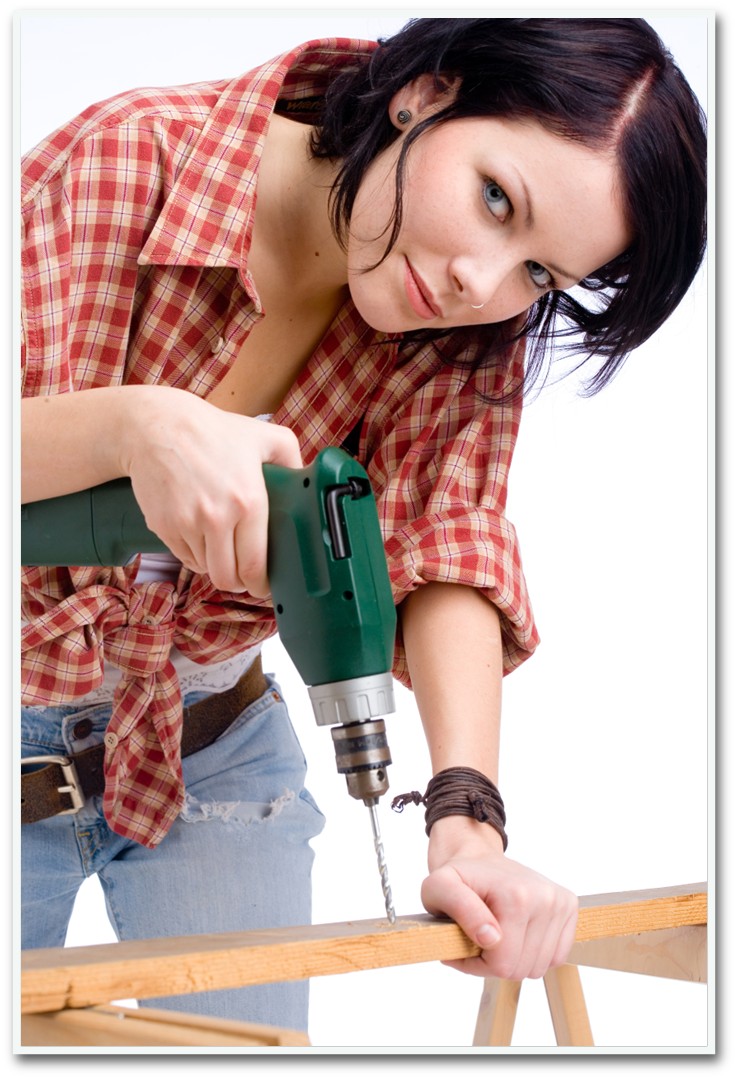
I even recommend these to my acquaintances. This is how I put it to them: “do you know the Opel screws?” Most of them are surprised by this. No, they do not know them. My work is varied, and so I have contacts with upholsterers, tinsmiths, decorators and restorers, and even with the maintenance staff of public institutions and with panel beaters. I have realised by now that these Opel screws are useful to everyone who works with textile, leather or imitation leather, fibreboard or plywood. They are good for aluminium sheets too. There are things I think you do not even have to pre-drill for; with textiles and leathers, though, rather yes, but only because otherwise it winds the material up.
Today I have helpers, deft-handed, quick, with a good eye. And I stand somewhere near them, and if something is more delicate, they call over. I look at it, feel it, and say that I would put this one in here. Maybe elsewhere they do it differently. I do not argue. I only know that here this has worked.
I have two grandchildren. It happens that they come in to a rehearsal. They sit in the dark, and when the set changes, I am proud, because the work of my hands and many years of experience are in it. I do not point it out, I do not say it, it is simply a good feeling that it stands there the way it should. That it can be moved. That it works.
The material, the glue, the hand, the screw… This is my vocation.
MM is who I am, but everyone just calls me Margó, and there is a reason for it: I generally fasten at the margin. I am a full-time set designer and, in my second job, a grandmother.
Off to the shop:
Leave a Reply