
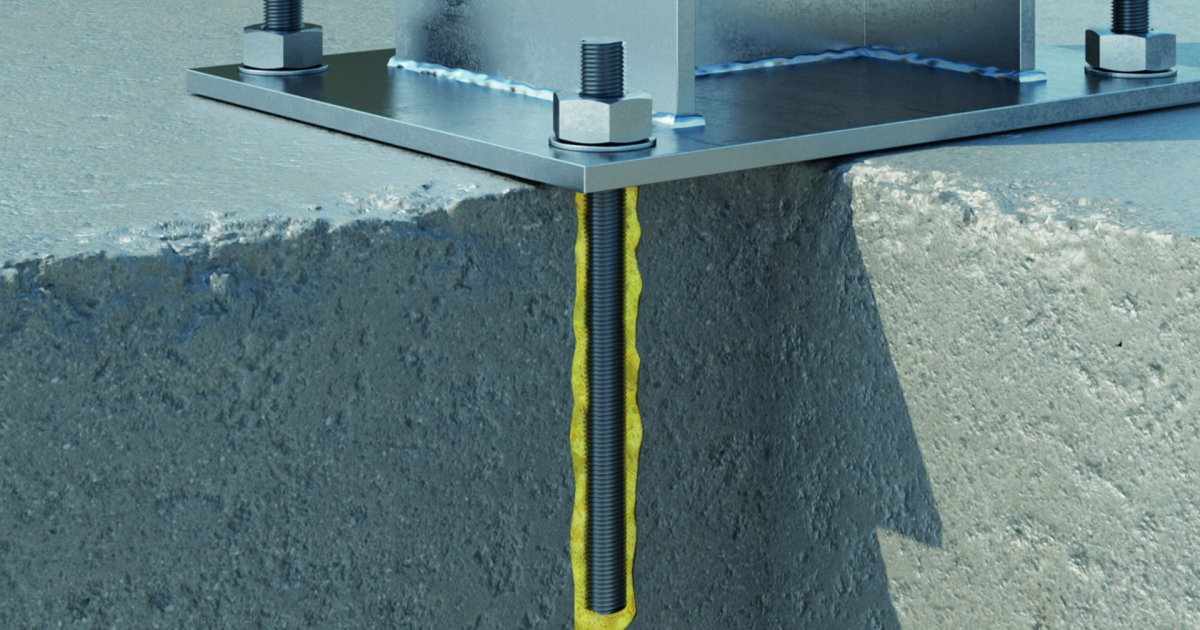
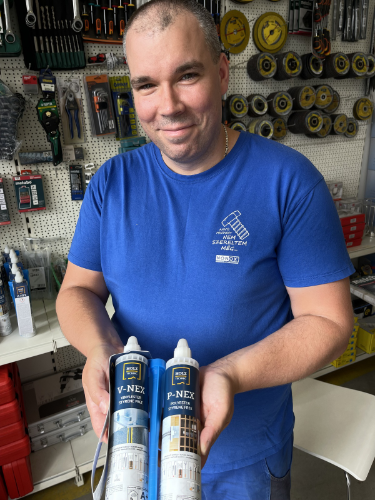
P-NEX and V-NEX concrete adhesives
The P designation refers to polyester, the V to vinyl ester. Both concrete adhesives are simple to apply and provide a high-strength bond without a wall plug or anchor in solid building materials. The comparison table below sets out the possible applications.
The basic procedure is the same in both cases
- 1.Pre-drilling
- 2.Cleaning the hole free of dust
- 3.Injecting the adhesive into solid material free of air bubbles (for hollow brick, a mesh must be inserted beforehand!)
- 4.Inserting the threaded rod cut to size
- 5.Waiting out the temperature-dependent curing time
- 6.Mounting the object to be fixed at the maximum tightening torque
Comparison table of basic properties
Click and choose!
Concrete adhesives in the online shop*styrene, in Hungarian sztirol, also known as vinyl benzene: styrene is an aromatic hydrocarbon with an unsaturated side chain. It is a colourless liquid with a pleasant (sweetish) smell and strong refraction. It does not dissolve in water, but many organic solvents dissolve it well, and it mixes without limit with alcohol and ether. It is found in coal tar. It is a long-known compound. Formula: C8H8 (Wikipedia) Expanded or extruded polystyrene is well known, among other things, as an insulating material in construction (Hungarocell, Nikecell)
*VOC: Volatile Organic Compound, that is “volatile organic compounds”; VOC is the collective name for hydrocarbon derivatives that are harmful when inhaled. (E.g.: Xylen, Methyl Benzene, Ethyl Benzene, Formaldehyde).
*LEED: Leadership in Energy and Environmental Design, a renowned American green-building certification system.
*LEED IEQ Credit 4.1 – LEED’s certification for low-emitting materials
For further detailed properties, click the product names of the adhesives in the header of the table above!

Leave a Reply