
The claim that “there is only one nut” is technically unfounded – and we have physical evidence for it: on Earth the hex nut is a basic form element which turns up in every area of our life. The fruit of the union of the nut and the screw, however, is not the washer but the assembled structure. The basic building block of society is the family, and of the world constructed by man it is the bolted joint. We set all these statements down right at the beginning because many kinds of nut exist in industry whose function and form are similar, but whose fields of use are different.
“Standard nuts”
Let us start from the normal hex nut mentioned earlier (DIN 934) as the basic version. It is generally widespread in every area of our life; we use it everywhere from the assembly of spectacle frames to bridge building. These normal hex nuts are available in stainless and acid-resistant versions as well. Different standards may specify different proportions, thread types and material grades, but fundamentally we are talking about the same structural element in every case. I tighten a right-hand nut to the right and undo it to the left: this is one of those movements which we learn in childhood and which becomes thoroughly ingrained. It is like writing with a pen. With it we can throw anything together in minutes, if everything is well prepared.
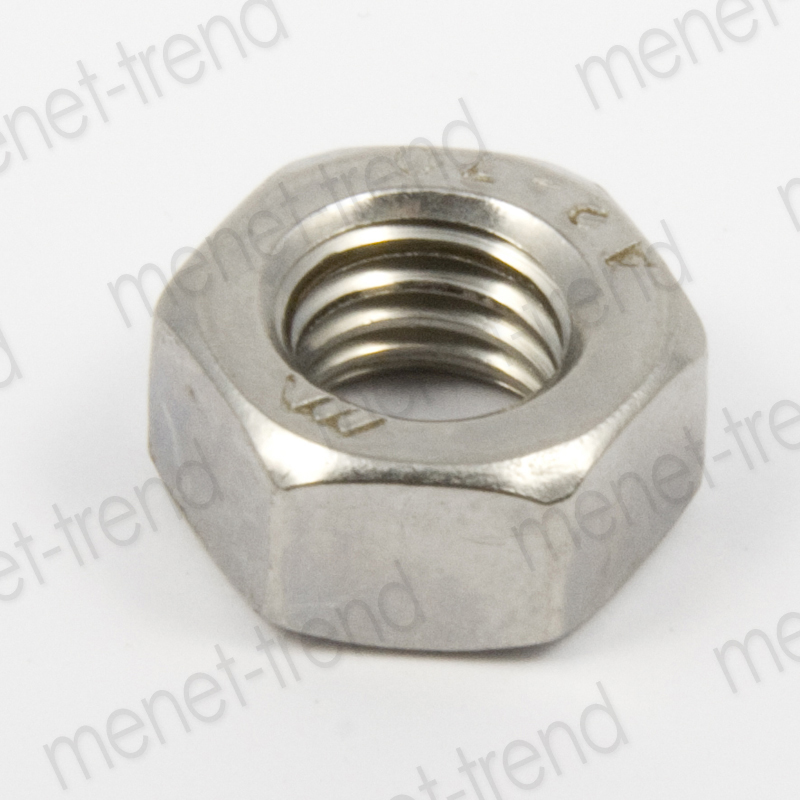
DIN 934
“Easy-to-handle nuts”
Understandably, we cannot always have a spanner or socket set in our pocket, yet we still have to perform that “wind it on, wind it off quickly” movement somehow. Nut types that can be fitted by hand were invented to solve this problem. Such are, for example, the NONOX stainless wing nuts (DIN 315), or the endless store of nuts with plastic, bakelite or metal housings. The two-armed NONOX stainless butterfly nut (DIN 80701) was invented for extremely fast closing and reopening of hatch covers.
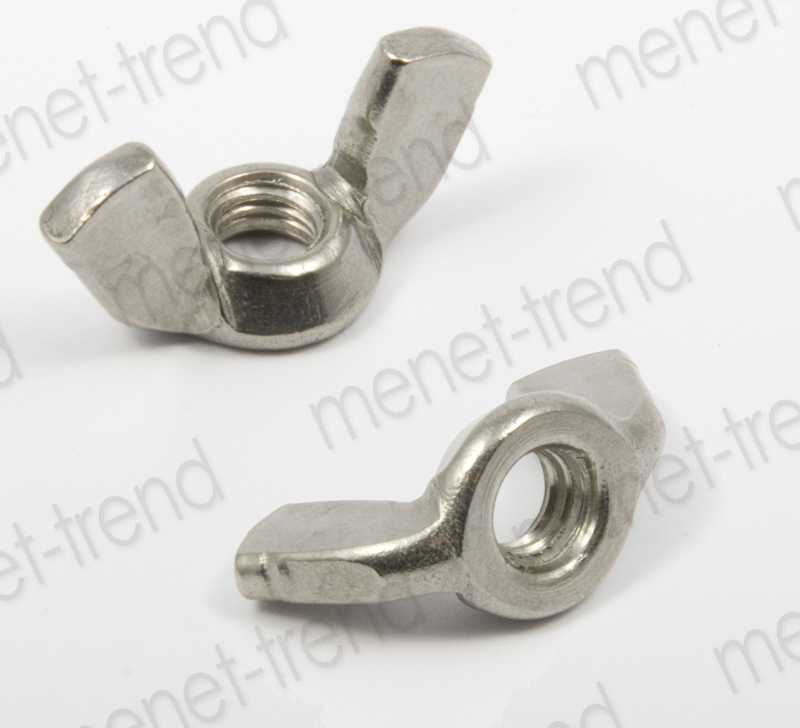
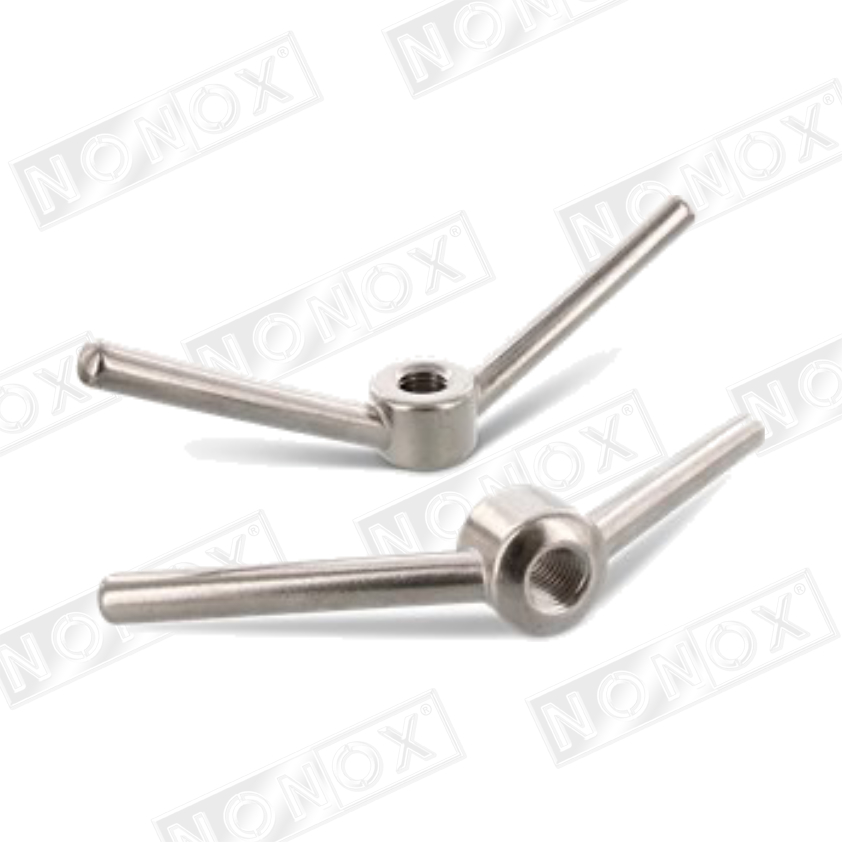
DIN 315 DIN 80701
“Closed-off nuts”
It is worth thinking about a closed nut when it is certain that the screw shank does not protrude significantly beyond the height of the nut, but we have to cover it for occupational safety or aesthetic reasons. Several kinds of NONOX acid-resistant closed nut are available; one of these is DIN 1587, the “tall closed cap nut”, and its self-locking version is DIN 986, while the other kind of closed nut is DIN 917.
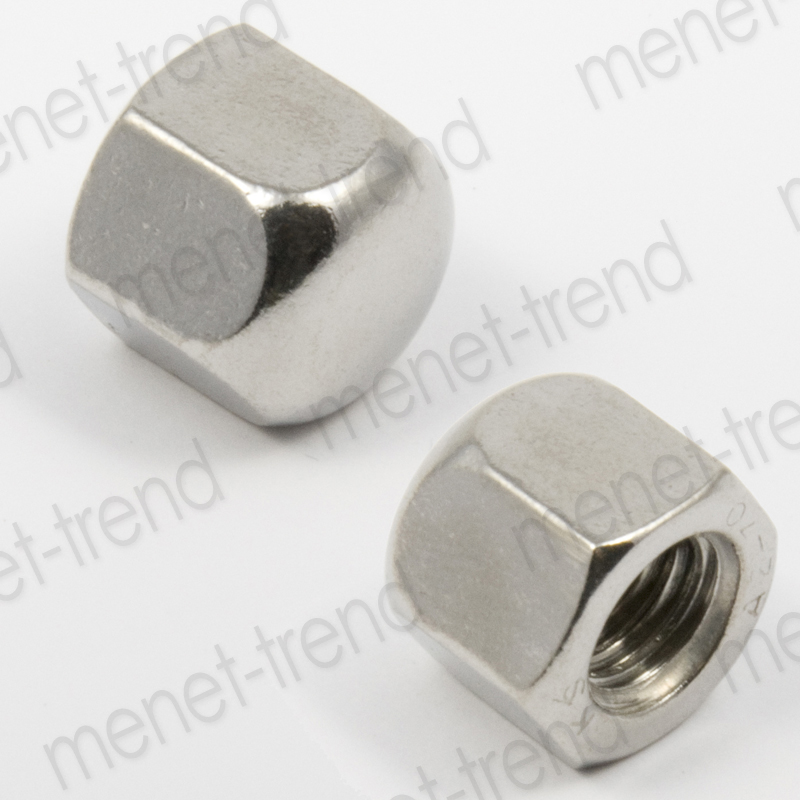
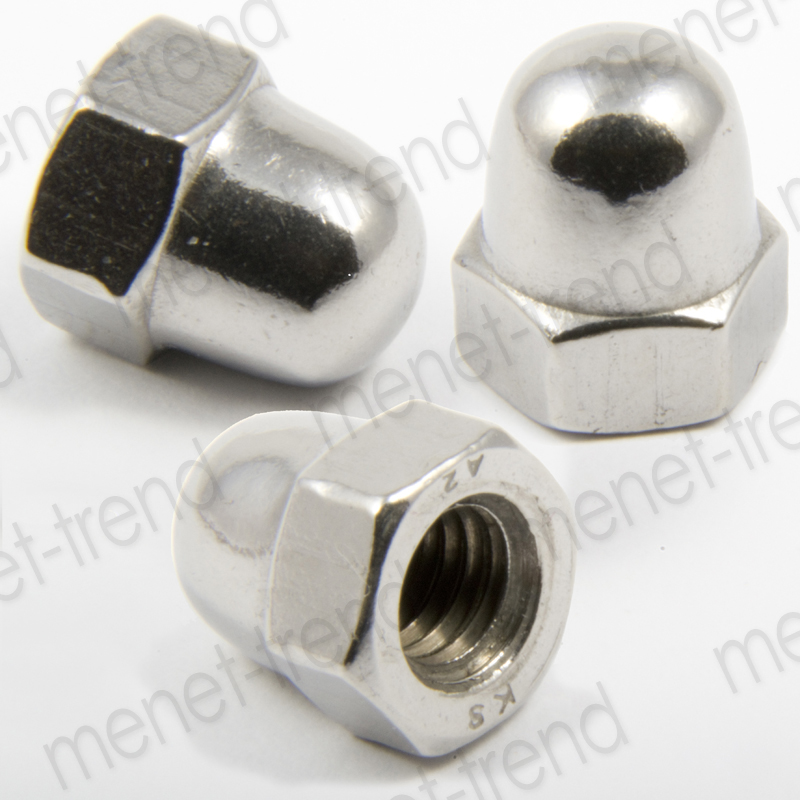
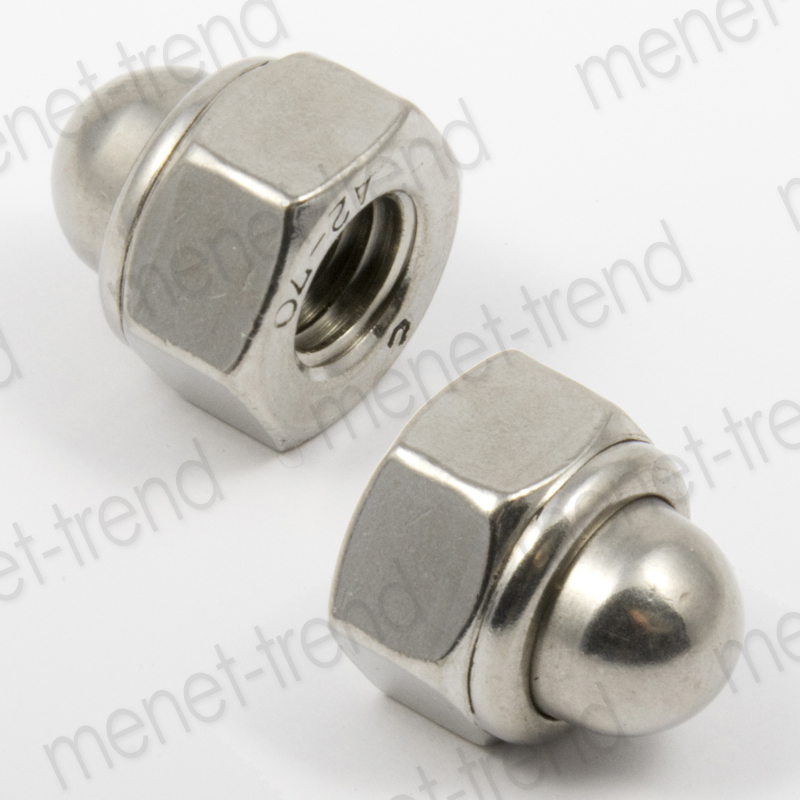
DIN 917 DIN 1587 DIN 986
“Multifunctional nuts”
Some nuts are also able to perform a few functions of washers, they need no separate washer, and on top of that an operation can be saved with them. DIN 6923, for example, is a flanged nut, available in stainless and acid-resistant versions as well, which has a widening base that completely replaces a conventional washer. It exists in both serrated and smooth-base versions. The serration – obviously important in the case of softer supporting surfaces, into which the serrations are able to press, and it is intended to prevent the unwanted turning of the nut. Where these indentations are not permissible, the smooth-base version comes on the scene.
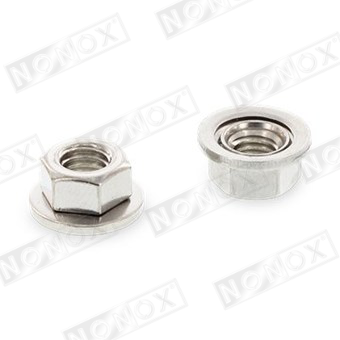
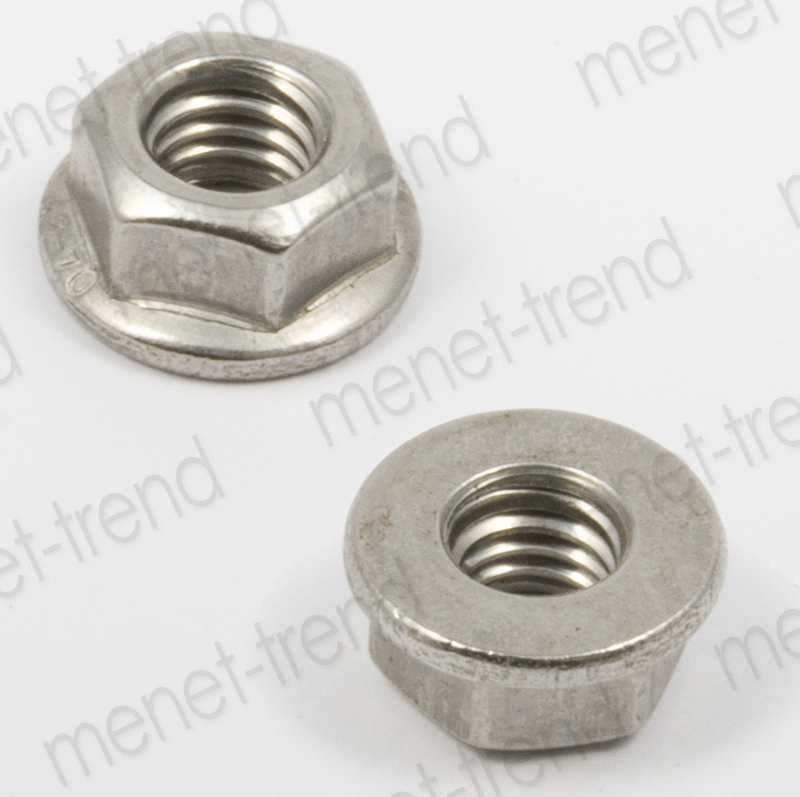
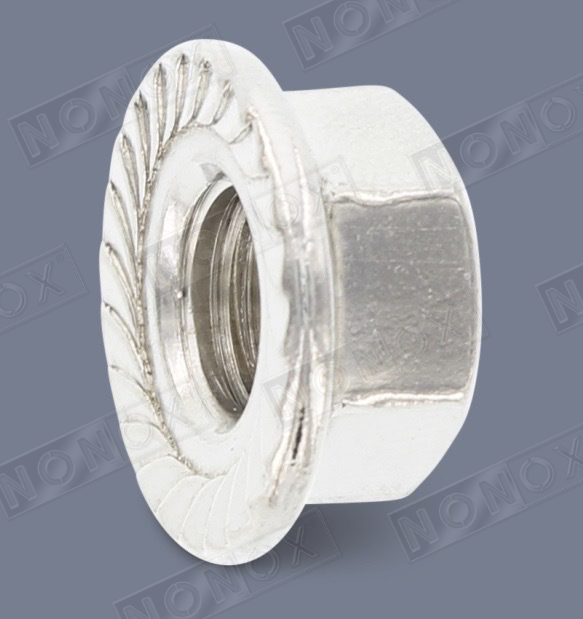
A 9085 DIN 6923 DIN 6923 serrated flange nut
The DIN 6331 version is not only flanged but on top of that taller than its fellows, so it can bear more load and is stronger, but the real universal champion among them is nevertheless the one recorded under item code 9085, which is a “combi” nut, i.e. a full-value nut and a full-value washer in one.
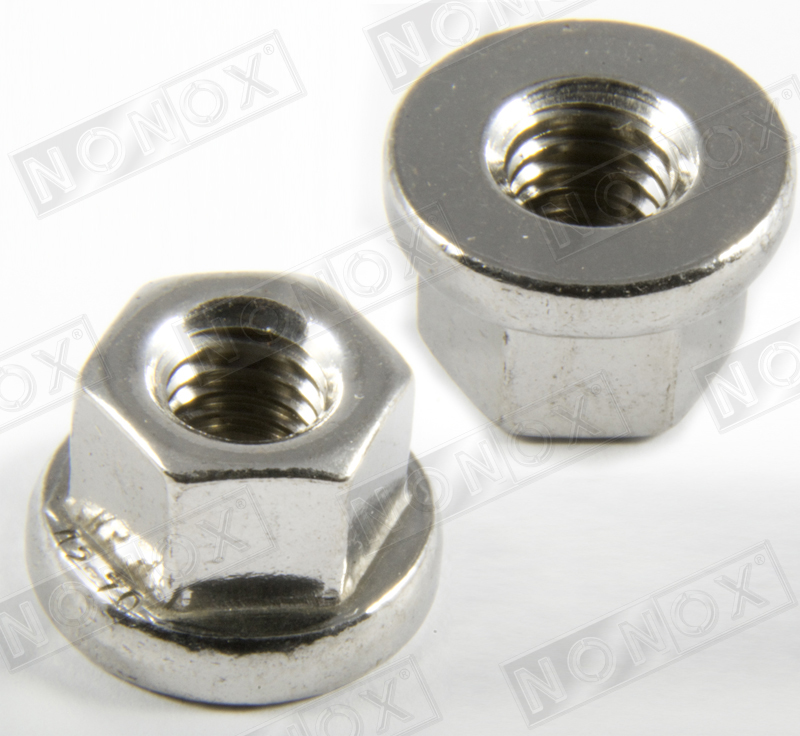
DIN 6331
“Tall nuts”
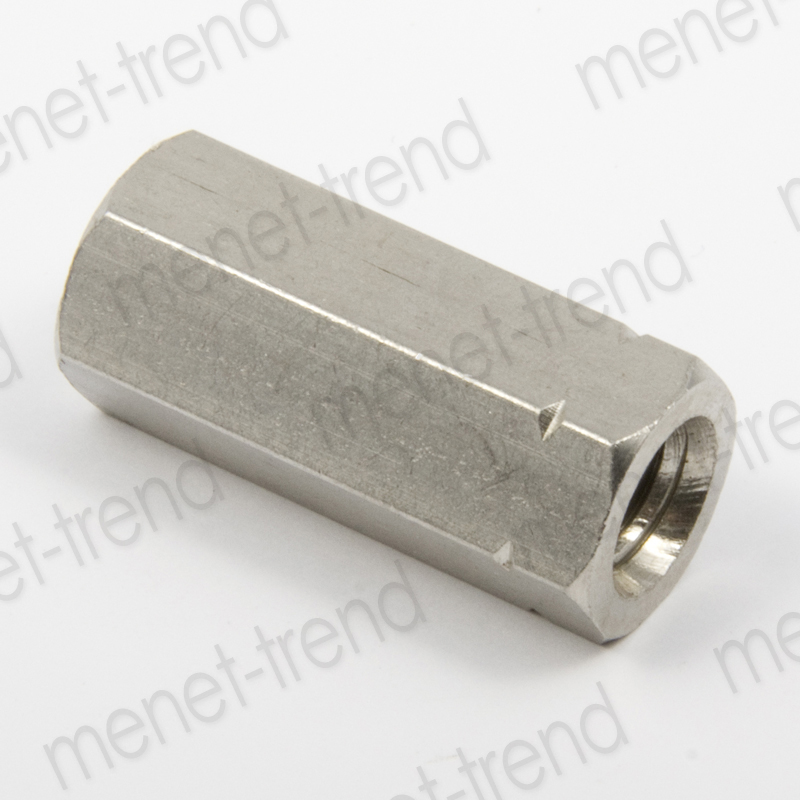
Sometimes the torque has to be distributed not, or not only, on the supporting surface but on the surface of the screw thread itself. Some tall nuts are made specially for this purpose (the DIN 6923, DIN 6330-6331 mentioned above), whereas others (such as the hex or cylindrical versions of the IFI 128) can also be used for extending shanks.
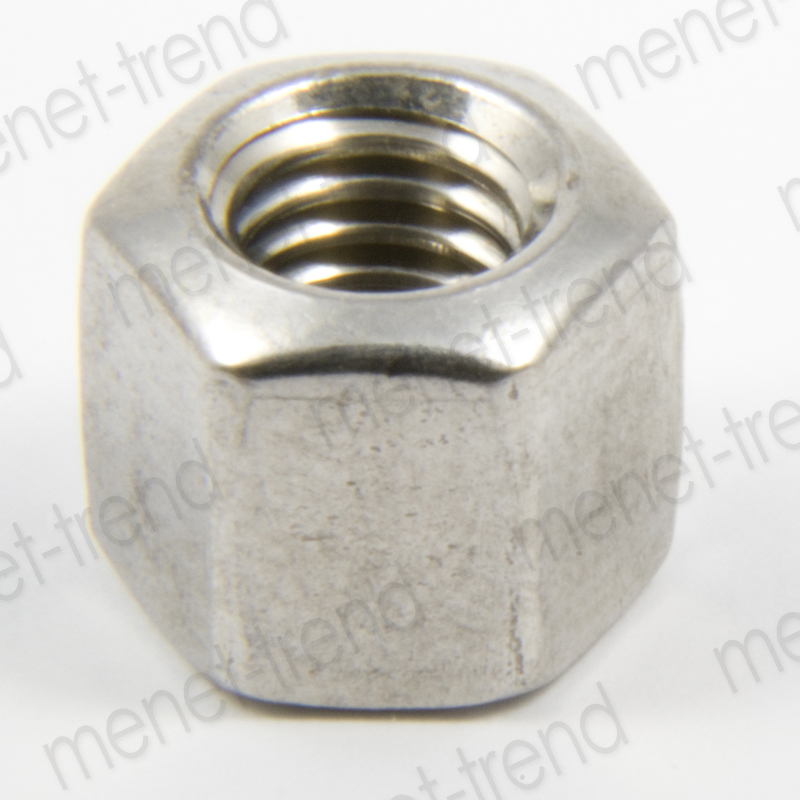
DIN 6330 DIN 6334
The IFI 128 mentioned above is the round one, while its sibling is the hex coupling nut; in other cases these also function excellently as spacers. Their little sister, the DIN 6334, is likewise a tall nut, but “only” 3d (where “d” means the diameter), i.e. its height is 3 times the diameter (and you do not need 3D glasses for it).
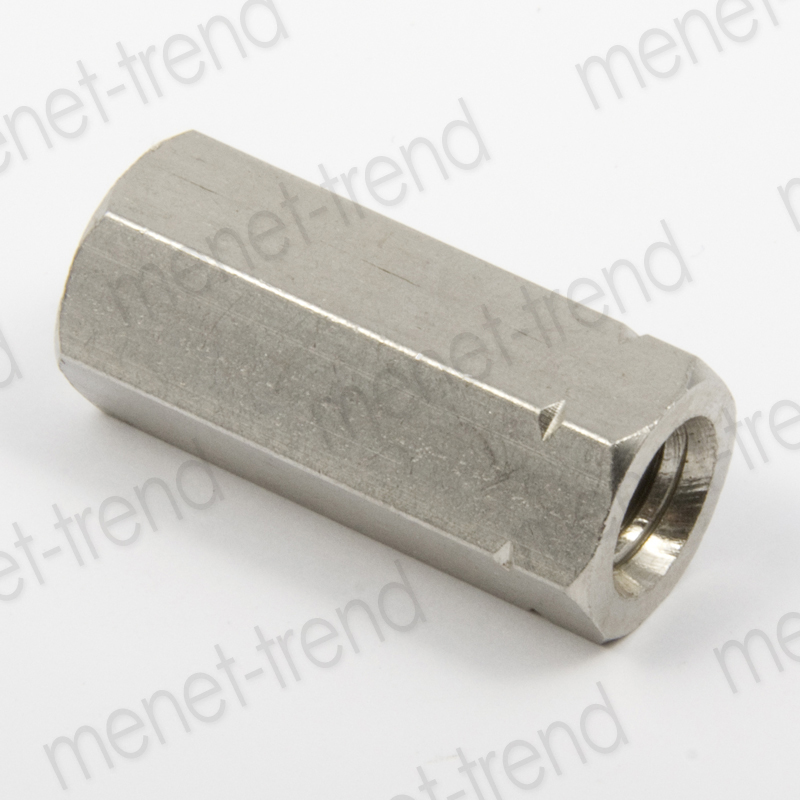
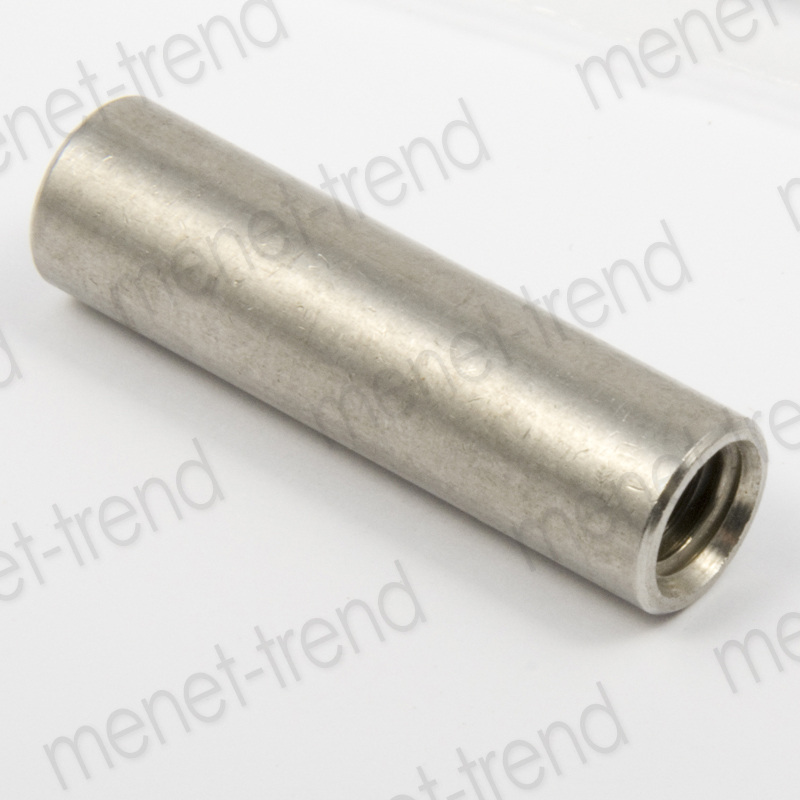
IFI 128 IFI 128
hex coupling nut round coupling nut
“The most stable nuts”
There is only one important thing we have not talked about, and that is the fixed attachment of nuts to the supporting structures. There is an ingenious method for this too, and not only one: welding, pressing, riveting, and in the case of wooden structures or softer metal castings, screwing in… Weldable nuts are different from their fellows because they have little feet functioning as spacers (DIN 928 square weld nut) or a flange (DIN 929 hex weld nut) for the filler material that forms, or contacts for the electrical discharge (9060 weld nut for thin sheets).
One thing is certain: a nut that has been welded on is stable, it will not move from there!
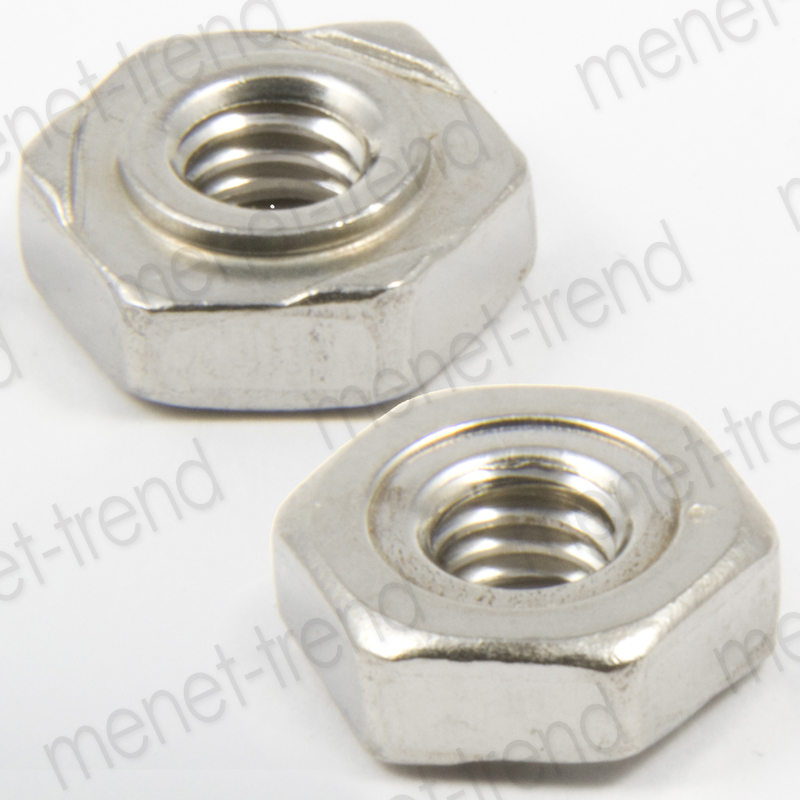
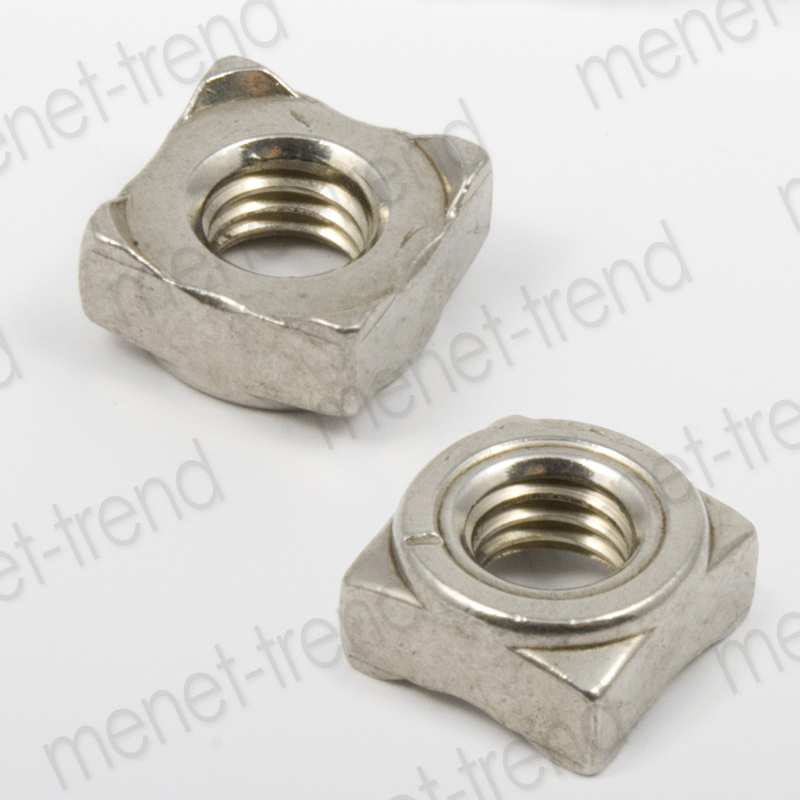
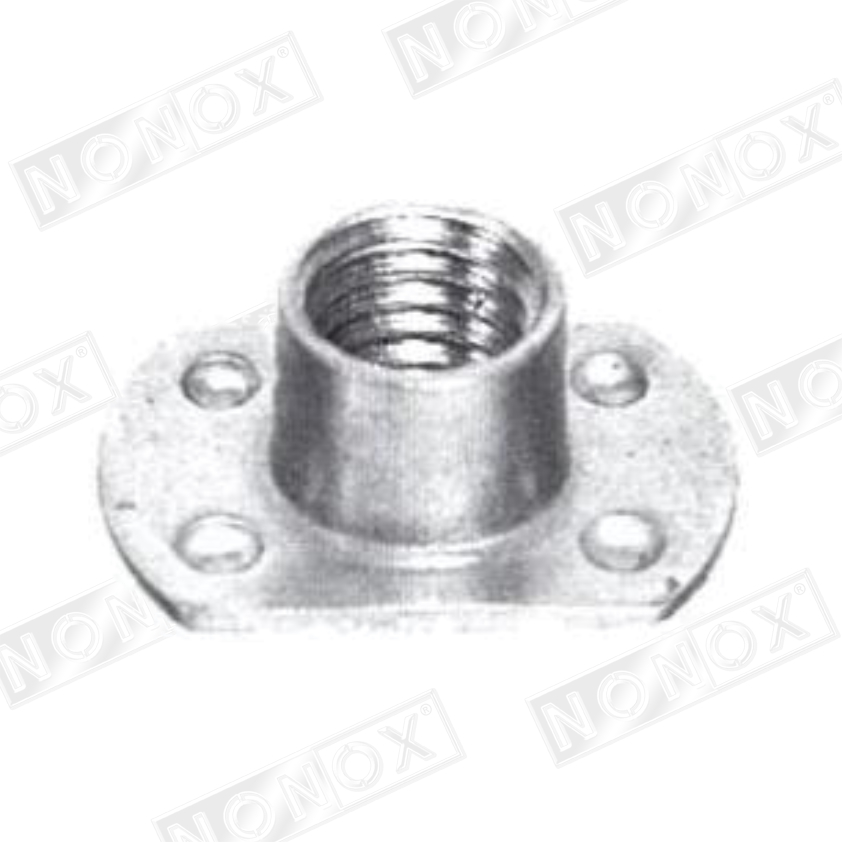
DIN 929 DIN 928 DIN 9060
“Cool rivet nuts”
Do we need to fix something quickly and simply to hollow sections, structural steel or tubes? This is where rivet nuts, or by their other name blind nuts, come on the scene. The sizing of rivet nuts delimits not only the threaded inside but also its outer diameter, its length and the thickness of the supporting structure (i.e. the clamping range of the rivet nut).
Let us choose the rivet nut of the right size, pre-drill with a drill of the size given on the box, wind the rivet nut onto the pulling mandrel of the setting tool so that the mandrel protrudes about 1 mm beyond the nut, insert the rivet nut wound onto the tool into the hole so that its head sits firmly on the rim of the hole, and finally pull the rivet nut fully with the correctly adjusted tool until the tool handles are closed! When we have finished this, unscrew the mandrel from the rivet nut, and finally fit to the nut the object we carried out the whole operation for! It is all this simple: 1.) drilling; 2.) pulling the rivet nut into the hole; 3.) fitting to the nut.
Of the standard-head rivet nut only the head shows out of the hole, which is no more than a 1,5-2 mm rim, and of the countersunk-head one not even that much, because the head blends completely into the surface. The latter may only be chosen with a suitable material thickness, in which there is room to countersink the head. If we want to play it safe, let us obtain a rivet nut whose neck section, under the head, is knurled, so that it is guaranteed not to turn during installation!
By using a closed-end rivet nut, moisture getting into the structure through the hole can be avoided.
Several names for this ingenious invention are in common use, for example the “rivet nut”, “blind nut” and “pull-in nut” mentioned above. Using it is most like the blind rivet and the pulling of it. If you have not tried it yet, try it! You are sure to grow fond of it!
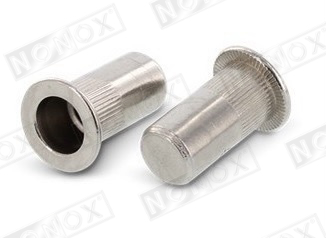
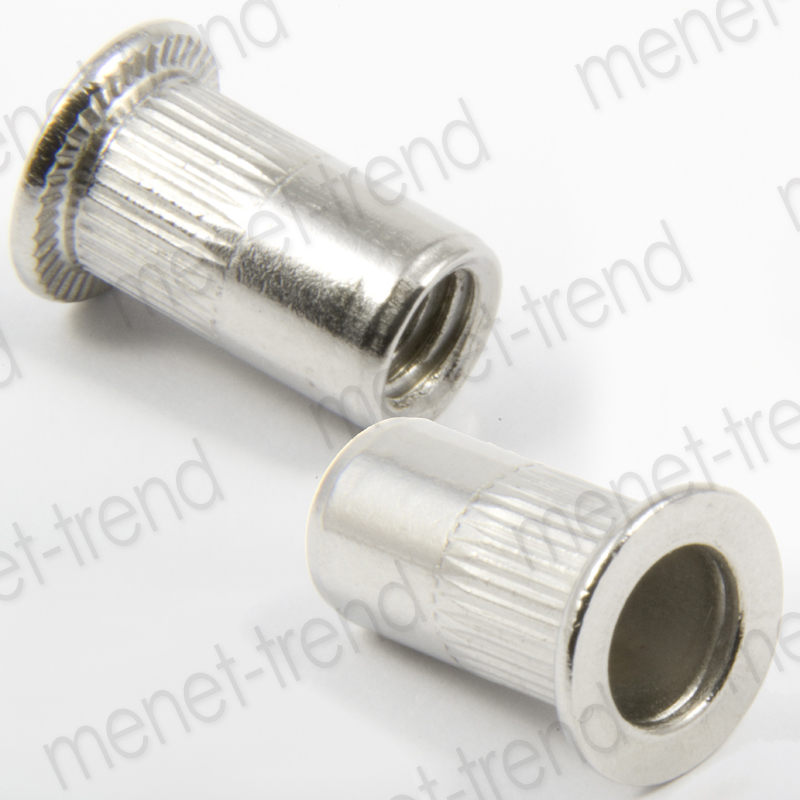
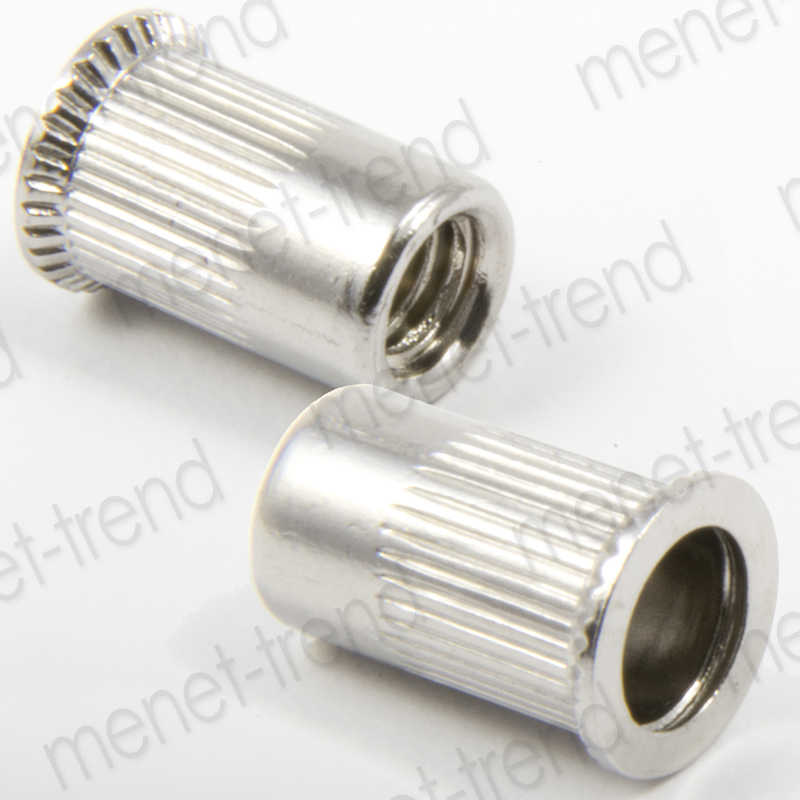
closed “rivet nut” flat “rivet nut” countersunk “rivet nut”
“Screw-in nuts”
When fitting screw-in nuts to wooden structures (item number 9058), first we have to pre-drill, then screw the nut into the hole, and finally fit the object to be fixed to the nut with a metric screw. Again 3 simple steps, which need no further explanation given a good example: with this solution we can even fit the handrail of a wooden banister to a stair railing made of iron, where the threaded insert goes into the wooden rail, and we screw the screw into it through a suitably drilled metal part.
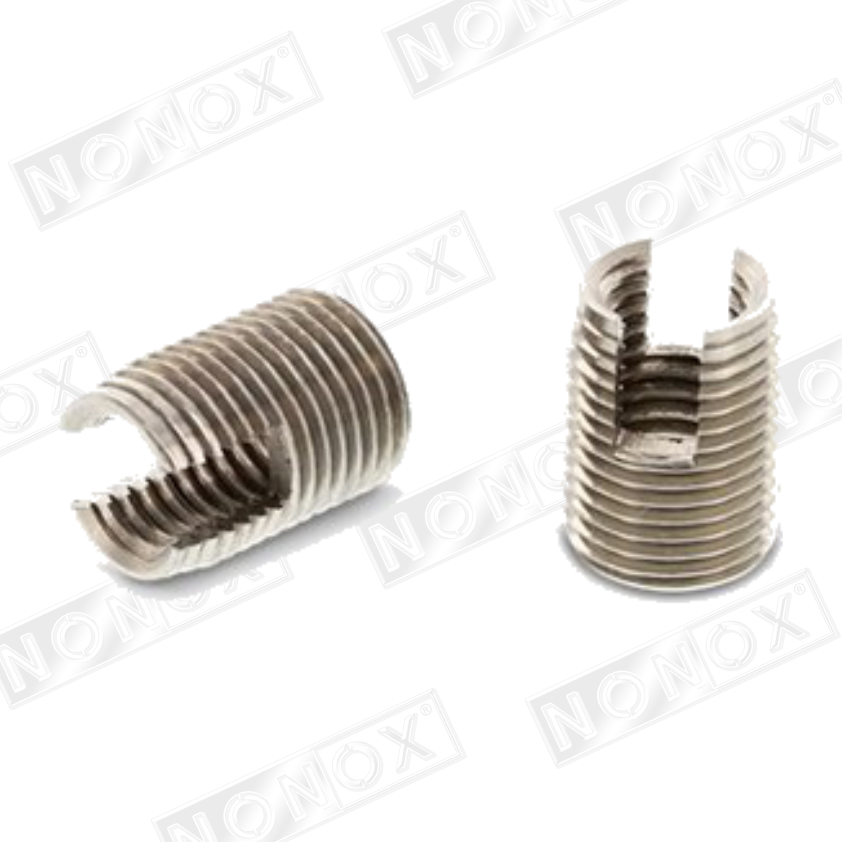
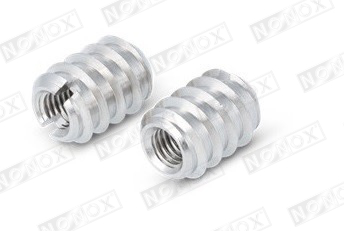
DIN 9058 DIN 9058
self-tapping self-tapping
nut insert nut insert
for castings for wood
“Stubbornly press-fit nuts”
The 9064 press-in, or press-fit nut can be pressed into the precisely formed hole of a thin supporting sheet, secured against rotation. Strong, fast and precise. An effective solution, because it does not discolour the material, does not modify the material structure, there is no heat effect, no warping… Think it over: maybe this is exactly the solution you are looking for?!
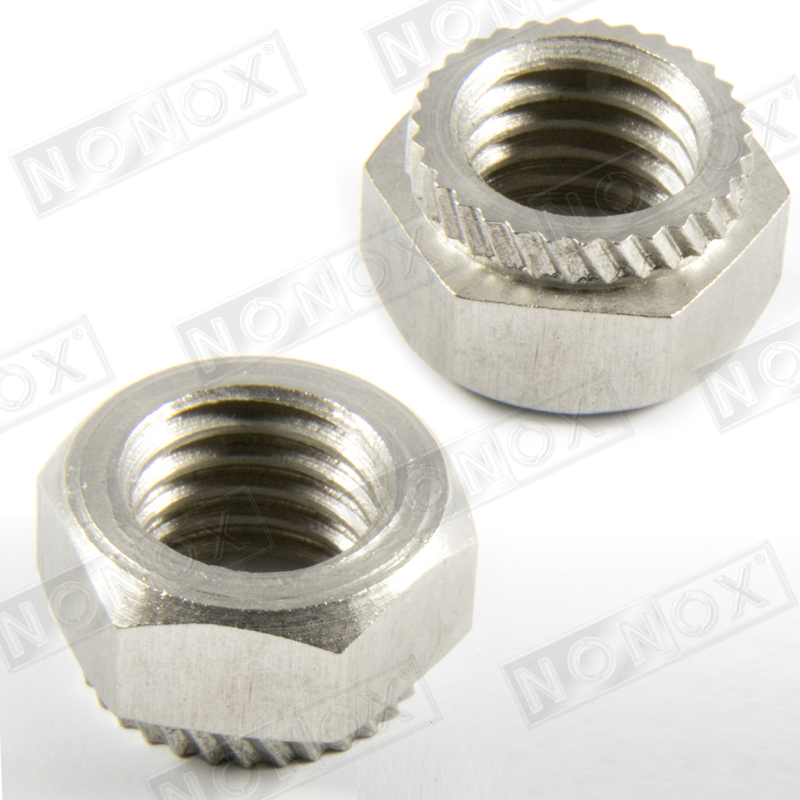
DIN 9064
The various types of NONOX stainless and acid-resistant nuts ensure that we find the right solution for every field of use.
As we can see, many kinds of nut exist, and we have not even been able to present them all… On the basis of the properties of the nuts listed, however, we can declare: “it is good that you exist, because without you our life would not be easy!”

Leave a Reply