
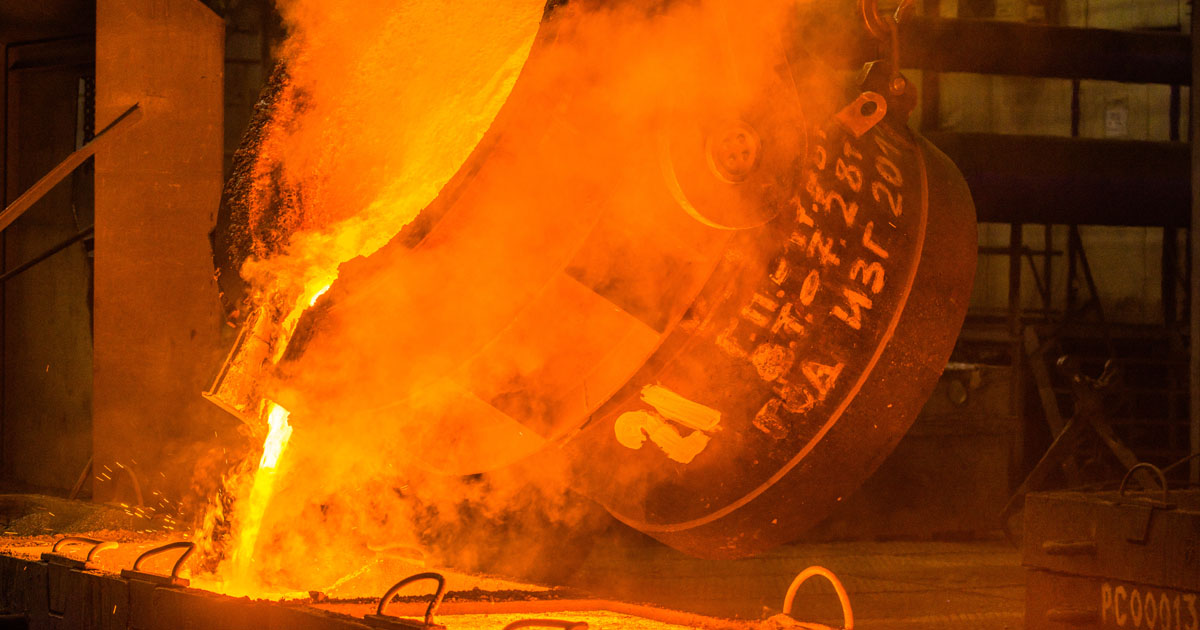
The metal most commonly used in industry: iron. The properties of pure iron are not the best, since it is soft and of low strength. On the other hand it is an elastic, tough material, readily formable and machinable, a good electrical and heat conductor, and magnetisable. In damp air or in water it oxidises quickly. Iron oxide has a porous structure and does not form a continuous, passive layer on the surface of the metal like the oxide of aluminium. Thus iron oxidises through its entire cross-section, as a consequence of which objects made of iron perish over time if we do not protect against the process.
Various protective coatings exist that provide effective protection against corrosion, as long as the coating remains intact. Now we shall discuss the other fundamental method of protection against corrosion, alloying, thanks to which stainless and acid-resistant steels also came into being.
The purpose of alloying
Alloying is nothing other than the mixing of metallic and non-metallic elements in order to improve the various properties of metals. Among other things, strength, hardness and corrosion resistance can be improved by alloying.
Iron-carbon alloys
The most important alloying material of iron is carbon. Carbon increases the strength of iron, but reduces its formability and toughness. Iron cannot be alloyed with carbon without limit. The maximum is 6.67%. Iron alloys containing less than 2.06% carbon are what we call steel. Within this we distinguish structural steels containing 0.1–0.6% carbon, which are strong and readily machinable, and tool steels extending up to a carbon content of 0.6–2.06%, which are hard, wear-resistant alloys. An iron-carbon alloy above 2.06% carbon content is what we call cast iron. Precisely because it is such a difficult-to-form, brittle, fragile material, the only way of processing it is casting into a mould in the molten state. Steels containing no alloying material other than carbon are what we call carbon steel. Carbon steels are not corrosion-resistant and for certain purposes are not tough enough either. In the interest of corrosion resistance, carbon steels must also be alloyed with other metals.
Corrosion-resistant steels
The first stainless steel alloy, which also laid the foundation for the later development of acid-resistant steels, we owe to the Krupp Works. We had to wait until the beginning of the 20th century for it to be produced, but stainless steel products only began to be applied widely in industry in the 1950s. Since then, however, their success has been unbroken. The condition of corrosion resistance is that a stable, continuous, passive layer forms on the surface of the steel. The condition of this is that the carbon content of the stainless steel alloy be at most 1.2%, and that it contain at least 12% chromium. Passivity is ensured by the chromium-oxide layer forming on the surface of the steel, in which chromium is enriched compared to the base material. The condition of stainlessness is that the structure of the alloy be homogeneous, that nowhere should a chromium-poorer part develop. Such an alloy has the property that if the chromium-oxide layer is damaged, a new chromium-oxide layer forms in its place.
Corrosion-resistant steels, such as stainless and acid-resistant steels, are customarily divided into two basic groups:
Stainless steel (A2 for fasteners): It resists the corrosive effect of the atmosphere and natural waters, as well as of weakly acidic foods and drinks.
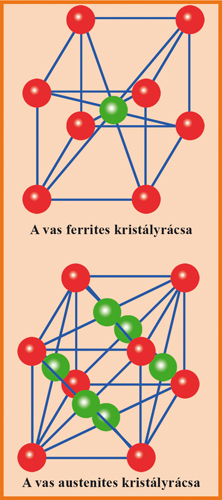
Acid-resistant steel (A4 for fasteners): It is resistant to strongly oxidising acids and other aggressive media as well. The steel alloy containing 25% chromium resists aggressive acids too. A part of this high chromium content can also be replaced with nickel. The most common ratio is 18% Cr, 10% Ni, which has the further advantage that the ferritic-structured iron alloy becomes austenitic-structured.
The properties of corrosion-resistant steels
Greater forces are needed for the mechanical machining of corrosion-resistant steels. Machining requires a lower speed and intensive cooling. During cutting the surface oxide layer is damaged, which restores itself on contact with the oxygen of the air, but this process is time-consuming. A freshly machined surface must not be painted immediately, nor allowed to become contaminated, because that may prevent the restoration of the oxide layer. The process can be accelerated with acid passivation.
Welding acid-resistant steels
Regarding acid-resistant steels we should know that they retain their acid-resistant property only in their completely homogeneous state, while with stainless steels problems of a different nature may arise. This is because austenite containing chromium and nickel is capable of dissolving 0.15% carbon at 1000 ºC, but at 600 ºC only a maximum of 0.02%. If we cool it rapidly from 1000 ºC, the carbon content remains dissolved and the alloy will be resistant to acids. However, if the cooling is slow, the excess carbon precipitates in the form of chromium carbide. Alongside the chromium-rich chromium-carbide crystals there will be chromium-poor crystals, which starts corrosion at the grain boundaries (intergranular corrosion). When welding, this heating is unavoidable up to a certain distance on both sides of the weld. Therefore acid-resistant steels above 0.02% carbon content would in principle not be weldable, unless after welding the entire structure is heated to 1000 degrees, which must be followed by rapid cooling. Of course this subsequent hardening procedure is mostly not feasible. Fortunately metallurgy is already able to reduce the carbon content of acid-resistant steel below 0.02%. Such low-carbon acid-resistant steels can be welded without problems. The third viable route is if the steel is alloyed with a material whose carbide is stable and does not dissolve in austenite even at high temperature. Niobium and titanium are such materials. The titanium content of such alloys must be five times, and the niobium content ten times, as much as the amount of carbon that has to be rendered harmless. Steel containing a sufficient quantity of titanium or niobium in this way is what we call stabilised steel.
The standardisation of alloys
Practically an infinite number of iron alloys can be made. This medley was simplified by creating a range that satisfies every need of industry. These standards contain the chemical composition of the standardised iron alloys. Since alloying cannot be carried out with complete precision, lower and upper limits are prescribed. The standards describe not only the recipe of the alloying, but also the desirable heat treatment procedures. Unfortunately quite a few kinds of standard exist. The most commonly used are DIN 17007 and EURONORM. The designations of the EURONORM standard also show the recipe of the steel alloy. The number following the X is one hundred times the carbon content, then come the chemical symbols of the alloying materials, and finally the percentage proportion of the alloying materials.
In the following table we have summarised the DIN and EURONORM designations and the most important properties of the most common corrosion-resistant steels:
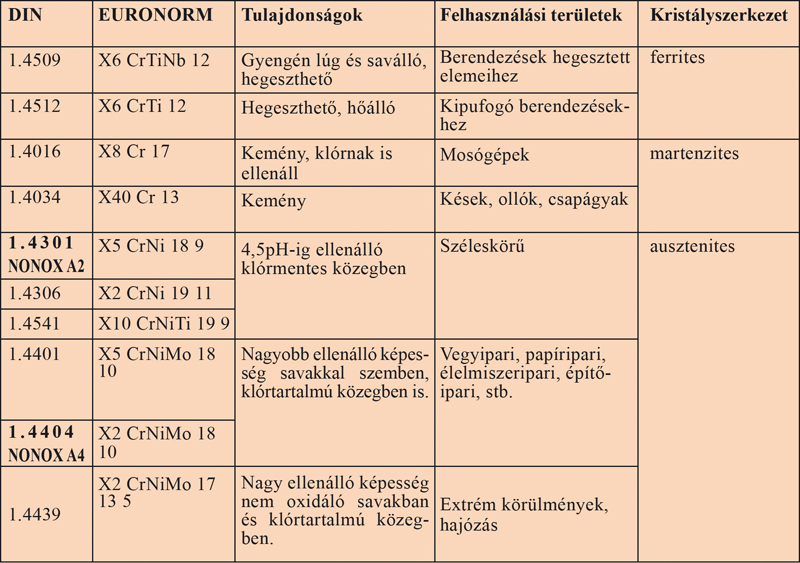
The table is far from containing all the available corrosion-resistant alloys. Today even alloys resistant to the most extreme conditions are available commercially. Thanks to modern metallurgy, stainless and acid-resistant steels have become indispensable raw materials of industry, genuinely defeating rust.

Leave a Reply