
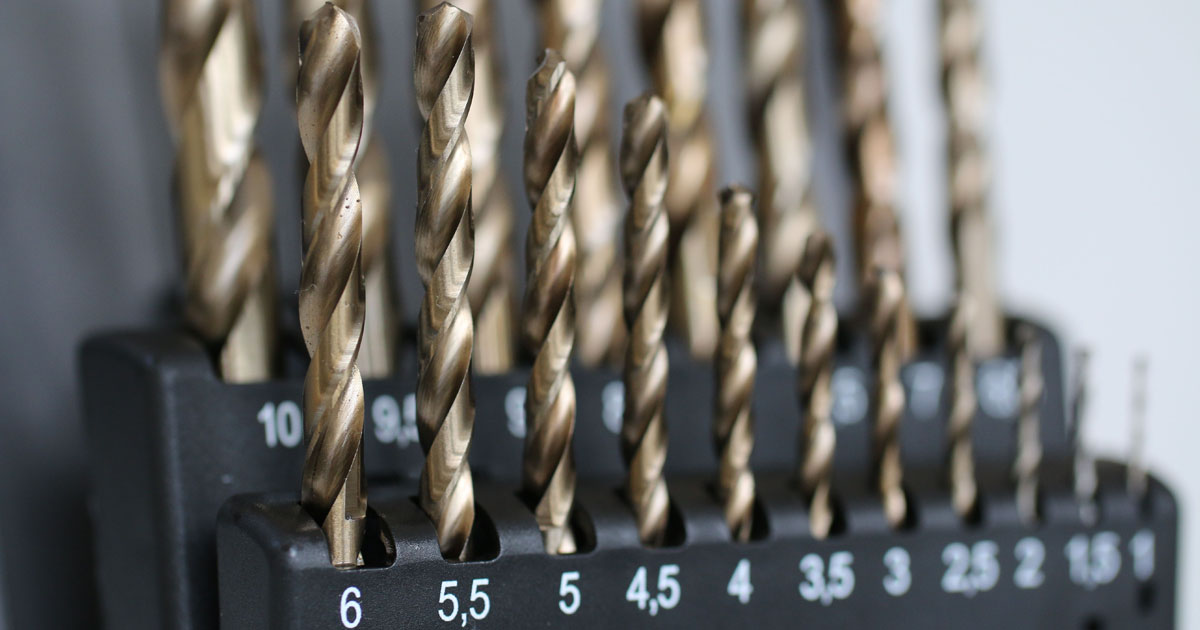
It is a basic rule that chip removal is only possible if the tool’s material is harder than that of the workpiece.
Using cobalt drill bits
It follows that the harder the material we wish to machine, the harder the tool we will need. For acid-resistant steels, for example, we recommend a cobalt drill bit, which is such a hard alloy that it copes easily even with tough acid-resistant steels.
It is also worth knowing that the harder the tool, the more brittle it is – that is, it wears slowly but also breaks more easily. This is particularly sad because harder tools are also more expensive.
Classification of metal drill bits
Tool steel drill bits

These black tools, made of a high-carbon steel alloy and costing a few hundred forints, can be used for drilling plastics, wood, chipboard and soft metals (copper, aluminium, and the softer carbon steels). What makes tool steel drill bits attractive is their low price.
Alloyed high-speed steel drill bits

Alongside the high carbon content, they are alloyed with chromium (4%), molybdenum (5%), tungsten (6%) and vanadium (2%). The alloy is silver in colour, with a hardness of 63–64 HRC*. With these tools we can drill harder steel, e.g. tool steel, as well. They are more durable than tool steel drill bits. Adequate cooling must be provided while drilling metal – using a cutting spray or some kind of oil.
Cobalt-alloyed high-speed steel drill bits

Machining hard-to-cut, tough, smearing, highly alloyed stainless or acid-resistant steels already calls for a serious tool. This is why the high-speed steel alloy is supplemented with a further 5% cobalt. The end result is a shiny bronze-coloured alloy. Cobalt is an exceptionally good heat conductor: the cobalt alloy quickly leads the heat generated during cutting away from the tool’s edge, thereby significantly reducing wear. Cobalt high-speed steel is a very hard material (65–66 HRC); with the exception of drilling rock and masonry, practically any material can be machined with it, so people today can use it almost as widely as our ancestors used their stone axes.
Unfortunately, great hardness goes hand in hand with brittleness. So if we drill freehand with a cobalt bit, it must be handled carefully, because it breaks easily under lateral forces. If possible, use a pillar drill instead! When drilling metals it is worth providing adequate cooling. Using a cutting spray can extend the life of a cobalt drill bit.
High-speed steel drill bits alloyed with 8% cobalt
These tools, with a hardness of 67–68 HRC, are manufactured for particularly hard-to-cut metals, for titanium and nickel alloys.
*Rockwell hardness testing: The degree of hardness is determined by how deep a diamond cone with a 120-degree included angle can be pressed into the material being measured, with a specified force. Its unit of measurement is HRC.

Leave a Reply