
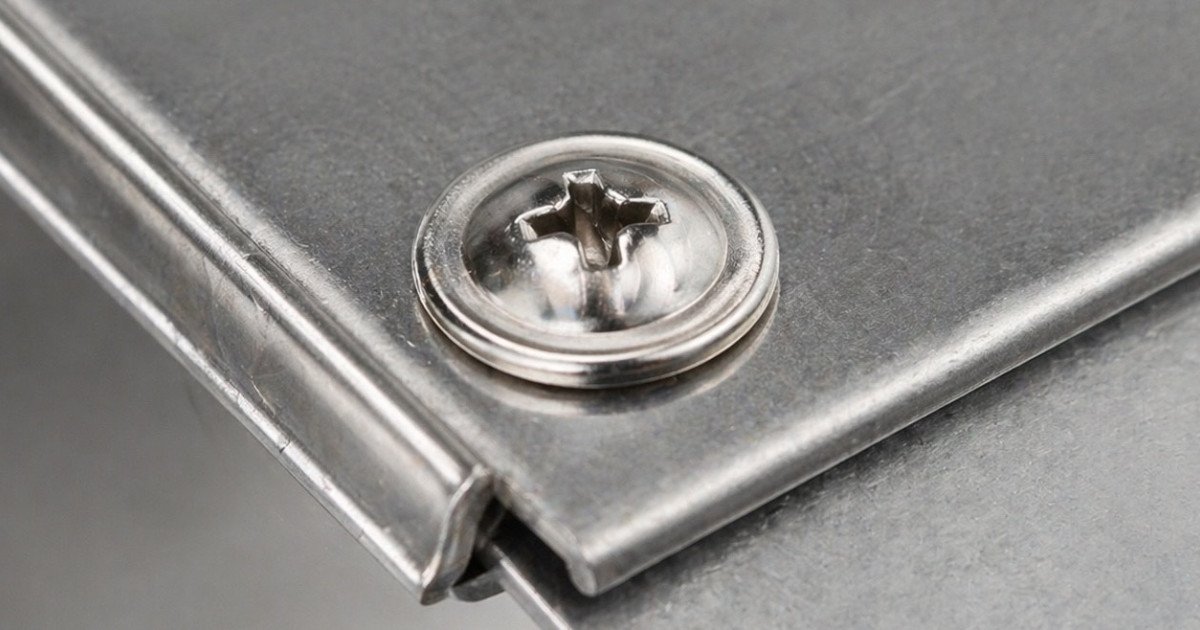
NONOX stainless “Opel-head” self-tapping screws in practice
This screw stands out from the rest
Between self-tapping screws there is no great difference at first glance. The same thread, similar sizes, familiar shapes. Situations can arise, however, where it turns out that it does matter after all what kind of head a screw has.
The Opel screw is special in the way it behaves during assembly, because it is when you are fitting it that you find out what it was devised for.
A head that widens into a washer, not a separate washer
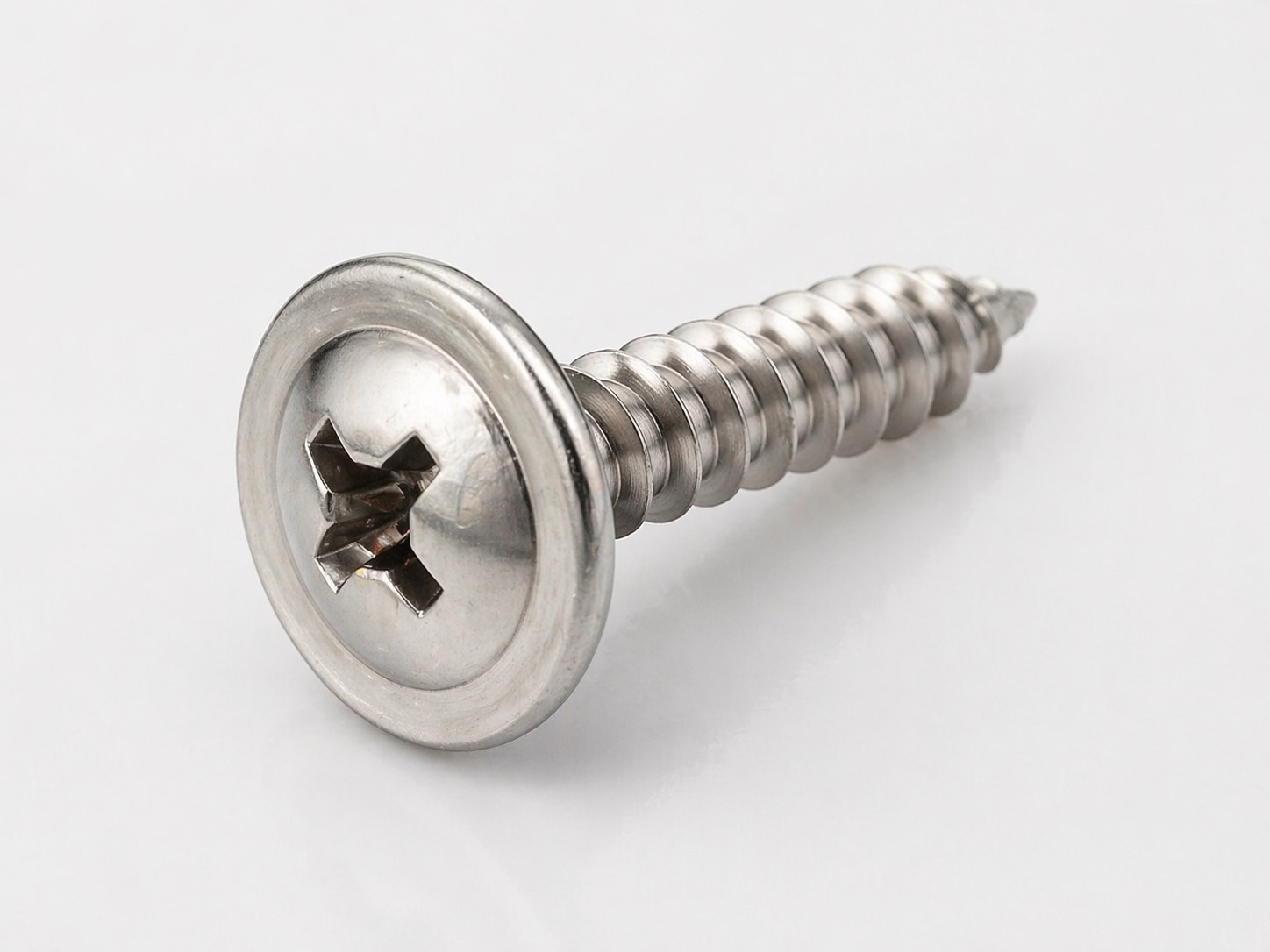
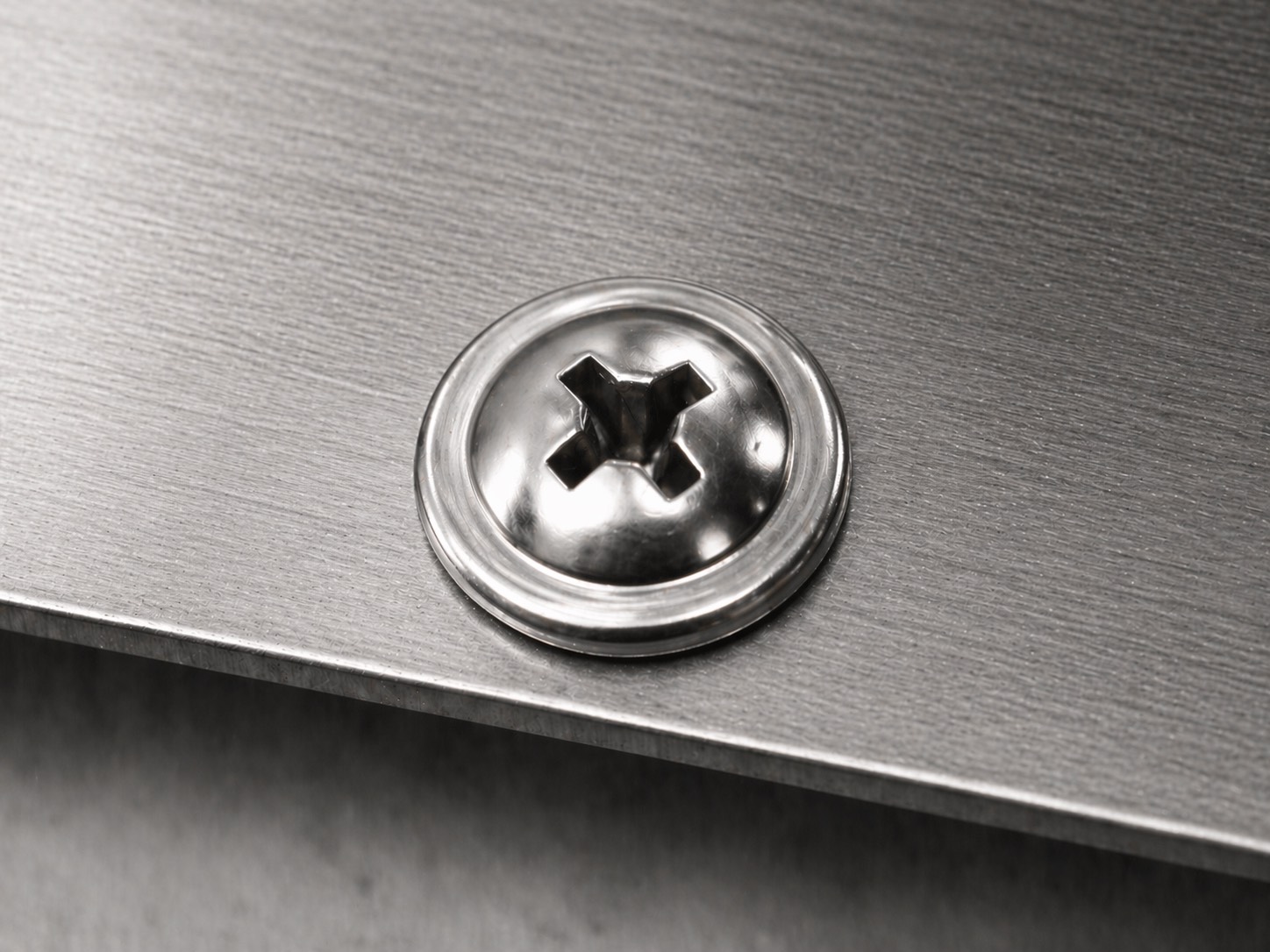
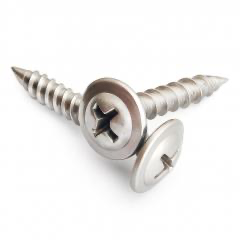
Its head is formed as if there were a washer underneath it, except that there is not, because the whole thing is one piece. In practice this means that there is no need to bother with a separate washer, no need to adjust it, and it cannot slip out of place or disappear somewhere in the structure.
The head bears over a large surface, it does not load the material at a single point. This comes to the fore where the material does not like concentrated pressure. With thin sheet, with plastic, with Plexiglas, or where wood and sheet meet, the difference shows very quickly.
With this screw you do not only fasten, you also position
It has one peculiar property that is mentioned more rarely, though it is often the essence of the matter: the half-tightened state.
With removable cladding, or cladding that is hard to put up, and in the case of mounting panels, a slotted hole or an open-ended opening is common. These are there so that the element can be put up, pushed across and adjusted. In such cases the screw does not go into place fully tightened, but partly tightened holds it until everything is exactly in place.
The “Opel-head” is great at this, since even half-tightened it grips, it does not let the sheet slip out of the hole, there is no need to balance it, no need for a “third hand”.
When the position is right, you tighten it and it is done, but the road leading up to that is far more manageable.
Anyone who has tried to solve something like this with a conventional screw and a washer knows what tends to happen. The washer tips, slips out of place, sometimes falls into the opening, and the head does not grip precisely where it should.
This is the functional difference of this head shape.
The design is not complicated, it is simply well judged
Cross-recess head, classic self-tapping screw thread, conical or self-drilling point. Nothing special.
What matters is that the difference is not made by the thread, but by the wide-bearing head. The rest merely serves to let it be driven in quickly and to hold properly at every point.
The Opel screw works really well for fixing thin metal sheets.
Where does it really come into play?
Where the fixing would be awkward, or is not final but has to be touched from time to time.
With cladding, machine housings and ventilation grilles – often in places where the screw itself is not even visible, but where, if it does not work well, the whole job becomes irritating.
Such a situation is, for example, when a cladding element goes up but its final position still has to be adjusted. The hole is not round, the material is thin, and the joint has to hold even in the half-tightened state.
That is when it really becomes clear what this head shape can do. It holds, but does not let the fitted element get away, while at the same time it leaves as much freedom of movement as is needed for the adjustment.
Dome head or “Opel-head”?
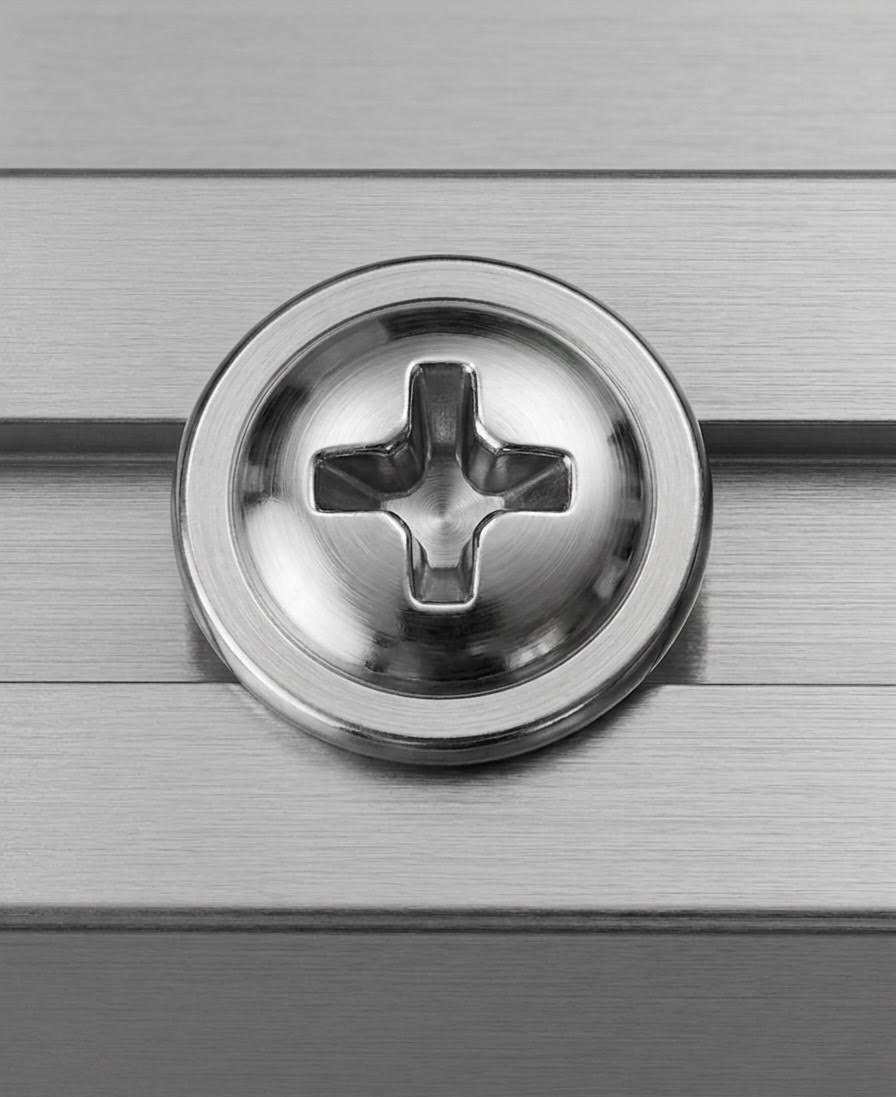
It is not that one is better, since the dome-head self-tapping screw can also be a perfectly good choice for many tasks. For simple fixing, where the material can take it and no adjustment is needed, there is no problem with it. The “Opel-head” comes to the fore where these conditions are not given.
The difference, then, is not the look, but what happens during assembly.
Why should it be stainless, and why not?
If someone searches for the Opel screw, they soon see that the market is full of them. Galvanised, coloured, in all kinds of versions. The stainless one, however, is no longer so general.
There is a simple reason for this: in many fields of use these lap joints remain hidden and the environment is dry. Where that is the case, there is no real point in stainless.
Elsewhere there very much is, where the environment is humid or wet or the terrain is critical. If nothing else justifies it, sometimes it is enough that it has to be of higher quality…
Galvanised solutions sooner or later give up and the rust can start.
Where compromise is not an option
- Kitchen and catering kitchen equipment.
- Food industry environment.
- Baths, wellness areas, saunas.
- Healthcare facilities.
- Sports and leisure equipment.
- Ships, watercraft.
In the wall, in the garage, in the store room the galvanised one will still do, but right on the front line the question of “is stainless needed” cannot even arise.
And where the advantages of the “Opel-head” are needed at the same time, the two meet.
One more small thing that becomes important during use
The “Opel-head” is flat, it does not stand out, it does not catch on anything.
Perhaps this does not seem essential at first; it is only when you really have to work in a tight place, or when you have to prevent something from catching on it, that its significance grows.
Where does the “Opel-” name come from?
This is professional language rather than a technical definition. It is not a standard, not a brand name. It probably stuck from automotive use, and that is how it has remained in practice. It is like many other expressions: someone once started using it that way, and then it stuck.
Leave a Reply