
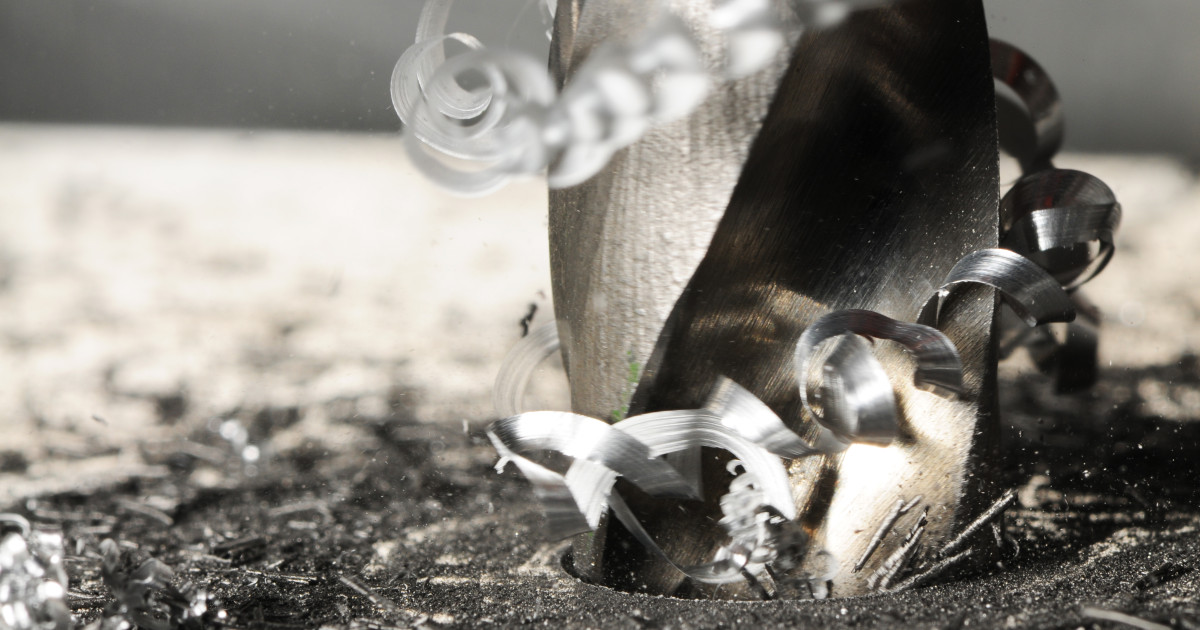
If you want to drill stainless material easily, without straining, then there are three things to watch:
Three things to watch
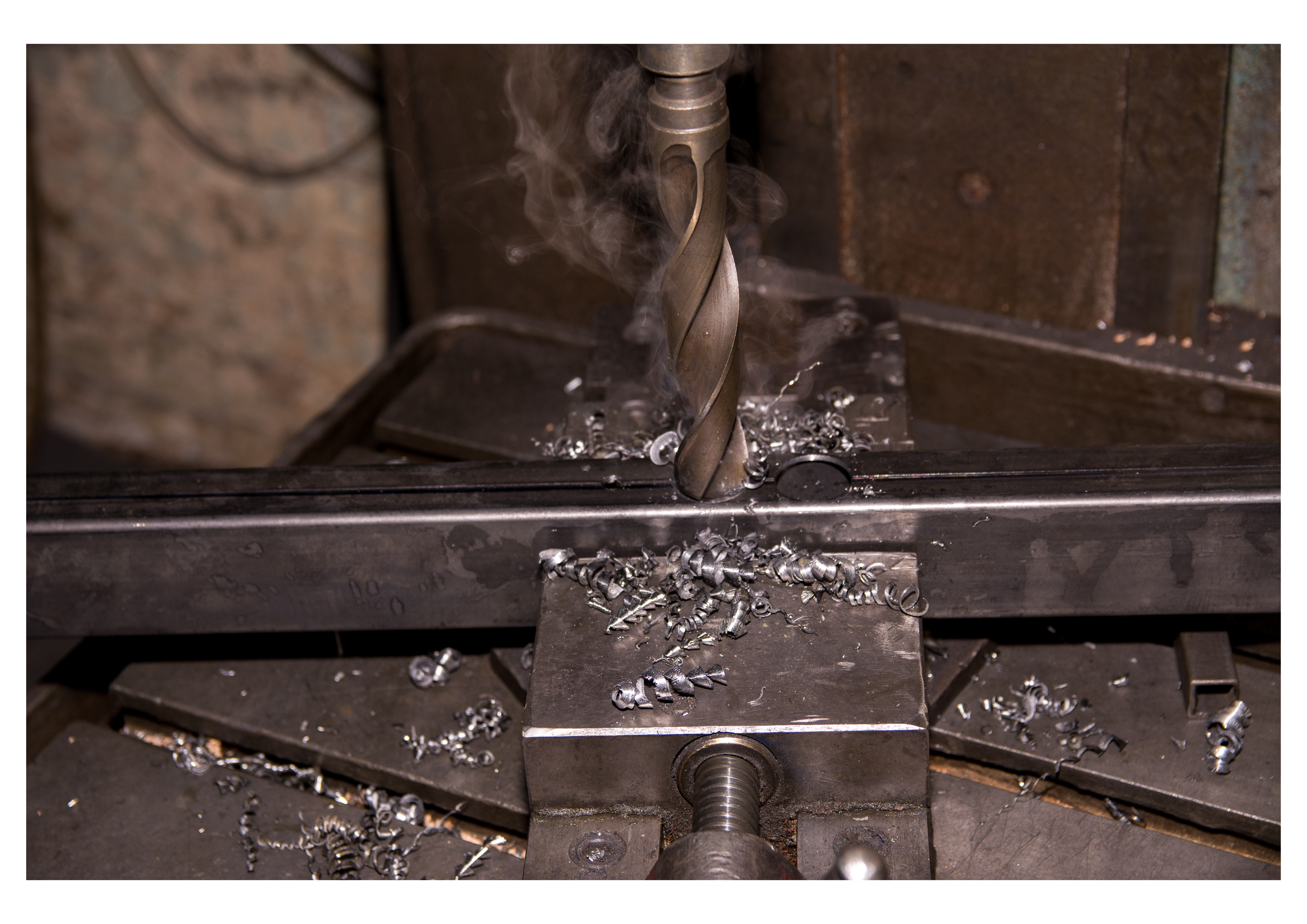
If the drilling still does not go easily
If you clamp a cobalt-alloyed high-speed steel drill bit into a suitable drill and the drilling still does not go easily, then I am certain the trouble is with the drilling speed. A typical mistake is to try at a higher speed than necessary, the result being that the bit heats up, the material is already smoking, but no chip removal gets under way.
It is worth knowing that the harder the material and the larger the diameter of the drill bit we drill with, the lower the speed at which chip removal will be perfect. A frequent mistake is not to reduce the speed set for low-alloy steels when drilling stainless or acid-resistant steel.
The table below helps in selecting the right speed:
These figures are for guidance only. For certain tools the manufacturer may prescribe different values. Proper lubrication and cooling is of course an important consideration with every metal, but it matters most with the harder metals, or with stainless steels.
| Material | v (m/min) | N (rpm) D=8 mm | N (rpm) D=4 mm |
|---|---|---|---|
| Aluminium | 60-80 | 2800 | 5600 |
| Unalloyed, low-alloy steel | 26-32 | 1200 | 2400 |
| Stainless steel, ferritic | 14-16 | 600 | 1200 |
| Stainless steel, martensitic | 10-14 | 500 | 1000 |
| Stainless steel, austenitic | 8-12 | 400 | 800 |
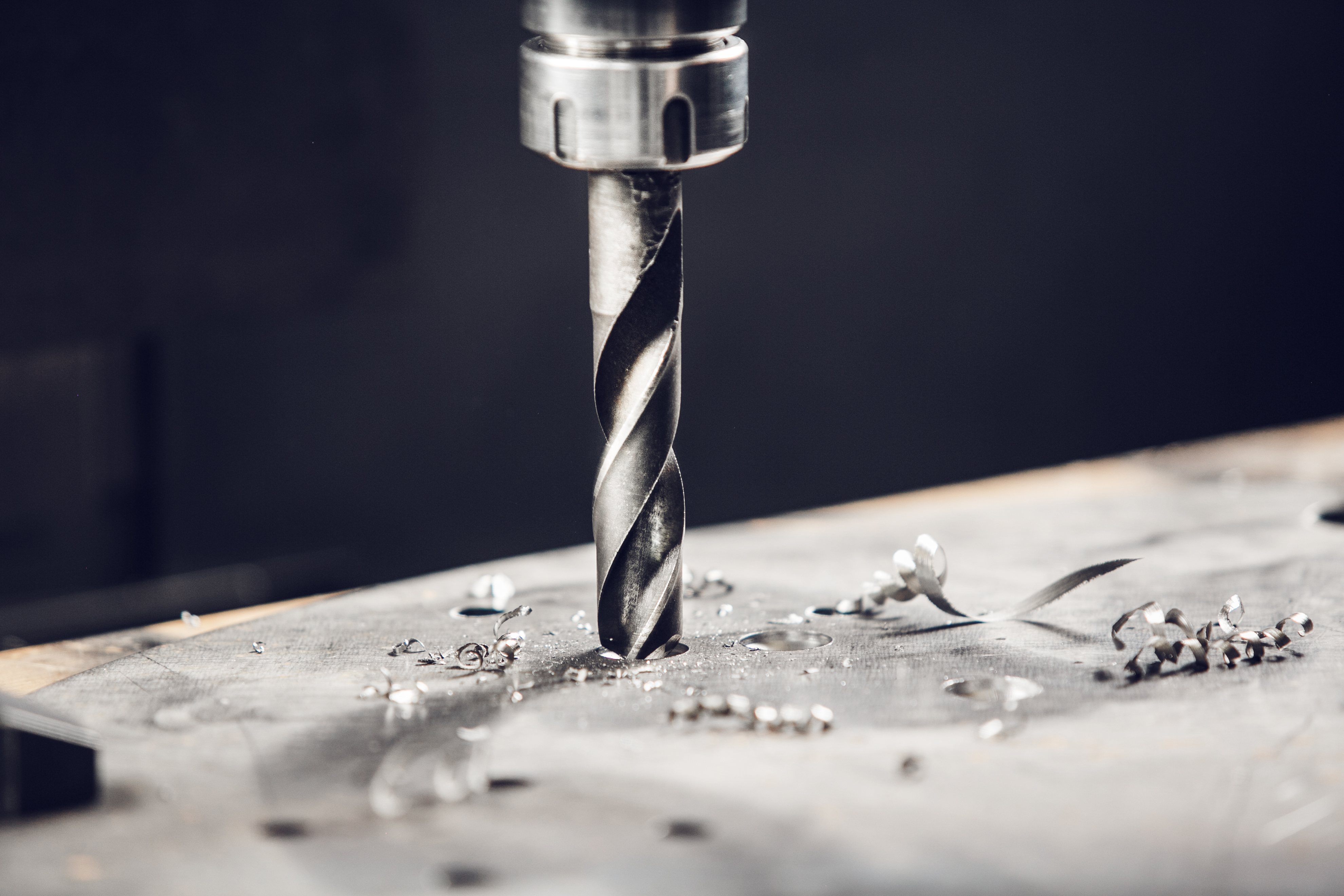
The cutting speed is understood to apply at the largest diameter of the bit. Moving towards the centre of the bit the cutting speed naturally decreases, and at the centre point it is “theoretically” zero.
From the cutting speed the correct rotational speed can be calculated with the following formula:
N=(v/D*pi)*1000
Where
If you have managed to dial in the right speed, it is easy to recognise: the chips come away from the workpiece in fine, long spirals.
If you have any questions or comments, please get in touch with us:
Did you find the article useful? Read our posts on similar topics too:
How to drill a hole in acid-resistant steel? Drills from the 21st century

Leave a Reply