


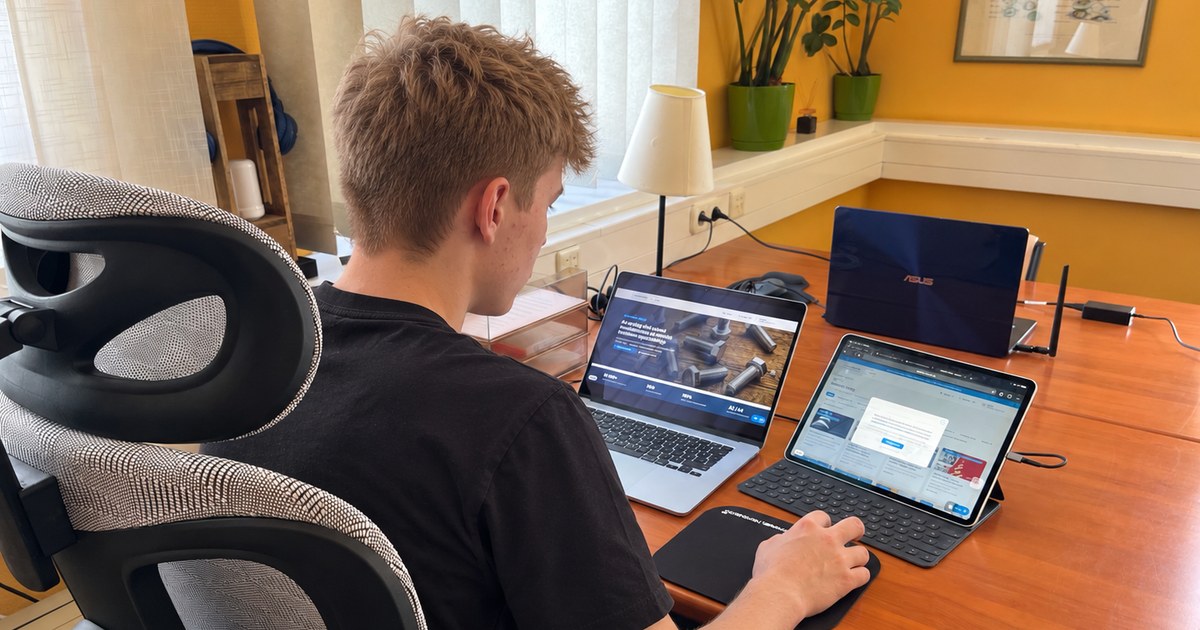
A student on his summer holidays came up with an idea: in his view, the time had come to renew Menet-Trend’s old websites. It was not his job. Nobody had asked him to do it. He was the one who felt he ought to.
And I did not talk him out of it. Quite the opposite! I encouraged him and let him get on with it.
By the end of the story, this 16-year-old lad – giving up part of his summer holidays – had, entirely on his own, rethought, designed, built and launched the complete web presence of a Hungarian business that has been operating for more than thirty years. Just as he had promised at the start of the summer, he had it finished by the end of the summer break.
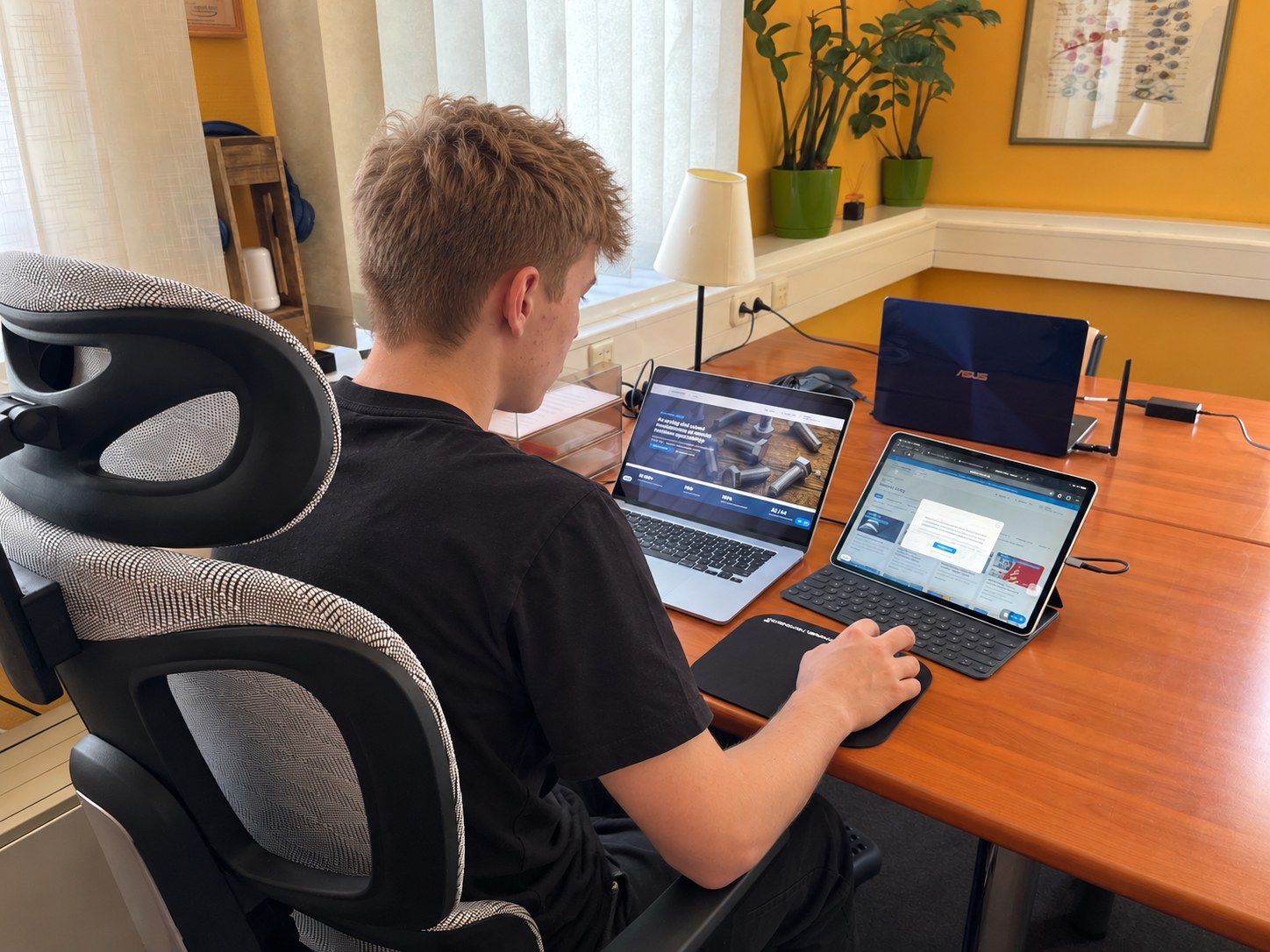
Not a renovation: new foundations
Menet-Trend’s earlier websites were not neglected, overgrown sites, but regularly maintained and updated ones that served the company and its customers for many years.
But the world had changed in the meantime. The technical foundations of the old sites were slowly becoming outdated, expectations of an online presence had changed, and it was becoming increasingly clear that sooner or later what would be needed was not a simple renovation, but new foundations.
It was the student who recognised this. On his own.
And instead of starting to patch up the existing sites, he started from scratch. He did not just build the new websites; he rethought them too. Design and implementation were in the hands of the same young lad who had taken on a commitment of this scale during his summer holidays.
One website turned into eleven
And the work grew far bigger than the words “new website” would have suggested at first.
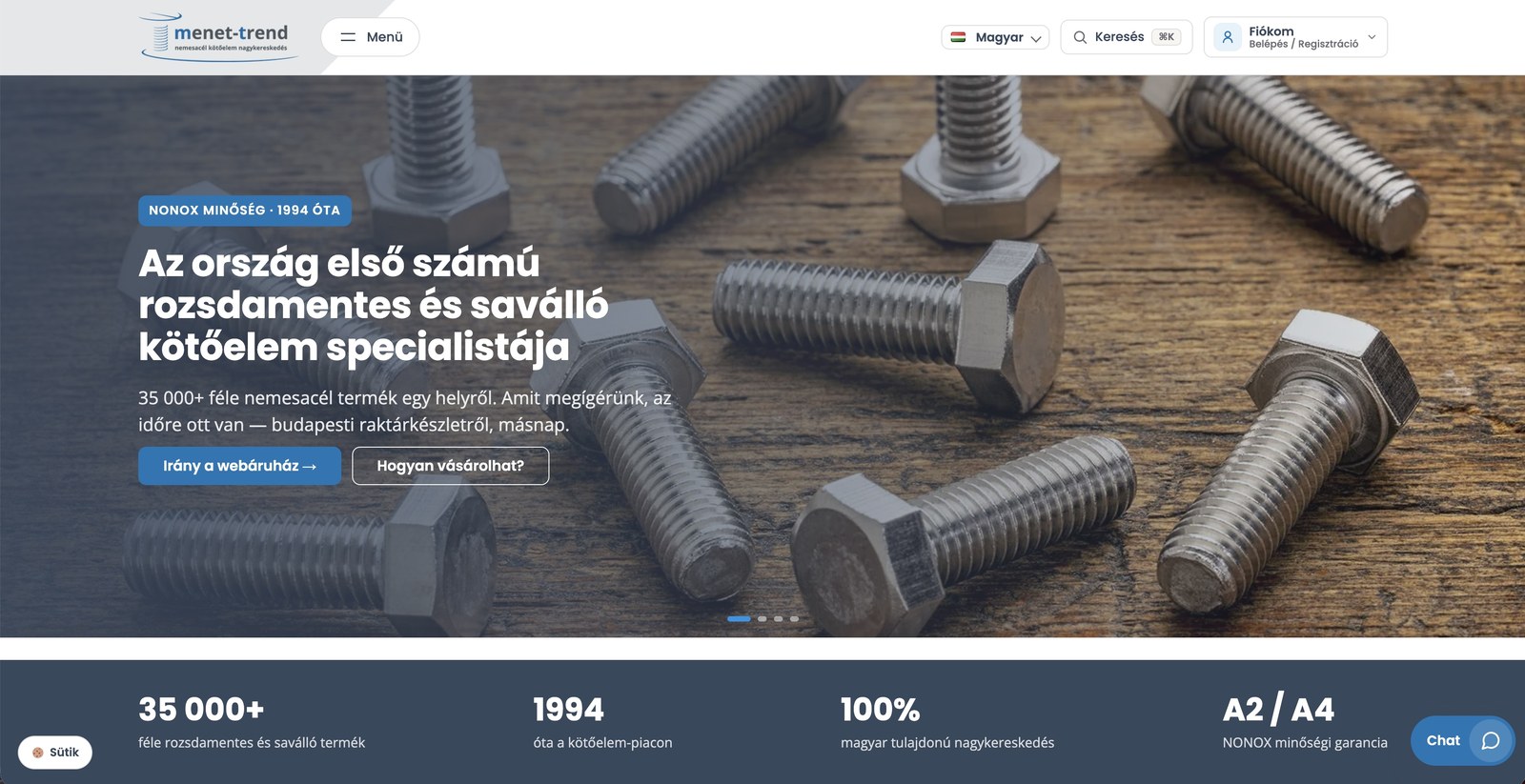
Menet-Trend’s central corporate website, menet-trend.hu, has been renewed, and with it ten independent specialist sub-sites of ours: anyacsavar.hu, sodronyok.hu, fittingek.hu, epuletvasalatok.hu, hajoveret.hu, szegecsek.hu, popszegecsek.hu, nonox.hu, nonoxvilag.hu and facsavarok.hu.
Eleven websites. In a single summer.
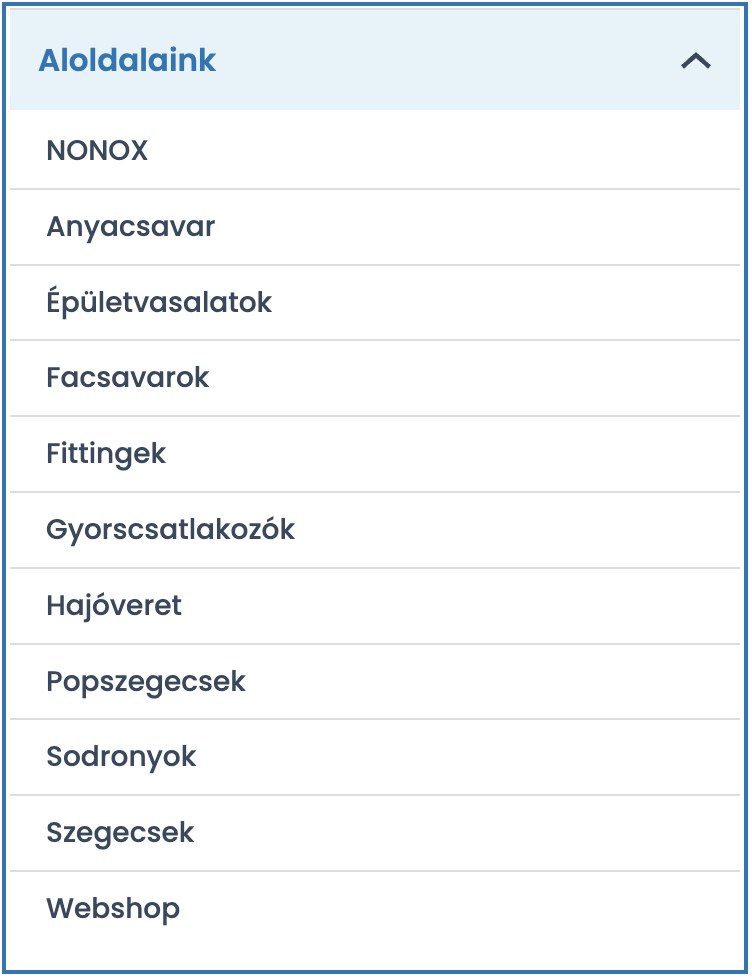
The company’s webshop was deliberately left out of this round: the shop is closely tied to our integrated enterprise resource planning system, so it forms a separate system and was not part of this development. For all the other sites, however, the young developer carried the project through on his own, from the first idea through design and implementation all the way to putting the finished websites into operation.
Without professional help from any adult.
My own involvement was essentially limited to checking from time to time how far he had got and what he had created, and listening to where he wanted to go next. I did not tell him how to do it, and I did not take his problems off his hands. He had to find the solutions himself.
The rest was his work.
The same content – an improved look – better results
The student did not rewrite the professional content Menet-Trend had developed earlier. He did not change what we had written about our products and the company; instead, he rethought how we present all of it.
And that is what makes the result particularly interesting: the new sites are already performing much better than their predecessors.
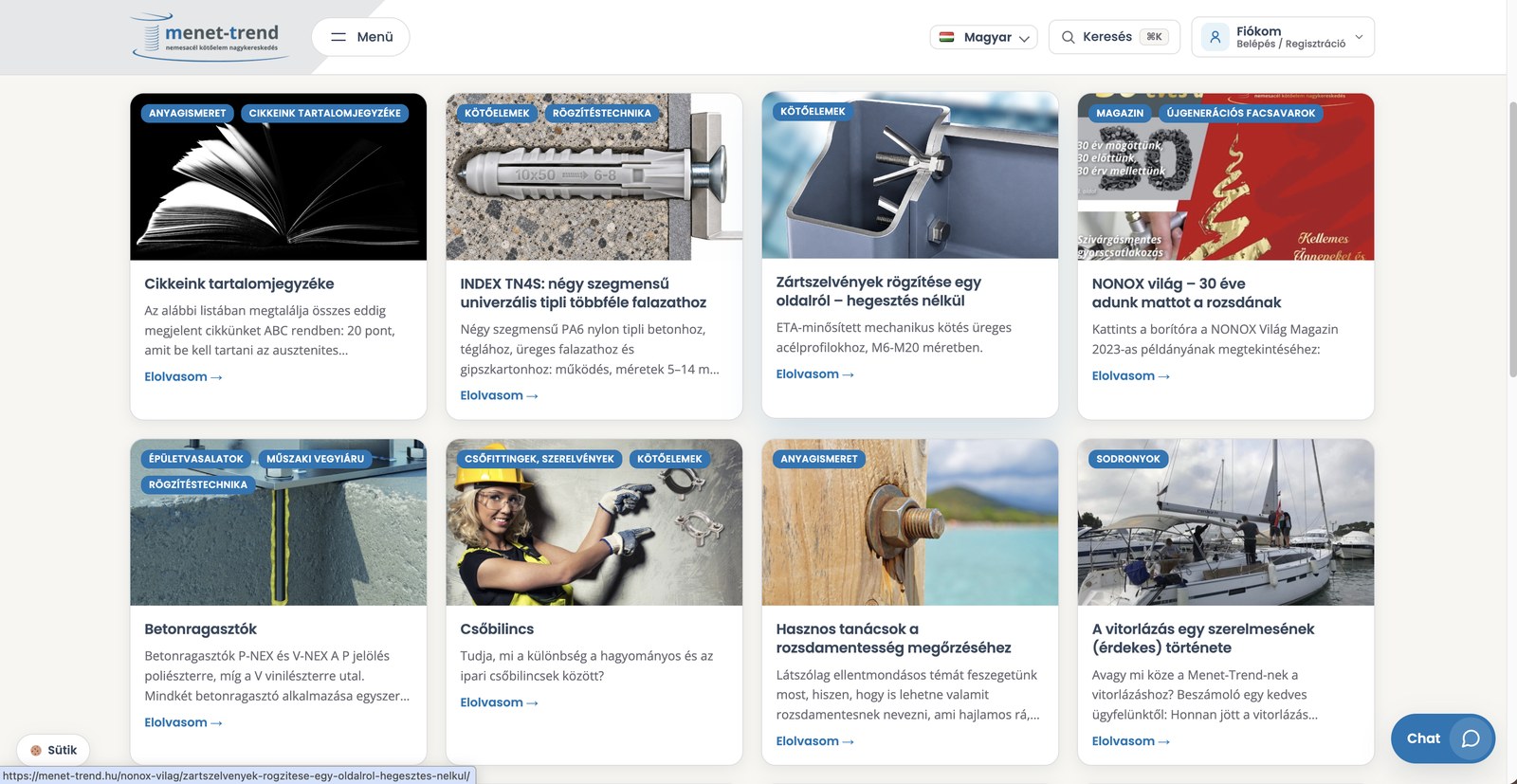
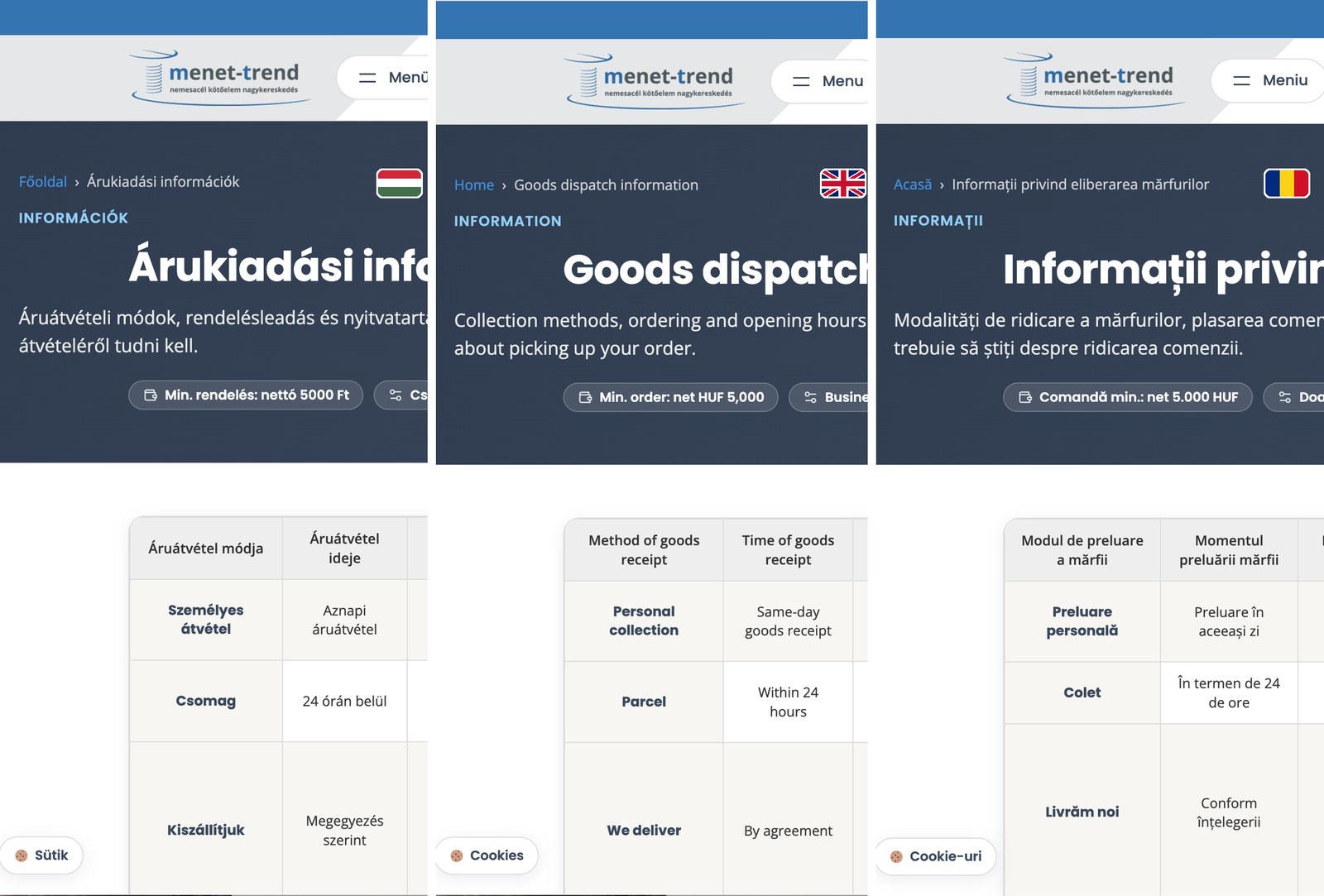
In other words, we did not necessarily need to say anything different. We needed to say the same thing better – and in three languages straight away, since our old sites only worked in Hungarian.
The young developer imagined the new ones differently from the outset: the Hungarian, English and Romanian versions of the new websites were completed at the same time. He is already working on further languages, although – as he himself realises – these will take him more time, since he is still at secondary school.
Well, yes: he also used artificial intelligence for the work – why should we keep it a secret?!
This student belongs to the generation for whom AI is no longer some distant technological curiosity, but a tool. He uses it for learning, for solving problems and for turning his ideas into reality. But a tool on its own does not build eleven working websites. For that, someone has to work out what they want to create, make decisions, solve the problems that come up along the way and, above all, see through what they have started.
Sometimes trust is worth more than help
For me, this was perhaps the most important lesson of the whole story.
Replacing Menet-Trend’s websites was not originally the student’s task. It was his own suggestion.
And I could have done what the adult world so easily does with a big initiative from a 16-year-old: I could have explained to him why the task was too big, why it was too complicated, how many things could happen along the way, and why it would be better to start with something smaller…
I did not do that.
What I said was: “Give it a try!”
As he made progress, I kept cheering him on and encouraging him. This gave him more and more momentum. One site was finished after another, and he did not stop until he had completed everything he had taken on.
When he ran into a problem, he looked into it. When he did not know something, he learned it. When something did not work, he looked for another solution. And by the end of the summer he handed over exactly what he had promised at the start of it.
First he built it, then the specialists came in
When the new websites were finished and running, and the student had handed them over, the story naturally did not end there.
Running a company’s web system over the long term also involves the ongoing supervision of specialist areas such as search engine optimisation and IT security. In these areas, we brought in outside specialists after the handover.
So they joined a system that was already finished and working. They acknowledged the young developer’s work and, perhaps just as importantly, they did not want to rethink what he had created in his place. Within their own fields, they support and oversee its further operation while keeping the original concept intact.
So the creation of the new websites is still, unmistakably, the work of the lad who carried them through from the first idea to the handover.
What others do not necessarily see
The young developer’s interests do not stop at the computer screen. In his free time he loves taking photographs, especially of cities and buildings.
But he does not necessarily see in them what we do.
He seeks out and discovers details, light, forms, connections and perspectives that remain invisible to many of us. And through his camera these become pictures with an artistic eye: he does not simply capture what is in front of him, but also shows something of the way he sees it.
This visual sensitivity can be recognised on the new websites too.
Menet-Trend’s sites, of course, have a professional job to do above all. They have to present products and technical information clearly, help visitors find their way, and be usable for those looking for a specific solution. The student did not try to override these constraints; instead, he shaped the sites’ own visual world within the professional framework.
Perhaps that is why we feel the new sites have not simply become more modern, but have gained a character of their own.
“It felt good.”
I asked the young developer what it felt like, at the end of the summer, to sit at the computer and watch the sites he had made take the place of the old ones one after another. What it was like to see that what he had only imagined a few months earlier was now working, that the first visitors were arriving, then the first interested enquirers, and that people were starting to use everything he had built from a single idea over one summer.
He is a modest lad. He does not make a long speech about it.
Asked what it felt like to see it all in action, his answer was simply this:
“It felt good.”


Leave a Reply